Robert Monell Terrific cast. I'll put up a link on my two Jess Franco blogs ASAP.
12 May, 2016
11 May, 2016
Two Jess Franco films coming on Bluray from Dorado Films!

These
two rarely seen, early 1970s Jess Franco directed thrillers are being prepared for
Blu-ray+DVD release by Dorado Films, a company with which I’m familiar
for their very good Eurospy/Eurowestern DVDs. They will be presented in Spanish language with English subtitles. This will be the HD debut of both features...
www.franconomicon.wordpress.com
02 April, 2016
A TRIBUTE TO JESS FRANCO: 3 YEARS ON...
Jess Franco (May 12, 1930-April 2, 2013) The prolific and irreplaceable Spanish filmmaker passed away 3 years ago today. His massive body of work, though, lives on through numerous new HD releases of his films and retrospectives both official and personal. What Jess Franco film are you watching tonight? For me it's a toss up between my all time favorite SUCCUBUS/NECRONOMICON and FEMALE VAMPIRE, two essential works and among his most personal projects, made in relative freedom but subject to much subsequent reedits by producers-distributors. There is a unique melancholy mood found in them.. They both have mysterious, deadly female lead characters, an erotic dancer (Janine Reynaud) in SUCCUBUS and a world weary vampire in the FEMALE VAMPIRE. Lina Romay plays the mute vampire in the latter and I find it her most moving performance, unpolished but real, a sad being lost in a fantasy bubble.
Of course, Jess was preceded by his wife/key collaborator/frequent lead actress/editor/director Lina Romay, who died much too young. It's difficult to think of him or his career without thinking of her. It's also difficult not to think of his other films and career arc as one watches any single one of his films. They all resonate within and across his filmography. They also are flooded with resonances of Bunuel, Lang, Godard (three of his masters mentioned by a character in NECRONOMICON). They are also infused with the poetry of Robert Siodmak (whom Franco himself frequently mentioned as a personal inspiration) and the B film maestros Erle C. Kenton and Reginald Le Borg. I first became aware of Jess Franco via an article about SUCCUBUS I read in 1969, the year of its US release, in an Adult magazine. It would take about another two decades before I could finally see the film, and even then it wasn't exactly in HD. I did see COUNT DRACULA (1970) and THE CASTLE OF FU MANCHU (1969) on local television in the early 1970s. I wasn't impressed. It took me another 20 or so years and the advent of VHS, then DVD and finally HD to become a serious student and collector of his work. His highly polished early 1960s films (GRITOS EN LA NOCHE, LA MUERTE SILBA DES BLUES, THE SADISTIC BARON VON KLAUS, MISS MUERTE) are quite different in visual style and tone than his Pop Art colored work of the late 60s (ROTE LIPPEN/SADISTEROTICA, SUCCUBUS, LUCKY THE INSCRUTABLE, VENUS IN FURS) and his early 70s Z budgeted masterworks EUGENIE DE SADE and A VIRGIN AMONG THE LIVING DEAD. The obsessive use of the telezoom in his mid 1970s work (DRACULA, PRISONER OF FRANKENSTEIN, FEMALE VAMPIRE) is less apparent in his films for Erwin C. Dietrich. His 1980's Golden Films Internacional period is especially ripe for discovery with gems like GEMIDOS DE PLACER and THE SINISTER DR. ORLOFF (both 1982) awaiting HD release. He often remade is earlier films, with surprisingly fascinating results. For instance his BROKEN DOLLS is as interesting as it's 1982 model LAS CASA DE LAS MUJERES PERDIDAS, while being totally different in visual style, sound design and interpretation by the actors.
As a director who favored on-set improvisation, he was more interested in the process, preparing the film and shooting it, than the result. The final forms of his films were often determined by others, including the sound editor, Gerard Kikoine, who worked on many of his Robert De Nesle projects, adding sound, music, dialogue and coherence where there was none. Film is after all a collaborative medium, but Franco was the captain on set, even when the front office delivered orders, as in some of his Harry Alan Towers, the fur worn by Maria Towers in VENUS IN FURS was there because of studio commands and he couldn't cast an African American (Miles Davis?) involved in an affair with a Caucasian woman, he had to flip the races.
Many formerly rare films of his have appeared in good and HD releases over the years, last year's Blu-rays of THE EROTIC RITES OF FRANKENSTEIN (1972) and VAMPYROS LESBOS (1970), among others, were especially exciting. And more are on the way this year, including his last project, REVENGE OF THE ALLIGATOR LADIES, which has been completed his longtime friend and leading man, Antonio Mayans. The sad thing is that there will be no newly made Jess Franco films after that, but there are dozens of presumed treasures out there still awaiting HD releases. He had a long, productive career and did pretty much everything he wanted to do, if not quite on the budget and schedule he would have preferred.
There are as many ways to watch a single Jess Franco film as there are Jess Franco films. His oeuvre is rich and layered, each film is a beckoning hall of mirrors, awaiting our delighted entry. Jess Franco lives!
(C) Robert Monell April 2, 2016
Of course, Jess was preceded by his wife/key collaborator/frequent lead actress/editor/director Lina Romay, who died much too young. It's difficult to think of him or his career without thinking of her. It's also difficult not to think of his other films and career arc as one watches any single one of his films. They all resonate within and across his filmography. They also are flooded with resonances of Bunuel, Lang, Godard (three of his masters mentioned by a character in NECRONOMICON). They are also infused with the poetry of Robert Siodmak (whom Franco himself frequently mentioned as a personal inspiration) and the B film maestros Erle C. Kenton and Reginald Le Borg. I first became aware of Jess Franco via an article about SUCCUBUS I read in 1969, the year of its US release, in an Adult magazine. It would take about another two decades before I could finally see the film, and even then it wasn't exactly in HD. I did see COUNT DRACULA (1970) and THE CASTLE OF FU MANCHU (1969) on local television in the early 1970s. I wasn't impressed. It took me another 20 or so years and the advent of VHS, then DVD and finally HD to become a serious student and collector of his work. His highly polished early 1960s films (GRITOS EN LA NOCHE, LA MUERTE SILBA DES BLUES, THE SADISTIC BARON VON KLAUS, MISS MUERTE) are quite different in visual style and tone than his Pop Art colored work of the late 60s (ROTE LIPPEN/SADISTEROTICA, SUCCUBUS, LUCKY THE INSCRUTABLE, VENUS IN FURS) and his early 70s Z budgeted masterworks EUGENIE DE SADE and A VIRGIN AMONG THE LIVING DEAD. The obsessive use of the telezoom in his mid 1970s work (DRACULA, PRISONER OF FRANKENSTEIN, FEMALE VAMPIRE) is less apparent in his films for Erwin C. Dietrich. His 1980's Golden Films Internacional period is especially ripe for discovery with gems like GEMIDOS DE PLACER and THE SINISTER DR. ORLOFF (both 1982) awaiting HD release. He often remade is earlier films, with surprisingly fascinating results. For instance his BROKEN DOLLS is as interesting as it's 1982 model LAS CASA DE LAS MUJERES PERDIDAS, while being totally different in visual style, sound design and interpretation by the actors.
As a director who favored on-set improvisation, he was more interested in the process, preparing the film and shooting it, than the result. The final forms of his films were often determined by others, including the sound editor, Gerard Kikoine, who worked on many of his Robert De Nesle projects, adding sound, music, dialogue and coherence where there was none. Film is after all a collaborative medium, but Franco was the captain on set, even when the front office delivered orders, as in some of his Harry Alan Towers, the fur worn by Maria Towers in VENUS IN FURS was there because of studio commands and he couldn't cast an African American (Miles Davis?) involved in an affair with a Caucasian woman, he had to flip the races.
Many formerly rare films of his have appeared in good and HD releases over the years, last year's Blu-rays of THE EROTIC RITES OF FRANKENSTEIN (1972) and VAMPYROS LESBOS (1970), among others, were especially exciting. And more are on the way this year, including his last project, REVENGE OF THE ALLIGATOR LADIES, which has been completed his longtime friend and leading man, Antonio Mayans. The sad thing is that there will be no newly made Jess Franco films after that, but there are dozens of presumed treasures out there still awaiting HD releases. He had a long, productive career and did pretty much everything he wanted to do, if not quite on the budget and schedule he would have preferred.
There are as many ways to watch a single Jess Franco film as there are Jess Franco films. His oeuvre is rich and layered, each film is a beckoning hall of mirrors, awaiting our delighted entry. Jess Franco lives!
(C) Robert Monell April 2, 2016
31 March, 2016
Excellent Podcast on Jess Franco's Female Vampire Films...
Fascinating discussion on Jess Franco and other Female Vampire films. Check it out...
Daughters of Darkness Podcast
Download MP3 | Download OGG In the second episode of Daughters of…
diaboliquemagazine.com|By Samm Deighan
Joe D'Amato's Jess Franco composite...
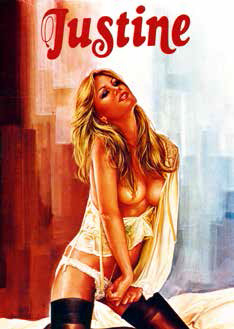
This 1979 composite(aka JUSTINE), supervised by Italian porn king Joe D'Amato [rn: Aristide Massaccesi], is pretty delirious stuff. D'Amato cut Jess Franco's JULIETTE DE SADE (1975), a hardcore starring Alain Petit and Lina Romay, into shreds and then inserted scenes from two other 1975 Franco productions, MIDNIGHT PARTY and SHINING SEX, the former a comedy, the latter a sci-fi tinged erotic fantasy. He then rescored the newly christened Frankenstein monster of a film with cues written by frequent musical collaborator, Nico Fidenco. The result was... I'll be doing an expanded blog on this in the near future.
25 March, 2016
Jess Franco Actress': Who is "Shirley Knight"?
"Shirley Knight/Night" is actually a Croatian actress featured in such Eurocine co-productions as Jess Franco's CANNIBALS/WHITE CANNIBAL QUEEN, Pierre Chevalier's PANTHER SQUAD, Jose Jara's OASIS OF LOST WOMEN, Andrea Bianchi's COMMANDO MENGELE aka Angel of Death. Nzoog has informed me that her real name may be Dragica Steiner.
Commando terrorista (1990) directed by Luis Colombo. With Draguy Steiner,…imdb.com, is an additional credit and alternate name pointed out by Francesco Cesari on the EL FRANCONOMICON Facebook group. Luis Colombo was the DP on CANNIBALS, on which Knight/Steiner also worked. There is also a "Draky Steiner" credited among the production crew of Jess Franco's 1980 EUGENIE, UNA HISTORIA DE PERVERSION. Does anyone know anymore information about her filmography or background? Not sure if she is the same person as "Draky Steiner" (see low quality screen cap below) or if she had anything to do with EUGENIE....
She appears as Barbara Shelton in CANNIBALS/WHITE CANNIBAL QUEEN (1980). There is no further information on her on the IMDB. All the above films were shot at least partly in Spain, but I'm not sure whether or not she is Spanish. Aka Shirley Night.
This image at the bottom of this post is from OASIS OF LOST WOMEN (1982), in which she plays the warden of a tropical brothel where kidnapped women are forced to work. This is another typically sleazy, cheap Eurocine composite with footage included from at least 4 different different films, Jess Franco's OPALO DE FUEGO (1978), Pierre Chevalier's THE HOUSE OF THE LOST DOLLS (1973), another unknown French thriller, Gianpaolo Callegari's 1967 Eurospy AGENTE SIGMA 3-MISSIONE GOLDWATHER, with Jack Taylor, along with newer footage shot by Jara (sometimes credited as John O'Hara) featuring Knight/Steiner and Yul Sanders [Claude Boisson] as the headsof the kidnap ring. The late Francoise Blanchard appears as a kidnapped heroine. Both THE HOUSE OF LOST DOLLS and OASIS... are mixtures of Eurospy and Women in Prison tropes.
Thanks to Nzoog and Francesco Cesari for adding pertinent information.
(C) Robert Monell, 2016
Commando terrorista (1990) directed by Luis Colombo. With Draguy Steiner,…imdb.com, is an additional credit and alternate name pointed out by Francesco Cesari on the EL FRANCONOMICON Facebook group. Luis Colombo was the DP on CANNIBALS, on which Knight/Steiner also worked. There is also a "Draky Steiner" credited among the production crew of Jess Franco's 1980 EUGENIE, UNA HISTORIA DE PERVERSION. Does anyone know anymore information about her filmography or background? Not sure if she is the same person as "Draky Steiner" (see low quality screen cap below) or if she had anything to do with EUGENIE....
She appears as Barbara Shelton in CANNIBALS/WHITE CANNIBAL QUEEN (1980). There is no further information on her on the IMDB. All the above films were shot at least partly in Spain, but I'm not sure whether or not she is Spanish. Aka Shirley Night.
This image at the bottom of this post is from OASIS OF LOST WOMEN (1982), in which she plays the warden of a tropical brothel where kidnapped women are forced to work. This is another typically sleazy, cheap Eurocine composite with footage included from at least 4 different different films, Jess Franco's OPALO DE FUEGO (1978), Pierre Chevalier's THE HOUSE OF THE LOST DOLLS (1973), another unknown French thriller, Gianpaolo Callegari's 1967 Eurospy AGENTE SIGMA 3-MISSIONE GOLDWATHER, with Jack Taylor, along with newer footage shot by Jara (sometimes credited as John O'Hara) featuring Knight/Steiner and Yul Sanders [Claude Boisson] as the headsof the kidnap ring. The late Francoise Blanchard appears as a kidnapped heroine. Both THE HOUSE OF LOST DOLLS and OASIS... are mixtures of Eurospy and Women in Prison tropes.
Thanks to Nzoog and Francesco Cesari for adding pertinent information.
(C) Robert Monell, 2016
04 March, 2016
Eugénie de Sade (1971) location report
Some exteriors of this key Jess Franco title were filmed in West Berlin.
Martin Luther hospital is where Jess Franco's character comes to visit the dying Eugénie after viewing the snuff film reel in the opening scene. Letters on the facade have remained unchanged since the 1970s.
The hospital interiors were in typical Franco fashion represented by a rather anonymous hotel room.
The
spot where Albert Radeck criticises humanity's unwillingness to 'face a
dismal future' (as per the English-dubbed version ) doesn't exist anymore. The scene was filmed on an elevated bridge which has since been demolished. This memorable location can also be seen in the Fanco's earlier film Succubus/Necronomicon.
'Haus der Nationen' shopping centre in Berlin's Kurfürstendamm as seen in a 1960s photo. This is where the murderous Radecks (Paul Müller and Soledad Miranda) go window-shopping when they run into the nosy Attila Tanner, played by Jess Franco)
Access to this
terrace of the 'Haus der Nationen' shopping centre is blocked by an iron
gate now. Presumably in the past the terraces were open to visitors who
could stroll around past the shop display windows and enjoy the views of
the Church of Remembrance and the Kurfürstendamm. This level of the
shopping centre now houses a fitness club.
Kaiser-Wilhelm-Gedächtniskirche (Kaiser Wilhelm Memorial Church) as seen numerous times in the film.
Kaiser-Wilhelm-Gedächtniskirche today
Exact whereabouts of the Radeck residence (both exterior and interior) remain a mystery. According to some sources it's located on the outskirts of Berlin, while others maintain it used to be producer Robert de Nesle's property and is therefore to be found in France.
22 February, 2016
UNE CAGE DOREE (A.M.F. Frank)
Mr.Caramelis (Jess Franco) makes a deal with Mr. Winter (Roger Darton) in the jaw dropping Eurocine composite UNE CAGE DOREE (A.M.F. Frank, aka Marius Leoseur and Jess Franco, 1976)

16 February, 2016
Jess Franco rarity screens at Brooklyn theater....
LikeCommentShare
Thanks to Scott Allen for posting this on the EL FRANCONOMICON Facebook group. I had no idea that this rarely seen 1972 Jess Franco crime film actually had a US theatrical screening, at Brooklyn's volunteer-run Spectacle Theater, last year! I'm wondering if it was a 16mm film print, a 35mm print or a projection of the old French VHS transferred to DVD? Would have loved to be there to find out. Any blog readers attend this or have any additional information? If so, please add it to the comments section below.It did have a showing at the 2009 Jess Franco Cinematheque Francais retrospective. According to El Franconomicon creator Alex Mendibil the 35mm print was vividly colorful and of prime Grindhouse quality....
BTW, LES EBRANLEES aka VIBRATING GIRLS (my favorite alternate title) aka LA MAISON DU VICE aka GIRLS FOR SALE is the subject of a recent photo essay over on our Sister site at http://franconomicon.wordpess.com
(C) Robert Monell, 2016
Thanks to Scott Allen for posting this on the EL FRANCONOMICON Facebook group. I had no idea that this rarely seen 1972 Jess Franco crime film actually had a US theatrical screening, at Brooklyn's volunteer-run Spectacle Theater, last year! I'm wondering if it was a 16mm film print, a 35mm print or a projection of the old French VHS transferred to DVD? Would have loved to be there to find out. Any blog readers attend this or have any additional information? If so, please add it to the comments section below.It did have a showing at the 2009 Jess Franco Cinematheque Francais retrospective. According to El Franconomicon creator Alex Mendibil the 35mm print was vividly colorful and of prime Grindhouse quality....
BTW, LES EBRANLEES aka VIBRATING GIRLS (my favorite alternate title) aka LA MAISON DU VICE aka GIRLS FOR SALE is the subject of a recent photo essay over on our Sister site at http://franconomicon.wordpess.com
(C) Robert Monell, 2016
15 January, 2016
FALO CREST (1987) The Jess Franco XXX Files
An updated review of this outrageous XXX take off on the 1980s US Television show.
Alternate title: CAPRICES SADOS POUR SALOPES DU PLAISIR/Producer: Phalos Films, Madrid/Director: Lennie Hayden [Jess Franco & Lina Romay]/Screenplay: Lennie Hayden, Lowel Richmond [J. Franco & L. Romay]/DP: Terry de Corsia [Jess Franco]/Music: Daniel J. White/Edited by Rosa Maria Almirall [L. Romay]/Agfacolor/Approx. 80m. Widescreen.
Cast: Jane Morgan (Marzan) [Lina Romay], Gina Corrington, Andre' White, Brenda Haven [Elisa Mateo], John First [C.Gonzalez Ordi], Mel Power [A. Bartos Velasco], Linda Ewing [M. Fernandez Moreno, Sado Summers [Jose Miguel Garcia Marfa, Carlos

Quiroga. Also listed in adverts: Fess Parker [!], Lola Falona, Twin Welamy, Wendy Cano, Andrew White, Sigourney Grant. Shooting locations: Benidorm.
One of two parodies of 1980s hit US television series, this one taking off from FALCON CREST. This one is ever-so- slightly superior to PHOLLASTIA, which parodied DYNASTY. There's not as much characterization here and the settings aren't as "upscale" as the other but a nonstop torrent of bitchy, sometimes amusing dialogue, which only Jess Franco could have written, saves this from being just another boring fuck and suck fest.
The ridiculous excuse for a "plot" involves an ongoing conflict within the devious Corrington family and and their feud with the Channings. Both hot to trot families are attempting to gain the rights for aphrodisiac fruit which grows on the inherited Channing estate. The hostess dreams that her guests will drink her mixture of wine and semen. Everyone ends up imbibing and a lengthy orgy ensues. Twosome, threesome, and moresome encounters rule the evening until everyone is drunk on sex and more sex.
The action unfolds in "real" time before and during the party on the Channing properties. Melissa Channing hosts the affair with zest and a clever plot to get the rights signed over to her without any hitches. The orange drink is mixed with "delicious" semen and drunk like champagne as a wife remarks, "It's so embarrassing to see my husband shoot cum in public!" as another woman drinks the spent semen out of a Phallo Crest wine glass. More witty Franco dialogue ensues until the company collapses into a heap of sweaty flesh. Lots of gynecological close-ups of sex acts make up most of the runtime here. Lina Romay's brisk editing does keep things moving....
Neither of the two hardcore spin offs of popular American TV shows became profitable due to the miscalculation of spending too much on professional hardcore actors and the costs of the productions themselves. When they were finally sold the price barely covered the costs and there wasn't a huge audience for what must have seemed like a clever marketing idea.
It should be noted that Angela Channing in the original FALCON CREST TV SERIES was played by Jane Wyman, the former wife of Ronald Reagan, who was President of the United States during most of the series run.
Falcon Crest (TV Series 1981–1990) - IMDb
*1980s era Spanish VHS covers. No DVD releases. Thanks to Alex Mendibil and Ferran Herranz for the images.
(C) Robert Monell, 2015
30 December, 2015
DRACULA VS DRACULA
Dracula and his guest in COUNT DRACULA.BELOW: Dracula's dogs/German Shepherds representing the wild wolves of Transylvania in Jess Franco's EL CONDE DRACULA (1970)
Severin Films new COUNT DRACULA Blu-ray may be my favorite Jess Franco related release by them in 2015. It's not as good a film as VAMPYROS LESBOS (1970), another stunning Severin HD release this year, but seeing it in HD lets us see it as never before possible. An overriding fact for me is the US Home Video debut, also in HD, of Pere Portabella's experimental making of documentary, filmed during the late 1969 Barcelona shoot, is included in the release. This alone makes this a must-have for serious collectors. Followers of Spanish genre cinema, Dracula adaptations, horror film history, international experimental cinema and the parallel careers of Jess Franco and Portabella are given a convenient way to compare and contrast two very different works by two very different filmmakers on the same subject.
Franco and Producer Harry Alan Towers set out to make a faithful adaptation of Bram Stoker's famous late 19th Century novel. With an enthusiastic Christopher Lee, Hammer's Dracula, on board everything should have went right. But what remains is problematic as a "Jess Franco film", a horror film, a DRACULA adaptation. As horror historian David Del Valle notes in his detailed commentary, Franco "did" DRACULA with the later VAMPYROS LESBOS, a supposed adaptation of another Stoker story.* For my taste, both DRACULA CONTRA FRANKENSTEIN and LA FILLE DE DRACULA (1971), featuring Howard Vernon as a shriveled, cartoon Dracula, are closer to the mark. Why is this?
My introduction to the film was via a local television broadcast in the mid 1970s. I was a confirmed fan of the Hammer Dracula's, especially HORROR OF DRACULA (1958) and DRACULA PRINCE OF DARKNESS (1965), which also featured Lee as a much more athletic Count than he is in Franco's film. I had already heard of Jess Franco by reading a men's magazine article in the late 1960s about his notorious X rated (in America) SUCCUBUS [NECRONOMICON] (1969). But it would be at least another decade before I would see that on a poor VHS dupe. After viewing COUNT DRACULA I wasn't anxious to see another Jess Franco film any time soon. It started with those damn German Shepherds standing in for wolves of Transylvania, first seen during the coach ride where Dracula drives Jonathan Harker (Fred Williams) to his castle. That everything was painfully out of focus didn't help. It seemed a poorly photographed, rushed, cheap production, carelessly planned and, at best, routinely directed. And it didn't follow the promise of the title card that the story would be told exactly as Stoker did. Sometimes exact faithfulness is not the way to go. NOSFERATU (1922), the classic silent version directed by F.W. Murnau, is most interesting in the way it departs from the novel. Max Schreck as Count Orlok looks nothing like the king vampire described in Stoker's prose. Orlok resembles a rodent which has someone taken on human shape. That look is continued with the appearance of Klaus Kinski in Werner Herzog's 1979 remake, although the actor adds considerable pathos to the character. The full title of the Murnau film, NOSFERATU: A SYMPHONY OF HORROR correctly states its tone, pacing and texture. It's a piece of melancholy music suffused with dread, illustrated by Expressionist compositions. Tod Browning's 1931 DRACULA, based on the hit stage play, is as static as an over rehearsed theater piece, but Bela Lugosi is hypnotic in the lead, even though the second half trails off into soporific dialogue scenes. It too has a musical quality, struck in the opening strains from Tchaikovsky's SWAN LAKE. Browning may have had a more suggestive, subtle cinematic work in mind if one considers some of his later statements, and Universal recut the picture, shortening it. Jess Franco, working with Lee in the title role, worked with producer Towers, to stay with the novel's description of the Count, and he's a rather sad antique, albeit a deadly one, who talks nostalgically of the history of his family and homeland. His white hair and moustache in the early scenes conform closely to Stoker's original description and as the film proceeds the hair turns black as he gorges on a series of victims. The blood is the life and reverses the aging process. But he's never as menacing as
Schrek, Lugosi or the swashbuckling Dracula in the Hammer films starring Lee. Severin's HD presentation gives the film greater sharpness and more enriched color than all previous home video releases. The high definition detail is extraordinary and focuses attention on the very artificial looking cobwebs seen throughout the castle, the overhead wire mechanism which drives the bats and makes the suddenly revived stuffed animals which the heroes encounter at one point seem less menacing than ever.
Franco's famous crash zooms seem to be utilized for mere convenience, to avoid the time it would take to do additional set-ups, rather than the space-collapsing devices which give such films as DRACULA CONTRA FRANKENSTEIN a compellingly abstract, almost post-modern quality.The jarring telezooms into coffins, landscapes and objects seem to announce a personal stylistic choice in that film rather than a cost and time saving measure, although they probably were also used for that reason. Hammer's Dracula films always looked lush and more well resourced than they actually were, EL CONDE DRACULA looks rather tattered in comparison. The obviously fake boulders thrown onto the gypsy caravan and the burning of Dracula in his coffin throw us out of the movie at a crucial moment. The film ends in a flurry of more shaky telezooms.
The brooding, symphonic, urgent Bruno Nicolai score creates most of the atmosphere throughout and makes up for the visual awkwardness of many key scenes. The living dead girl manner of Soledad Miranda is electrifying in the scenes she shares with Lee and provide memorable frissons. Franco himself seems rather dispirited in his appearance as the clinic employee. Perhaps that's because the director himself was becoming deeply disillusioned with his work for Towers, the film's co-writer and co-producer. Franco was obviously becoming frustrated and bored as an employee of the Towers film factory. Just compare his energized presence as the inquisitive writer in EUGENIE DE SADE (1970), made just before this film and without Towers overseeing the production as writer-producer. It comes as no surprise that COUNT DRACULA would be Franco's final directing job for Towers.

The factory process of commercial filmmaking in Spain during the horror boom would become an even more interesting subtext in Portabella's intriguing experimental documentary on the making of EL CONDE DRACULA.
Franco struggled to make a personal film while remaining true to the source material, but Portabella's unique film deconstructs both the final product and workaday production of it. Franco did bring considerable artistry to the final product but CUADECUC-VAMPIR, opens up the actual shoot, infuses it with an eerie, abstract poetry and provides another subtext, that of making a commercial horror film on an iconic subject in late 1960s Spain still ruled by the dictator Francisco Franco. Spain welcomed international film productions in the 1960s as a way of increasing cultural exchange, boosting an uncertain economy and bringing foreign investment in the national coffers. Parts of DR. ZHIVAGO and Sergio Leone's wildly successful Spaghetti Westerns used Spain's desert and mountain regions as a ready made exotic backdrop. Costs were low there and the locals were grateful to get steady work on US, Italian and other co-productions. Portabella, who had produced Bunuel's notoriously banned (in Spain) VIRIDIANA (1961) had already rattled the authorities there, and he was much more subversive in every regard than EL CONDE DRACULA's director at the that time, although when Franco later cut himself loose he would evolve into a master of subversive genre cinema from the 1970s onward.

ABOVE: Not produced by Hammer Films, of course, but an interesting mistake.
Portabella shot his film in high contrast black and white, sometimes the image goes into negative, creating a further sense of unreality, projecting the footage of the shoot into an alternate dimension. It chronicles the shoot in roughly sequential order but selects key scenes and then shoots them simultaneously to the actual production from different camera angles, sometimes revealing the cast and crew (including Jess Franco) as they go about their work. Soledad Miranda looks directly into Portabella's camera and flashes a demure, somewhat chilling smile. Christopher Lee mugs for the camera and seems to be having a good time on the set as he reaches out toward Portabella's camera as if to grab it while a jarring sound is heard on the soundtrack. Most importantly, Portabella, like Murnau, understood that the story of Dracula was best told without words, the stumbling block in the Lugosi version. The best moments in the Hammer Dracula's were the wordless moments of menace just before and during the appearances of Lee's Count. It should be noted that Franco's DRACULA CONTRA FRANKENSTEIN contains no dialogue during its opening scenes and most of of its runtime. What dialogue there is is functional, delivered with dispatch and minimized by the director and actors.
The use of sound is quite unusual and distinctive. Most of the footage is either silent or appears with music, loud crashing sounds, creating a soundscape which operates in counterpoint to the images. Footsteps are heard but they don't quite synch up with the footfalls in the scene, a train is heard but it doesn't seem to be the modern one seen suddenly cutting across the screen. The arrival of Harker by coach in Transylvania is here scored with disturbing crashing sounds while the arrival a 1960a black American sedan, delivering Maria Rohm on set clad in a stylish floppy hat, leopard skin coat and movie star sunglasses is accompanied by dreamy jazz.
The black and white images have a very grainy texture, enhanced by the 1080 HD resolution. A very different version of the novel unfolds in Portabella's footage, one which somehow is much closer to the tone of the original prose than Jess Franco's finished version. Capturing a sense of dread between the shots of the actors in informal groupings or preparing for an imminent shot. The final scene bursts into synchronized sound as Lee reads the final lines of the novel, in which the destruction of Dracula is described. Set in the actor's dressing room, he addresses the audience directly, speaking of the economy of the prose and notes some of the descriptive details. The destruction of Dracula in the is, of course, quite different, replacing it with the burning of the Count in his coffin after which the body is dumped over the castle walls. The staging, shooting and editing of the scene leave much to be desired and one is struck by how simple and superior the actual ending is as Lee reads them in his resonant voice. He then closes the book and stares into camera for an unnervingly long time before Portabella is heard calling, "cut"! Those few lines are really all that is needed to make an effective closing scene. Lee and Portabella obviously had a much better sense of the what made the novel so haunting and memorable than did the writer and director of EL CONDE DRACULA. That's why this HD release of both films is so essential for those interested in the novel, the history of Dracula films, Spanish horror, experimental cinema and the career of Jess Franco.
(C) Robert Monell, 2015
14 December, 2015
ANNUAL POLL: Best Jess Franco DVD/Bluray releases of 2015
Looking forward to another years of varied, surprising HD releases including DAUGHTER OF DRACULA, SHINING SEX, COUNTESS PERVERSE, to name a few....
DVD - Erotico
Justine - Una Minorenne Deliziosa
This product was added to our catalog on 11/06/2015.Regista: Jesus Franco |
Subscribe to:
Posts (Atom)


