29 March, 2007

"Touch" Connors in Jess Franco Collection Vol. 2?


Jess Franco Collection Vol. 2

our price: £23.99 Delivered
availability: Due for release on 21/05/2007

RRP: £29.99 You save: £6.00 (20%)
Review

Anchor Bay presents The Jess Franco Collection 2, a selection of his best works now available together with digitally re-mastered picture and sound. Experience Downtown Heat, Down Town, Macumba Sexual, The Story Of O, Inconfessible Orgies of Emmanuelle and The Mansion Of The Living Dead as never before, with brilliant colours, clear sounds and technical perfection surpassing the originals by far.
Technical Details

Certificate 18 years and over

Screen Widescreen 16:9

Languages Dolby Digital (2.0) Stereo

Region Region 2 - Will only play on European Region 2 or multi-region DVD players.


The above is from play.com re: The Jess Franco Collection Vol. 2, reportedly coming from Anchor Bay UK. I'm trying to dig up some more specific info on this set. Titles include MACUMBA SEXUAL, MANSION OF THE LIVING DEAD, ...ORGIES OF EMMANUELLE, SEXUAL STORY OF O, DOWNTOWN, DOWNTOWN HEAT. A mixed bunch of Severin releases along with the 1975 Erwin Dietrich produced crime film. Surprised to see the 1990 French-Spanish coproduction DOWNTOWN HEAT in there. There is also the separate Severin Films US DVD release of SEXUAL STORY OF O and ORGIES OF EMMANUELLE scheduled in April. Looks like another busy year on the Jess Franco DVD front already.

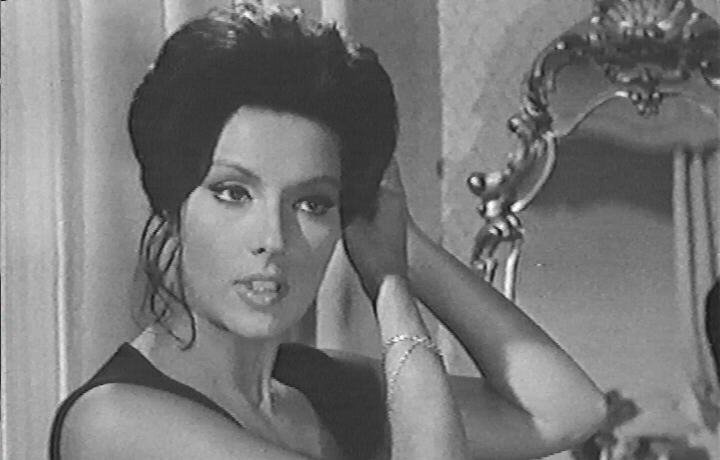
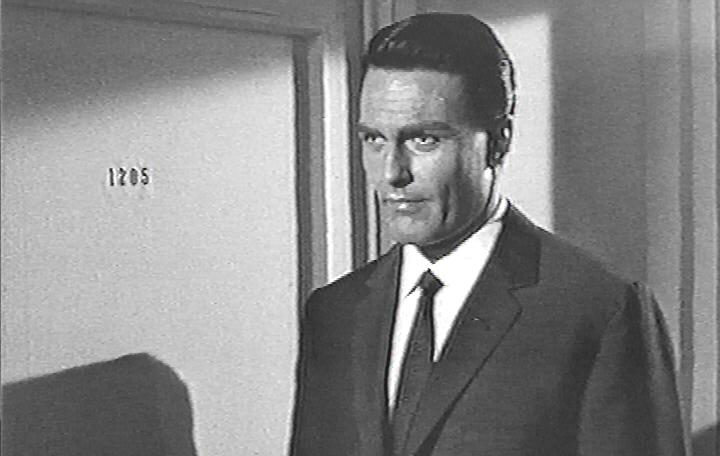
A rather glossy production, DOWNTOWN HEAT is a gritty and pretty interesting crime flick. Mike "Touch" Connors is featured as a special agent out to bust Eurocrime Lord Radeck (Craig Hill). Connors, who started his career in such Roger Corman B film entries as the WIP SWAMP WOMEN, is his usual hard edged self and gives everybody hell.

"Touch" may be pissed if it all turns out to be a mistake. And you don't want to deal with a pissed off "Touch" Connors.

Any additional information or updates on this release will be much appreciated.

(c) Robert Monell, 2007

28 March, 2007

Jess Franco's MACBETH?


"I've also got this Macbeth in mind, in which an amateur theatrical troupe are rehearsing the play in a theatre until the power of the tragedy starts to take over and they begin to act for real."

A quote from a recent interview with Jess Franco published in the Barcelona leisure guide "Guia Del Ocio" [n.158]*

Interesting that Franco also mentions making a new version of the classic "Medea" set in the present era. He also has been working on [circa 2005] his "Nathaniel Hawthorne" project, THE HOUSE ON TOP OF THE CEMETERY. He described this last project (not to be confused with Lucio Fulci's 1982 Lovecraftian HOUSE BY THE CEMETERY) to me in some detail during a phone conversation in 2005. His ideas sounded pretty exciting. I hope it works out. I'm still not sure, though, on WHICH Hawthorne story he has based this project!*

Why is Jess Franco taking on such heavy duty literary projects at this stage in his long career? I think it has something to do with his relationship to his favorite director, Orson Welles. Welles directed his own low budget MACBETH in 1948. Maybe even more to the point is the fact that Jess Franco was second unit director on Welles' CHIMES AT MIDNIGHT (1965), and helped stage the famous battle sequence, often praised as one of the best ever filmed. I find that CHIMES... only gets better over the years and strikes me as the best-ever Shakespeare adaptation simply because of the creative risks it takes with the Bard's works, composting several major plays with bits of Holinshed's Chronicles. Welles' gives his most moving performance as the tragi-comic Falstaff, the role he was born to play. Welles' interpretation stresses the relationship between age and play. Falstaff is the eternal child, who despite his advanced age leads Prince Hal astray until the young man has to assume the role of King. Childhood's end is perhaps the great Welles theme, or one of them. It also may be one of Jess Franco's less examined preoccupations, playing a large role in EUGENIE (1970), AL OTRO LADO DEL ESPEJO (1973) and BROKEN DOLLS, three of his best films. The adventure (and terror) of growing up is in all of his films from WE ARE 18 to SNAKEWOMAN.

Let's all pray that the complex rights issues can be cleared so we get a decent R1 DVD of CHIMES AT MIDNIGHT sooner than later. The Spanish DVD is simply unacceptable in terms of video quality and sound.

"Macbeth" may have been a primary source of inspiration for the Santiago Moncada scripted LA ESCLAVA BLANCA, a microbudgeted jungle yarn Franco made in 1985. And, of course, the sometimes magnificent BROKEN DOLLS is shot through with elements from KING LEAR and THE TEMPEST. In any case, Franco's MACBETH, with the play taking over the actors, has a Rivette-like** resonance, also evoking Ronald Coleman in George Cukor's A DOUBLE LIFE. "Macbeth" has been filmed an unlucky 13 times since 1916.

We'll have much more to say about the complex relationship between Shakespeare, Orson Welles and Jess Franco in future blogs.

* This eventually was completed and released as the two part CRYPT OF THE CONDEMNED (2012).

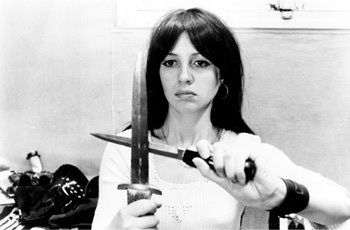
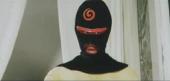
**Image at the top of the blog from Jacques Rivette's OUT ONE (1970).

Thanks to Nzoog Wahrlfhehen for providing the reference and translation.

(c) Robert Monell, 2007

23 March, 2007

BLACK EMANUELLE'S BOX: Continued


Just to clarify my comments concerning the runtime of EMANUELLE AROUND THE WORLD. The soft version included in the boxset is a legitimate release version and complete in that regard. I'll be covering Severin's DVD of the XXX Euro version but it must be noted that, as with Jess Franco's LA COMTESSE NOIRE, a non hardcore version was shot for some markets and a XXX cut prepared for other territories. I should note that these are the only versions I have seen to date, there may be more out there.

As illustrated by the above collage the two D'Amato directed features are presented with the original US release adverts on the covers, while the CD is illustrated with the original vinyl EMANUELLE NERA cover. Giuseppe Vari's SISTER EMANUELLE is presented with a promo still of Laura Gemser in her shocking white nunsploitation gear with Euro-hottie Monica Zanchi (EMANUELLE AND THE LAST CANNIBALS) kneeling before her in birthday suit. I wish the film itself were as provocative as the DVD cover.

Shot entirely in Italia, SUOR EMANUELLE suffers from the loss of D'Amato as its director/cinematographer and especially from the lack of another deliciously quirky Nico Fidenco soundtrack. This DVD has the same specs as the other two and is a nice transfer from almost pristine elements. It's nowhere near as deliriously colorful as the other two, but that's because DP Gugliemo Mancori had mostly dreary castle interiors to light. This one is best watched in Italian with the English subtitles on since all the action takes place either in Venice or the castello doubling as a school for wayward girls. Note that the castello is the same location used in BLOODY PIT OF HORROR and numerous other Italian horror films of the 1960s and 70s. The real problem with this film starts with Mario Onorati's script which has Emanuelle suffering for her past "sins" under the watchful eye of the stern mother superior, who chides her for such "blasphemies" as not wearing her "chastity" undergarments. You don't want to have Emanuelle stuck in this situation for the entire runtime, although they do come up with a DEAD OF NIGHT style twist to liberate her at the end.

With the exception of some erotic flashbacks, showing how Monica Zanchi got there (for seducing her stepmom), everything which occurs is rather dull and predictable. Ms. Zanchi does heat up the proceedings by having close encounters with everyone in sight, including an escaped convict (a very welcome Gabriele Tinti), but one longs for the wilder international adventures and exotic tone of the D'Amato Emanuelle entries. It's all shot from absolutely static camera positions which leave one wondering why Vari and Mancori didn't bother to compose an occasional inventive image to create some visual interest. The energetic wind and percussion cues of maestro Stelvio Cipriani try hard but just can't make up for the absence of one of Fidenco's infectious Emanuelle themes. His work is craftsmanlike but it's not one of Cipriani's more memorable scores. This one is all by the numbers.

Four deleted scenes in Italian language only, featuring brief glimpses of hardcore action performed by body doubles for Gemser and Zanchi, are included. But even if they were inserted into the feature it wouldn't help much. One is appreciative that they are available here even if the very soft picture quality (are they sourced from an Italian vhs?) is way below the quality of the feature print. The English language theatrical trailer, letterboxed and in good quality, is also included. All told, this is an excellent presentation of one of the lesser Black Emanuelle titles. It just confirms that Bitto Albertini and D'Amato were really the prime movers of this series.

Also included as an extra are an array of postcard sized Italian adverts for the features. They're colorful and fun to look at. It's all packageed in an appropriately black box which features a glossy image of the sultry Ms Gemser staring out from a window cut out of the gatefold cover. The cover opens up to reveal her svelte torso, nude from the waist up. It's a great cover and a terrific boxset. I await Vol. 2 with high hopes. By my count, Gemser made at least eight Black Emanuelle films between 1976 and 1983 so there's a lot of material to choose from out there.

As stated before Severin's separate disc,the XXX Euroversion of EMANUELLE AROUND THE WORLD,contains several scenes of hardcore action. They involve scenes of group sex and two instances of bestiality. I'm not going to describe them in detail, you'll have to discover them for yourself. The do appear to have been shot at the same time as the feature as altenate footage for a version intended for select adult markets. They are just XXX extensions of scenes already in the soft version and they really don't add much to the film except for 4 or 5 extra minutes. It will be of some value to Eurocult collectors and D'Amato completists. Laura Gemser wasn't directly involved in any of the hardcore footage. In any case, she always had a body double for hardcore scenes where her presence was implied. Any information or comments on the variances between these two versions of EATW is very welcome in the comment section below. This is my first exposure to both versions. It might be interesting to come up with some suggestions for a Vol. 2 BLACK EMANUELLE Box.

(c) Robert Monell, 2007

22 March, 2007

Review: BLACK EMANUELLE'S BOX, Vol.1


"I was looking for happiness, but I got lost." Laura Gemser in EMANUELLE PERCHE' VIOLENZA ALLE DONNE?

"Come...with Emanuelle," invites the heavy-breathing male narrator on the vintage Jerry Gross Organization US trailer for Joe D'Amato's EMANUELLE AROUND THE WORLD. It's just one of the delightful and pertinent bonus materials on Severin Films BLACK EMANUELLE'S BOX Vol. 1. It's especially eye opening when considering the splice-ridden, blurry trailer vs. the gorgeous new transfer that Severin has given the original EMANUELLE PERCHE' VIOLENZA ALLE DONNE? (1977). After viewing two of the discs and listening to the CD compilation containing three Nico Fidenco "Black Emanuelle" scores, GETTING DOWN WITH BLACK EMANUELLE, my immediate reaction is that this 4000 Unit Limited Collector's Edition box is already a candidate for one of the 10 Best Eurocult DVD's presentations of 2007...and if you are as much of a Joe D'Amato/Nico Fidenco/Laura Gemser fan as myself then it's Christmas in March.

Given the amount of material included on the four discs, along with my preference for shorter to medium blogs rather than epic-length ones, I'm going to split my look at this LE boxset into two separate blogs. First of all, I do appreciate someone at SEVERIN having the wit to call it BLACK EMANUELLE'S BOX, given what we all "think" these films are about. Excellent transfers have become expected from Severin and they continue to dazzle at least myself with these revealing transfers of EMANUELLE IN BANGKOK (1976) and EMANUELLE AROUND THE WORLD (1977). They present convincing new evidence of the multifaceted talents of both the late, prolific and always underestimated Joe D'Amato (rn: Aristide Massaccesi, which he uses in both of these features as his DP credit, more about that later) and the Prince of eccentric Italiano cult music, singer-composer Nico Fidenco.

First, some history: my introduction to Joe D'Amato and the "Black Emanuelle" series came during a 1977 theatrical showing of EMANUELLE IN BANGKOK (US title) which I attended at the Hollywood Theater in Syracuse, NY, one of those old brick and mortars which specialized in showing cult films like George Romero's MARTIN and the ISLA films at Midnight on Saturdays. I paid my one dollar [!...those were the days] admission and expected a repeat performance of the 1974 French film EMMANUELLE, which I had seen and reviewed in a local newspaper a year or two before. What I hadn't realized was that Italian director Bitto Albertini has created the "Black Emanuelle" character of Mae Jordan/Emanuelle in EMANUELLE NERA, his 1975 exploitation of the French film, which became a surprise hit in the US, playing in much more mainstream venues than dollar Midnight movie houses. I found the French EMMANUELLE to be a rather pretty (in terms of cinematography and locations) bore. In other words a pretty stupid X rated film to which I took my girlfriend after we had a few too many one rainy Sunday afternoon. I can't even remember why on earth we went to see EIB a few years later except that it WAS Saturday Night and there had probably been more liquid persuasion. EIB seemed gritty, grungy and much more disgusting (the mongoose and cobra scene sent my girlfriend out of the theater). And, of course, this Emanuelle was a person of color whom I somehow found much more real and appealing than Sylvia Kristel. Of course, the Italian Emanuelle films aren't really related to the French, Spanish (some by Jess Franco), Asian and US films with the name Emanuelle in the title. Joe D'Amato himself makes clear in the Eurofest interview included as an extra on this set that Albertini, himself and Italian colleagues made sure the character's name always was spelled with one M rather than two, like the French heroine's in the competing series based on the novel by Emmanuele Arsan.


In EMANUELLE IN BANGKOK the globe trotting, sexually available photojournalist has somewhat evolved from the kinder, gentler mold in EMANUELLE NERA of the previous year. D'Amato was a much more innovative and daring director than Albertini and gave the character and action a harder edge, including sequences of graphic sex, rape and violence. This would reach its apex in the notorious entry EMANUELLE IN AMERICA (already out in a deluxe DVD ed from BLUE UNDERGROUND). EIB (onscreen title: BLACK EMANUELLE EN ORIENT) is much milder, almost a lighthearted international sex romp compared to ...AMERICA or the other D'Amato directed Black Emanuelle flick in this set, EMANUELLE AROUND THE WORLD. Set in the sprawling Thai metropolis D'Amato doesn't shrink from presenting the crushing poverty of most of the residents seen in the background, and sometimes foreground. There is a lot of handheld, strikingly framed cinematogrphy, none of it is pretty but all of it is extremely effective in efficently setting the tone and atmosphere of its exotic locations without ever relying on "tourist shots" of easy, photogenic targets. D'Amato always admitted that he was a DP first and foremost who just happened to get into producing and directing. The fact that he was the DP on his best films is what often gives them their only distinguised quality.

Voyaging to Bangkok from her New York City base with an achaeologist friend (the late Gabriele Tinti, who was married to Gemser from 1976 to his death in 1991) the credits detail their oceanliner trip by amusingly intercutting them having sex with the movements of the giant pistons driving the ship's engine. There are a lot of canted camera angles of the local architectural wonders and a general sense of fun as a swinging Republican US Senator (are there any other kind?) and his bimbo wife (FIVE DOLLS FOR AN AUGUST MOON's Ely Galleani) join into the sexual hijinx in between encounters of the sleazy kind with local strippers who get into dripping hot candle wax and projecting ping-pong balls from unlikely places... you get the idea.

A strong supporting cast includes the late Ivan Rassimov (charmingly saturnine as always) as the mysterious local politician who gets Emanuelle involved in a plot for a coup, making her the target of a group of thugs who try to change her mind by raping her and then being nice! This, of course, would all be wildly politcally incorrect in today's pop culture and maybe that's part of its fascination. The fact that corrupt US officials are played by such prolific Italian Eurocult regulars as Giacomo-Rossi Stuart (the hero of Bava's KILL BABY KILL!) and Venantino Venantini somehow keeps reminding us that this is after all mid 1970s European Trash Cinema. The action moves to Morocco, where Emanuelle gets involved with more group sex and near rape scenarios. Toward the end Chris Avram (BAY OF BLOOD) shows up as a writer who tries to impose a philosophy on the entire affair.

Severin has given EMANUELLE IN BANGKOK another of its impecabbly detailed and colorful transfers which one has to only compare in terms of resolution and luminousity to the original vintage theatrical trailer to see how much work has gone into this restoration. The 1:85.1/16X9 transfer from generally very good elements (excluding a somewhat lower resolution opening credits sequence and a few fleetingly visible scratches) would probably surprise even its late director. It's the absolute best this feature has ever looked or will look.

As with the other two Emanuelle features in the set, both the Italian and English language tracks are available, along with removable English subtitles. The Dolby Digital presentation of the Mono tracks has remarkable presence and gives the wonderful Nico Fidenco score a chance to assume its primary place over the admittedly risible dialogues. I would recommend watching both of the D'Amato Emanuelles in English with the Italian subs on. It's nice to have the Italian track there but since these films are set initially in the US and have an American main character who interacts with English speaking Europeans and Asians the Italian track sounds strained and artificial in comparison

Along with the original trailer a 12m video interview camcorded at the 1995 Eurofest Convention is included wherein the modest D'Amato is questioned by Mark Ashworth and Adrian Smith. A very genial and laid back D'Amato answers questions about his work. The credits list this as his only English language interview. The video/sound quality is admittedly substandard but watchable, providing some insight into the character of this often misunderstood auteur. Interestingly, the opening and closing credits for EIB and EMANUELLE AROUND THE WORLD are in French, obviously indicating these elements originated in France.

EMANUELLE PERCHE' VIOLENZA ALLE DONNE? (onscreen title: LE VICE DANS LA PEAU) is another D'Amato-directed Black Emanuelle item from 1977, and is more along the lines of the same year's EMANUELLE IN AMERICA in terms of its presentation of scenes of extreme sexuality and violence against women. EIB has its rape scene but this entire feature is built around the concept of rape and sexual slavery as a shameful underside of a societal perversion which thrives on the sexual exploitation and control of women, especially "liberated" women who dress provactively, are intelligent and travel without escort. Once again, top US government officals along with various underclass rapists are part of a worldwide plot involving the abduction of female tourists who are then sent to work in brothels in the Middle East and Asia.

Emanuelle arrives in San Francisco (after having a go with a truck driver in the back of his rig) to investigate and expose the operation. She is greeted by a local journalist (international sex sensation Karin Schubert) who wants "the most famous photo-journalist in America" to help her indict the white slavers. Schubert is brutally raped by the ring's enforcers which only makes Emanuelle more determined. Stopping over in Bombay she meets a world famous Indian guru (frequent D'Amato actor and sometimes screenwriter "George Eastman" rn: Luigi Montefiori), whom she quickly beds and just as quickly exposes as a philosophical and sexual fraud. Moving onto Rome, the Far East and back to New York D'Amato unleashes one gorgeous long lensed impression after another of the exotic locales while allowing Fidenco's increasingly odd musical cues to provide audio counterpoint. The repeated use of Fidenco's song "A Picture of Love" performed in High Bubble Gum style by FIRE FLY has to be heard to be believed, and once you hear it there'll be no forgetting it! I mean that in the most fun sense. But EMANUELLE AROUND THE WORLD is serious stuff when it comes to sexual violence. The sequence involving the sexual humiliation and gang rape of "Miss Ohio", orchestrated by a group of powerful US Senators as "punishment" for her gambling debt, is truly jaw-dropping and takes on a prescient quality in light of high profile news stories of the last few years. D'Amato seems both appalled and a bit amused that the liberal press, with the New York City based Emanuelle as its representative, is ultimately unable to change the system of representation, although she does get some of those responsible (including, in an amusing cameo, D'Amato himself) busted.

The transfer of EMANUELLE AROUND THE WORLD is also 1:85.1/16X9; DD, Mono; English and Italian tracks available, with optional English subtitles. It seems a bit soft during the opening credits before exploding into the most breathtakingly colorful transfer of the set. Resolution and detail are just amazing throughout and the original French elements couldn't be more luminously beautiful. Check out the glowing emeralds, deep ocean blues and hot crimsons of the Bombay guru's palace interiors and tell me if the color and definition isn't as good as any contemporary big budget Hollywood feature film showing at any theater in the US.

Curiously, the EATW disc clocks in at just over 97m, about five minutes short of the 102m listed on the back of the box. I'm sure we'll read more about this elsewhere. Also, I haven't yet seen the XXX Euroversion, but I'll attempt to report any variations after I see it later. It's also has a 102m runtime listed on the back of its box. Remember, this disc is NOT going to be included as part of the boxset. I'm not an expert on this particular title, so if someone can clear up the correct original runtime of the non XXX version please feel free to to do in the comment section below.

The inclusion of a CD compilation of 25 Fidenco tracks from three separate Black Emanuelle features mark the EMANUELLE AROUND THE WORLD double disc as the motherlode of the boxset and worth the price of admission. There are nine cues from EMANUELLE NERA (although the film itself is not in the set), eight from EMANUELLE NERA ORIENT REPORTAGE along with another eight from EMANUELLE PERCHE' VIOLENZA ALLE DONNE? The outre lyrics ans music is all composed and orchestrated by Fidenco and conducted by Giacomo Dell'Orso. The singers BULLDOG perform track 5 "Off Your Body" while SILKY SOUND SINGERS perform "Sweet Living Thing" and "Like a Sailing Ship" is tones that can best be termed...silky.

The coup de grace for me on this double disc, though, is the bonus feature BLACK EMANUELLE'S GROOVE: Interview with Composer Nico Fidenco. For a Euro music collector like myself this is a jam packed 13 minutes of pure joy. Fidenco appears as a impeccably dressed lounge master who, vinyls of the three scores in hand, rapidly and hypnotically takes us through his 40 year and still going career as a songwriter, composer and performer. He's a compulsive talker, charming, self effacing, insightful about his peers. He brackets his work between "technical" assignments like his first score (at the behest of RCA) for the mid 60s Spaghetti Western IN A COLT'S SHADOW and his crazier cues for the 1980s gorefest ZOMBIE HOLOCAUST. He also manages to detail his approach to composing soundtracks for sex films, citing his attempts to present a romantic leit-motif or theme which is then repeated to soften the eroticism and violence. He underlines his basic philosphy as a kind of anti-orchestral minimalism, noting: "When an erotic scene plays to a very sweet, romantic soundtrack, it loses its morbid character." Viva Fidenco! GETTING DOWN WITH BLACK EMANUELLE also comes with a very informative and helpful program insert listing the tracks and their timings. It's illustrated with the original vinyl covers. Fidenco also finds time to squeeze in discussion of his personal memories of D'Amato, Gemser, Ennio Morricone among others. This guy can really TALK!

If all the above weren't enough there is still the fourth disc on this set to consider, the very different in tone SISTER EMANUELLE, also featuring Laura Gemser in the title role. This is directed by Giuseppe Vari and scored by Stelvio Cipriani, a fact which, as we shall see in our next blog, makes a crucial difference. We'll also be considering more of the special bonus features included in the set along with the separately released Severin disc, the XXX European version of EMANUELLE AROUND THE WORLD. Stay tuned...

(c) Robert Monell, 2007

18 March, 2007

Godard's Magnum Opus on R2 DVD


Even Bela Lugosi can be found in Jean Luc Godard's epic collage, HISTORIE(S) DU CINEMA...

"Godard, Bunuel, Fritz Lang, they're not outmoded..." actress in SUCCUBUS discussing trends with Jack Taylor.

Jean Luc Godard is identified as a primary influence by Jess Franco not only in the dialogue of NECRONOMICON/SUCCUBUS but also in his recent interviews. Godard's massive "documentary" HISTORIE(S)DU CINEMA (1989-2004) will be available on FR PAL R2 DVD [with English subtitles] March 20, 2007 from Gaumont. It is a 4 disc boxset containing the documentary and three major featurettes.

Layered with images from films of all genres from all over the world, HISTORIE(S)... represents a cinephile's paradise. A challenging intellectual and sensual matrix which signals something of a paradigm shift in the art of categorization and commentary. It's been called Godard's testament on the evolution of cinema from the silent era onward in his unique personal essay format.

It will be interesting to see if this surfaces on R1 DVD anytime soon.

We'll be rotating screenshots from this amazing work at the top of this blog as a slideshow for the next few days...

www.dvdbeaver.com/ Amazon Fr HISTORIE (S) DU CINEMA

(c) Robert Monell, 2007

17 March, 2007

LA BRUJA: DVD


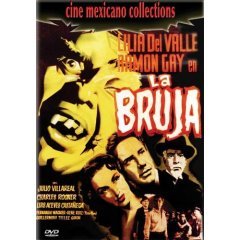
We've discussed the influence of the films of the prolific Mexican director Chano Urueta (1895-1979) on the career of Jess Franco in a previous blog. Urueta made over 100 films in many genres between 1928 and 1974 and is probably best known in the US for his ultra-bizarre THE BRAINIAC [EL BARON DEL TERROR-1962], which is now out in a superior CasaNegra DVD presentation along with his 1960 THE WITCH'S MIRROR. We also look forward to a future CasaNegra edition of THE LIVING HEAD (1961). Urueta was also an actor who appeared as bandidos in Sam Peckinpah's THE WILD BUNCH (1969) and BRING ME THE HEAD OF ALFREDO GARCIA (1977). One assumes that Chano and Sam got along famously. Urueta's 1954 THE WITCH (LA BRUJA) is also out on DVD from Phoenix: Cine Mexicano Collections. This 2005 disc is in Spanish language only and not as impressive as the CasaNegra DVDs. The image is fullframe and not exactly in High Definition in terms of sharpness, detail and contrast. It is quite watchable but makes one wish this fascinating item will be considered as a future CasaNegra release.

Urueta hasn't quite achieved the kind of critical reputation of his colleague Fernando Mendez (EL VAMPIRO-1957) but at his best this reliable journeyman can conujure up a delirious Primitivism. Just as THE WITCH'S MIRROR has many parallels with Franco's GRITOS EN LA NOCHE (1961), probably coincidentally since it wasn't released until after GRITOS was produced, LA BRUJA uncannily anticipates the surgical horrors of MISS MUERTE (THE DIABIOLICAL DR. Z-1965). Dr. Boerner (Julio Villarreal) transforms a facially deformed woman (Lilia Del Valle) into a beautiful seductress who lures several men responsible for the death of the Doctor's daughter to their doom. The character of La Bruja is a kind of composite of the disfigured female scientist (Mabel Karr) and the seductive nightclub perfomer (Estella Blain) in MISS MUERTE.

The basic idea of a sexy enchantress murdering a group of scientists whose intolerance resulted in the death of a mad doctor's loved one also resonates in Franco's later Soledad Miranda vehicle SHE KILLED IN ECSTASY (1970). Urueta's film is in some ways even wilder as he includes a cult of black robed beggars, drawfs and assorted freaks who aid in the elaborate vengeance scheme from their subterranean temple dressed with human skulls, stuffed animals, occult symbols, along with numerous macabre details in Urueta's outlandish mise en scene. The Tribunal of the Night sequence is a surreal highlight with elements from Fritz Lang's M and the 30s Lugosi serial RETURN OF CHANDU woven into the plot and visual design. The scientifically manipulated "ugly woman" would be a recurrent feature in other Mexican films (the markedly inferior John Carradine Mexican excursion LA SENORA MUERTE-1968) as well as many 50s and 60s Eurohorrors (notably the fumetti inspired SATANIK).

LA BRUJA really deserves the kind of deluxe DVD treatment, complete with English subtitles, that other Mexican fantasy films are finally realizing.

(c) Robert Monell, 2007

13 March, 2007

Jess Franco makes IMBD Bottom 100 list...


For a film which he provided the original story and was set to direct before French Erotic-Vampire-Movie specialist Jean Rollin was called in to helm when Jess didn't show on the first day of shooting. Yes, it's the immortal ZOMBIE LAKE [LE LAC DES MORTS VIVANTS] the 1980 Nazi-Zombie stomp which is so bad that it's... well, not good but kinda fun.

The IMBD poll places it at #98 out of 100. These are the worst films of all time according the the IMBD reader's poll. They also have a top 250 list which places THE GODFATHER at #1.

BTW, I noticed in my last screening of this that film historian, Jess Franco actor {MIDNIGHT PARTY, TENDER FLESH), screenwriter (PLAISIR A TROIS) and author of the essential Franco study THE MANACOA FILES Alain Petit can be glimpsed at the film's climax as an angry villager who is standing next to the guy who is turning the flame thrower on the zombies.

Other Eurogenre/cult films in the bottom 100 listing include the Joe D'Amato produced TROLL 2 (a personal favorite) while D'Amato's ATOR THE INVINCIBLE 2 is #100.

Interesting that Franco's name is listed in the IMBD writing credits for the film but not on the film itself. Maybe Eurocine was mad at him for not showing up at the last minute!

(c) Robert Monell, 2007

09 March, 2007

LA BELLE CAPTIVE DVD:


Sara and co. have prepared an unpleasant surprise for Walter in Alain Robbe-Grillet's LA BELLE CAPTIVE.

Finally, Robbe-Grillet's 1983 fusion of Rene Magritte, Film Noir and female vampires arrives on R1 DVD 3/13/07. I can't vouch for the transfer but at least it's here with Eng subs. From Koch Lorber. The only extra is the original French trailer.

Not to boast but check out my August 2000 review of LA BELLE CAPTIVE under its IMBD listing. I believe that dates me as the first critic to point out the visual and thematic qualities which link it to Stanley Kubrick's 1999 EYES WIDE SHUT. Not to impley that SK saw or was influenced by the earlier Robbe Grillet film but now one can consider them together on DVD. I'm a supporter of EYS and still chafe at the digital altering of Kubrick's elegantly ominous swansong. Both films certainly link Eros and Thanatos within the format of the Erotic Thriller genre. They also both seem to employ the mythic structure of Orpheus in the underworld and that's probably a conscious decision on ARG's part. I can't speak to what Kubrick had exactly in mind.

LBC is probably ARG's most accomplished color film. Lensed by the legendary Henri Alekan it's certainly his most visually sensuous cinematic enterprise, and one of his most difficult. I must admit that I fell asleep the first time I attempted to watch this, via a poor video dub. It may improve with repeat viewings. This is the kind of film which respects and rewards the adventurous viewer but demands full attention. It's a very high performance vehicle and probably the most erotic of his films. Robbe-Grillet makes literary arthouse events with softcore porn surfaces which are often criticized as exotic S&M. But LA BELLE CAPTIVE is something else again with a specific density which will put off the casual consumer.

"La Belle Captive" is also a novel by Robbe-Grillet, in "collaboration" with the late surrealist painter Rene Magritte. It is like few other "novels" and, in fact, redefines the genre as do his other literary collaborations with visual artists.

(c) Robert Monell, 2007

08 March, 2007

VAMPIROS AND MONSTRUOS


Check out Mirek Lipinski's newly revamped Mexican Fantastique blog, VAMPIROS AND MONSTRUOS. Mirek is a world class expert on Mexican horror/fantastic cinema.

The colorfully illustrated blog has accurate information on new Mexican horror DVDs along with compelling reflections on the films themselves.

Mirek has written a book of the same title which will be a comprehensive study of 20th Century Mexican Fantastic cinema. I am proud to be a contributor to this eagerly awaited and much needed tome. Other contributors include Mark Barnard, Gary L. Prange and Richard Harland Smith. And, of course, Mexican horror cinema has a fascinating, interactive relationship with the career and films of Jess Franco, a relationship we shall explore in future blogs. In the meantime, try a double bill of the CasaNegra DVD THE WITCH'S MIRROR and THE AWFUL DR. ORLOFF.

VAMPIROS AND MONSTRUOS: THE MEXICAN HORROR FILM OF THE 20TH CENTURY should be published sometime this summer according to the update.

It will be a must-have for all fans of Mexi-horror and those who want to learn more about the subject.

www.vampirosandmonstruos.blogspot.com/

THE EUROSPY FILES


In answer to our quiz question in the previous EUROSPY FILES entry: It's Roger Browne in Osvaldo Civriani's OPERAZIONE POKER (1965), a rather lavish affair, moving from the dangerous backstreets of Casablance to a Scandanavian brewery which is the cover for the usual worldclass villainy. Colorful stuff scored by Piero Umiliani, who provided more catchy, frenetic Eurogenre soundtracks during the 1960s than anyone else (my favorite are his happy-to-be-crazy cues for Mario Bava's minimalist madcap FIVE DOLLS FOR AN AUGUST MOON).

Roger Browne acted in a bunch of subsequent Eurospy adventures including the underrated and oddly titled RIFIFI IN AMSTERDAM, returned in KILL AGENT GORDON when not taking time out to embody the masked supervillain in ARGOMAN, all stylishly directed by the talented Sergio Greico (as Terence Hathaway). Reportedly, Roger later retired and worked as a chiropractor. Roger could be considered the King of the mid budgeted 1960s Eurospy film. I'll take him over any and all of the post Sean Connery Bonds.

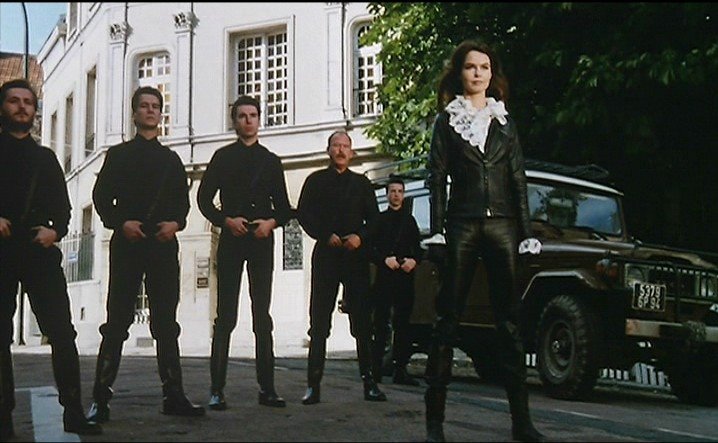
Above is an image, also from OPERAZIONE POKER, of an actress who could be considered the Queen of the 60's Eurospy genre. Can anyone ID her?

BTW, after looking at the filmography I calculate that our subject Jess Franco may be the most prolific director of Eurospy films. He seems to have made more than any other single director from 077: OPERATION JAMAICA (1962) up to IS COBRA THE SPY? in the mid 1980s. My favorite is the satire LUCKY, THE INSCRUTABLE (1967).

(c) Robert Monell, 2007

05 March, 2007

Douglas Sirk vs Jess Franco


"Melodrama means music plus drama..." Douglas Sirk

Way back in the days before cable TV, videotape, DVD, I once travelled 500 miles to see a Douglas Sirk film. There are not many films I would do that for. It was THE FIRST LEGION, his film about Jesuits. Not exactly a key film in his oeuvre or something I could discuss here at length. But, like all of Sirk's films, I was hypnotized by the emotional honesty of it amidst its unique plastic aesthetic. It was worth the trip.

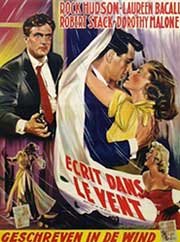
I finally caught up with the CRITERION COLLECTION DVD of Sirk's WRITTEN ON THE WIND (1956), a late masterwork and one of the 20 plus films he made for Universal International after signing with them in 1950. It's Sirk's most beautiful film in terms of pure form and that has a lot to due with DP Russell Metty, who would shoot Orson Welles' Hollywood swansong TOUCH OF EVIL (see Jess Franco's 1963 RIFIFI EN LA CIUDAD for a virtual remake, which may have prompted Orson to hire him to direct second unit for CHIMES AT MIDNIGHT) the next year. Universal was persuaded by producer Albert Zugsmith to let Sirk, and later Welles, work as they pleased. A DP able to give a film an auteur's style and a studio look Metty is one of my favorite Hollywood cinematographers and he enabled Sirk to do breathtaking things with color, framing and camera movement. The gorgeous hues pulsate in depth of field and seem to have a life of their own. It's beyond the kind of Expression which Sirk practiced in his early UFA films before he fled the Nazis. It's a kind of eye drugging American Surrealism, bold, delicious and somehow morbid. How can one describe in words a canary yellow sportscar speeding past a pumping oil derrick and tanks emblazoned with a red family business seal? You have to see it. It's like Metty is painting with Technicolor heated up to the max. The plot is lurid and ulitmately unimportant. It's a film about sex and class and its images are its true story and themes. By classification it's a melodrama, a "woman's picture" which Douglas Sirk mastered in his final decade of filmmaking. But Jess Franco, througout his career, has also made the woman's picture HIS genre.

Franco's most interesting and personal films are women's pictures: women and their emotional turmoils are at the center of THE DIABOLICAL DR. Z, NECRONOMICON, 99 WOMEN, NIGHTMARES COME AT NIGHT, EUGENIE DE SADE, VAMPYROS LESBOS, SHE KILLED IN ECSTASY, LA FILLE DE DRACULA, LA COMTESSE NOIRE, THE OTHER SIDE OF THE MIRROR (a perfect Douglas Sirk title), LORNA-THE EXORCIST, A VIRGIN AMONG THE LIVING DEAD, MACUMBA SEXUAL, right up to the recent SNAKEWOMAN. Women have absolute power over men (and not just sexual) in these films and even in his male centered neo-noirs like BOTAS NEGRAS, LATIGO DE CUERO. The women at the center of these titles search for meaning and identity, usually finding neither.

In WRITTEN ON THE WIND the pathetic nymphomaniac played by Dorothy Malone holds the life and death of her dysfunctional family in her quivering hands througout. On impulse I immediately put on Franco's 1973 MAIS QUI DONC A VIOLE LINDA? (BUT WHO RAPED LINDA?)and completed a fascinating double bill. Franco also made early films in the style of German Expressionism (1961's GRITOS EN LA NOCHE/THE AWFUL DR. ORLOFF), moved to a kind of Surrealism in films like NECRONOMICON, VAMPYROS LESBOS, THE CURSE OF FRANKENSTEIN, but settled into the impoverished minimalism or subrealism of his these mid 1970s French backed features. He didn't have Russell Metty, or even his favorite DP, Manuel Merino. He had little money, so it's an imposed style, and he seems to have preferred working in relative freedom, although he had to eventually turn even the best of these films into hardcore versions at their producer's insistence. LINDA presents the precognitive dream of Marie-France (Alice Arno) who is about to go to an island where she will interact with the bizarre Radeck/Steiner family. The fact that the "story" of the film is presented as she dozes off reading a book (by "David Khunne*) recalls the formal structure of EUGENIE...THE STORY OF HER JOURNEY INTO PERVERSION (1970), but that was a big budget film compared to this.

Like Sirk's film LINDA is also about sex and class, the pressures they place on the family unit, which ultimate fragments under the strain. The Orloff's family secrets as the ones of the title character in SNAKEWOMAN are kept hidden from the outside world and are investigated at the risks of those who do the probing. Paul Muller's neurotic father is wealthy and remote, he warns Marie-France about the nymphomania of daughter Olivia (Lina Romay). As in most of Franco's key films, this is about watching various performances and he uses mirrors to open the action into symbolic dimensions of time and space. The mirror is the central object in Franco's mise en scene and his filmography as it is with Sirk. The progression into madness and murder is thus a reflection on what life should be, something to be experienced within a happy family. But there are no really happy families in the films of Douglas Sirk or Jess Franco, only the Self to be contemplated by the camera and in the mirror.

"The mirror is the imitation of life. What is interesting about a mirror is that it does not show yourself as you are, it shows you your own opposite." Douglas Sirk


*MAIS QUI DONC A VIOLE LINDA? is also known as LES NUITS BRULANTES DE LINDA [Hardcore version], EROTIC DREAMS [the rare non hardcore English language version], among other titles. The film must be seen in it's origina 2.35:1 OAR to appreciate Franco's complex use of framing, space and objects. Thanks to Francesco Cesari for helping me to see three significantly different edits of this underappreciated JF title.

**The title of the book is MAIS QUI DONC A VIOLE LINDA? Now that we know that there were no actual "David Khunne" novels, this is a double in-joke on JF's part.

"Sirk on Sirk".

(c) Robert Monell, 2007

01 March, 2007

Happy Birthday, Paul Muller!


Born in Switzerland 84 years ago today, Paul Muller is the King of Eurogenre character actors with 100's of roles to his credit. An exceptionally fine actor and very nice man. I thank him for patiently attempting to answer all my annoying questions.

Here he is as the drug addicted stalker, strikingy framed by Mario Bava, in the template for all following Italian and Euro-horror, I VAMPIRI (1956). Note the similarity between this set-up and the scenes of Morpho abducting victims in Franco's 1961 GRITOS EN LA NOCHE. No wonder Mario Bava is one of the few Italian directors JF speaks well of.

Muller portrayed Dr. Seward in Jess Franco's COUNT DRACULA, but my favorite of his numerous roles for the director is the depraved and desperate Radeck, the father of Soledad Miranda's Eugenie in the 1970 film EUGENIE DE SADE.

Today he lives quietly in Italy and is still available for work.

(c) Robert Monell 2007

THE EUROSPY FILES


You can have the new James Bond and all the ones since 1970. I prefer the Eurospy guys and girls of the 1960s vintage. As a regular feature here I conjure up images from that era. Here we have one of my favorite Eurospy actors in one of the several he made in Europe during that Golden Age.

Can you name the actor and the film shown above?

Or at least appreciate the threads and hairstyle circa 1965 (that's a hint).

26 February, 2007

Severin's PERVERSION STORY DVD


If you're like me and prefer your gialli served flaming hot then Lucio Fulci's 1969 entry, ONE ON TOP OF THE OTHER, is your ticket. Actually, this is what I would term a prototype "erotic thriller", a superior murder mystery with elements of the police procedural. The plot takes dangerous curves with the greatest of ease, but watch out for appearances. Before looking at Severin Films new DVD let's consider what Fulci accomplished with this underrated title, known as UNA SULL' ALTRA in Italy and PERVERSION STORY in France.

Dr. George Dumurrier (BELLE DE JOUR's Jean Sorel) runs his upscale San Francisco "clinic" with the slippery side show morality of a seasoned carnival barker. His concerned brother (Italian giallo regular Alberto De Mendoza)takes him to task for suggesting the underfunded clinic host a heart transplant. On the personal front George's marriage to Susan, a homebound asthmatic, is a front for his hardly concealed affair with a bisexual fashion photographer (Elsa Martinelli). While away in Reno, Nevada on a gambling excursion George is informed that his wife has died from her condition. Upon his return he finds he has inherited a multimillion dollar fortune though his wife's will. As he is trailed by a suspicious insurance investigation he becomes obsessed with a stripper (DIABOLIK's Marisa Mell) who is the star attraction in a local psychedelic adult club. The stripper is a dead ringer for the late Susan which makes her all the more fascinating as the object of George's obsession. That's a lot of plot already and suffice it to say there are a mind boggling array of further twists and turns, none of which are predictable. That is, unless you've seen Hitchcock's masterwork VERTIGO. But Fulci is being Hitchcockian in a good/creative way rather than a bad way (cf Brian De Palma).

This emerges as the best written and constructed of all Fulci's 57 feature films and the scenario he has concocted with Roberto Gianviti and Jose Luis Martinez Molla is almost demonically clever in its layered ironies, rapid inversions and the way it plays with the element of time, the latter being the most crucial as the action crosscuts between preparations for George's execution in San Quentin's gas chamber and events which have unfolded sometime earlier on another continent. Fulci's judicious use of familiar San Francisco locations is every bit as original and unconventional as the one's Hitch chose for VERTIGO. The fact that the film opens and closes with aerial views of the famous bay bridge is doubly ironic since it represents the main theme of escape from reality.

The film's two setpieces, George's visit to the Frisco strip club and the death row climax are examples of a director working at top form, using color, framing, tempo, focal length, camera movement and actors like a symphony conductor. Fulci employs mirrors, overhead shots of the locations, a sylized palette, and startling angles in a carefully calibrated mise en scene. If it's still too early to call him an auteur, one can certainly discern such future themes as a critique of class prejudice, an unhealtly fascination with the living dead and, even though there's absolutely no preaching about it, a look at the realities of the death penalty which may make some supporters of it think again. It's all as impressive as anything he subsequently accomplished in his more explicit gialli (the delirious LIZARD IN A WOMAN'S SKIN) or his zombie gorefests of the 1980. Fulci was already a seasoned professional after 10 years of directing broad comedies like HOW WE STOLE THE ATOMIC BOMB and a terrific Spaghetti Western, MASSACRE TIME (1966). He is given significant support by the detailed, complex set ups of master DP Alejandro Ulloa (THE DIABOLICAL DR. Z) and first rate performances by Sorel, De Mendoza, Riccardo Cucciola, all of whom revolve around the feral Marisa Mell until their fates play out.

The one element which perhaps impresses me the most is a wild, hot jazz score of maestro Riz Ortolani which breathlessly combines swing, big band, lounge, sax, flute and booming bass instrumentation. It's one of the great giallo soundtracks from that era and on par with Ortolani's equally memorable compositions for THE ETRUSCAN KILLS AGAIN, CANNIBAL HOLOCAUST and many more Italian genre films. It's compulsively listenable and is presented on a separate CD in the new Severin Films double disc set. Presented as PERVERSION STORY, the English translation of the French title, the print here was discovered in France as an original vault negative. The onscreen title is UNA SULL' ALTRA, the original Italian. The transfer is glossy, has excellent resolution and bold in terms of definition and color. Obviously, the elements were crystal clear and the rich hues are a knockout. Presented in 16X9, letterboxed at 1.85:1, there are English and Italian language options with English subtitles. I would recommend watching it with the English track first, since it seems to have been shot in that language. Theatrical trailer included. A 103 m runtime is listed on the box. The film itself runs just over 97 minutes.

Leaving aside THE DEVIL'S HONEY. this registers as Fulci's most erotic film due mostly to the late Ms. Mell and the sex and nudity are presented full strength. I haven't seen the US version titled ONE ON TOP OF THE OTHER, but there has been some internet chat that it is some minutes longer, apparently establishing shots and dialogue scenes on the Reno, Nevada locations. If that's so they certainly aren't missed here, unless one is waiting for them. This edit was the previously lost French theatrical one and I view it as a legitimate alternate Euro version. Some internet comparisons have this version containing over 4 minutes of footage not included in the US cut. If any of our readers have access to the Italian or US versions and can add any comments, please do. In any case, given that this is a first class revelation of Lucio Fulci's first (but not last) masterwork and that you get a CD of a score that will rock your world many times over this comes highly recommended.

(c) Robert Monell, 2007

24 February, 2007

DVD Review: COUNT DRACULA


A blue tinted shot of Christopher Lee as the title character in the new Dark Sky DVD of Jess Franco's COUNT DRACULA. The tinting is just one of a number of differences between this presentation and previous versions on home video. Thanks to Mirek Lipinski for the screenshot.

First, the good news. The Dark Sky DVD of Jess Franco's COUNT DRACULA [onscreen title: LES NUITS DE DRACULA] looks absolutely terrific in terms of color and resolution, a significant improvment over the 2003 DIVISA Spanish language DVD and the older REPUBLIC VIDEO presentation, both of which featured film versions supervised through post production by Jess Franco himself. The DS disc has the longest runtime [just under 97m] of any home video version so far released. There's also at least one scene, a shot of gypsies gathered under the window of Jonathan Harker's room at Castle Dracula [followed by a new Bruno Nicolai music cue], that is so darkened in the previous Spanish and US home video versions as to be virtually invisible, but looks crisp and clear here. The DS also includes a final credit scroll which extends its runtime while listing the cast and Italian technical staff, some of whom may have been included for coproduction/quota reasons. The longer runtime is not due to any further Franco footage. The end scroll was simply tacked on by the Italian producers.

According to the opening credits (which appear in Italian after the French main title) this version was edited by Bruno Mattei, who would later become a prolific hack director of Italian exploitation (RATS: NIGHTS OF TERROR; HELL OF THE LIVING DEAD; THE OTHER HELL). And that's where my reservations begin. Two important scenes have been edited in this version: the opening shot of a stark forest at twilight has been abridged by over 10s and the scene of a gypsy woman (Teresa Gimpera) pleading for the return of her child outside the walls of Castle Dracula has been removed altogether. In a fascinating and detailed discussion over at the The Franco Lounge on the LATARNIA MESSAGE BOARDS webmaster Mirek Lipinski has specualted that this may actually be the Italian version, appended with the LES NUITS DE DRACULA main title for exhibition in France, with the English language track overdubbed. One thing is for sure. This version was not the director's cut. I know that because I spoke with Jess Franco in 2005 about this film and he assured me he only supervised the post production of the English language version and then a Spanish language version, adding that he had nothing to do with the final cuts of the Italian, French and all other versions.

As long as one is aware of what is missing and what has been added/altered this first R1 DVD in English of COUNT DRACULA is well worth purchasing for its superior video/sound quality and significant extras. The 1.33:1 transfer from virtually spotless, evocatively colorful elements reveals layers of detail in the sets, performances and Manuel Merino's lighting design heretofore obscured by dirty, worn prints. It also reveals a much more carefully composed film than had been indicated from the previous prints, which have always had rather murky night scenes [the DIVISA disc heavily artifacts during the entire coach sequence]. The REPUBLIC video and the DIVISA disc both have bold colors with the latter oscillating perhaps too much toward the Red end of the color spectrum. The colors are much more modulated in this transfer. For instance, the use of red, a key color in any vampire movie, seems more judicious and subtle, a vase of roses cutting into the frame here or a bright gypsy shawl there signal imminent vampire attacks. In the scene at the Opera house Maria Rohm's Mina is now enclosed in a warm bath of that color which warns of her close call with the Count. There are numerous shades of red here, signifying moods which range from contemplation of an obsession with blood to foreshadowing of danger to complete immersion in crimson fantasy. Also new here are previously unseen filtering effects. Harker's coach ride and most of the night exteriors now unfold under a blue filter which lends them a more spectral effect than they've ever had before. If this was not in Franco's original design it certainly gives the previously murky looking night scenes a much needed facelift. The other primary color is green, which isn't quite as prominent here as in the Spanish and US prints, but it's still vividly registered between the warring reds and blues (the colors of blood outside and inside the human circulatory system).

One thing which really hit me seeing this cleaner, brighter, more color-detailed version was both the "Spanishness" and irreality of Franco's aesthetic approach. "Spanish", not just because this was shot mostly in Barcelona by a Spanish director, but due to the fact that, outside of costuming, there is no attempt to make the action look like it's actually taking place in Transylvania and then London, 1897. In fact, Franco frequently underlines or foregrounds the Mediterranean foilage and topography instead of attempting to mask/transform them. For instance, one notices that the front door of Dracula's castle has potted tropical plants on either side of it, unlikely decorative flora for Transylvania.

The irreality of Franco's presentation is more apparent in the numerous odd set details which are now clearer than ever, like the plastic spiders strung about, fake bats and all too obviously artificial cobwebs (which seem deliberately sculpted around the candelabras and castle pillars). On one level reflecting budgetary restrictions, these elmenents also illustrate Franco's longstanding method of visual stylization just as Tod Browning's smoking fissures and armadillos add to the delirious mise en scene in his classic DRACULA (1931). Then there's the very surreal scene during which stuffed animals appear to come alive and threaten the male protagonists searching Dracula's hideout. The fact that the animals look mostly like cute child's toys and include a mixture of skunks, ostriches, foxes and a shark [!] evoke another Spanish surrealist, Luis Bunuel. Franco deconstructs this scene in the essential David Gregory directed interview extra, BELOVED COUNT (heavily supplemented with pertinent clips, images, finding Uncle Jess in high spirits, full of interesting behind the scenes stories and in full-cigarette-smoking-antics mode--cf our previous blogs on SMOKING WITH JESS FRANCO). He states that he deviated from the concept of following Stoker and created this outre interlude to illustrate how the very concept of Dracula is a violation of Natural Order, something which the Count himself expounds upon in the early scenes with Harker. BTW, watch this disc with the English subtitles on for a fuller level of comprehension and appreciation of the highly literate quality of the dialogue. Interesting that Producer-Scenarist Harry Alan Towers is not listed in the writing credits of this version.

On the two scenes which are missing or altered. The first 12 seconds of the opening shot, the aforementioned shot of a denuded forest which then slowly pans over to castle Dracula as Bruno Nicolai's eerie score gradually fades in is not only a highly effective opening but illustrates the theme of nature stripped bare by the fetish of vampirism while the hysterical presence of the gypsy mother in search of her child just before Dracula gives it to his brides powerfully acts out the relationship of Dracula to Fuedalism. This version now rather awkwardly opens in the middle of the original camera movement, making it seem like the action was meant to begin in media res, which was not originally intended. When you take away or alter a film's opening image it's rather like chopping the topic sentence of a complex essay. It's sure to affect the remainder of the work. If you are not familiar with these scenes then these omissions might be insignificant but it is part of my purpose here to report them.

The definitive DVD presentation of COUNT DRACULA would, imo, be a 2 disc set of the English version which was released by REPUBLIC VIDEO and the Spanish language version with English subtitles, since both were seen through by the director. The loss of several scenes from those versions and inclusion of new images, cues and effects may obscure the issue for now, but this is a more than interesting DVD presentation which gave me some new takes on the film. Recommended.

Special thanks to Squonkmatic, Mirek and the rest of the posters over at the Franco Lounge topic at The Latarnia Forums.

(c) Robert Monell, 2007

21 February, 2007

Meet Agent 069!


At least that's what he was called in the French dubbing of one of JF's Eurospy adventures. The above actor played the agent after playing a important role in one of Franco's previous films. This actor turned 86 yesterday, so this is a belated birthday quiz.

Who is this actor and what are the films in question?

20 February, 2007

STILL SMOKING WITH JESS FRANCO!


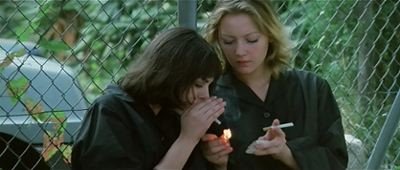
Francesco Cesari sends this image of Lina Romay and Martine Stedil sneaking a smoke in the slammer. Note that the set looks like a parking lot surrounded by a typical stockade fence! Typical mid 70s JF mise en scene. From the DVD of the 1975 Z grade WIP DES DIAMANTS POUR L'ENFER [yes, that's the film Franco made in secret while filming BARBED WIRE DOLLS, even the actors didn't know what was going on!}. This film is known as WOMEN BEHIND BARS in its English language version. It's very amusing and one of my favorite JF WIPs.

Francesco comments: "This is a film about smoking girls!"

Indeed it is. Thanks, Francesco.

And look out for the guards, girls!

WANTED ON DVD


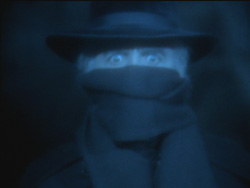
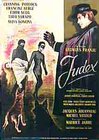
Masked superhero films are always fun. Here are two European models from the 1960s. Roger Browne as ARGOMAN (1967) and Georges Franju's JUDEX (1963). I understand the former is now on DVD, I would like to hear of any comments. JUDEX is certainly in need of a R1 DVD presentation. I've always found the film very slow but compelling.

18 February, 2007

MORE SMOKING WITH JESS FRANCO


German producer (MARK OF THE DEVIL), director, actor and singer Adrian Hoven as Radeck, the mad artist who creates a wolfman, attempts to relieve the stress of it all by taking a drag in SADISTEROTICA/TWO UNDERCOVER ANGELS/EL CASO DE LAS DOS BELLEZAS (1967).

He doesn't appear to be enjoying it, does he?

16 February, 2007

SMOKING WITH JESS FRANCO


Of course you've noticed how much Jess Franco smokes during his numerous DVD interviews and public appearances. Jess really loves to smoke, that's for sure. And he fills his films with characters smoking. He even named all the main characters in his marvelous Noir parody LOS BLUES LA CALLE POP (AVENTURAS DE FILIPE MARLBORO, volumen 8) after popular American cigarette brands (Saul Winston was the villain and Jess himself played a paino player named Sam Chesterfield). Jess and his characters always smoke compulsively (it IS an addiction) but with class. Can you imagine Bogie without a Lucky Strike between his lips?

Above is a shot of the late, great Soledad Miranda enjoying a smoke between murders in SHE KILLED IN ECSTASY. Smoking can also be sexy in JF's universe, especially when Soledad is doing the puffing. There's no doubt Franco is one of the all time great smokers and it plays a prominent role in his films. Of course now that smoking is recognized as a deadly addiction it's no longer cool and become somewhat politically incorrrect. It's difficult for me not to light up when watching a Jess Franco film.

Yeah, I know, I need to quit... But I HAVE cut down to less than 10 a day!

COMING SOON: More shots of Jess and his characters smoking like crazy....

(c) Robert Monell, 2006

13 February, 2007

Barbara McNair: Death of a Singer...


and actress. Probably first and foremost a Jazz singer she performed a soulful rendition of the song heard at the opening and closing of Jess Franco's 99 WOMEN (1968) and, of course, was featured doing several vocal performances while playing the singer who witnessed the tragic fate of James Darren in VENUS IN FURS (1969). She also appeared on the Broadway stage, hosted her own US TV variety show, and continued to perform live, in films and on CD through 2006 until she lost her battle with cancer on Febuary 4, 2007. Her last CD was ironcially titled "Here's To Life."

Her film career also included the controversial X rated crime melodrama "IF HE HOLLERS, LET HIM GO...", which resulted in a PLAYBOY spread right before she got her prominent role in the also X rated VIF. She also appeared as a nun in Elvis Presley's last dramatic film, CHANGE OF HABIT. Appearing as a participant in an interracial romance in a Jess Franco film, as a nun opposite Elvis Presley and [as an African-American woman in a pre Black Power era] hosting a TV show pretty much made 1969 her big year. The rest of her personal and professional life was marked by probably more downs than ups but she kept on working.

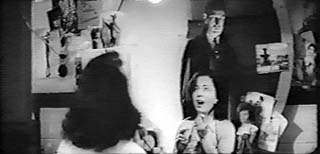
She certainly makes an impression as both an actress and vocalist in VENUS IN FURS, the only film I've seen her in. I can still see and hear her singing the title song in the mirror surrounded by the Manfred Mann group and finally breaking up in almost metaphysical laughter at VIF's delirious musical climax.

For more information on her life, career and films [including a VIF screenshot] go to her website: www.barbaramcnair.com

I wasn't aware of her passing until yesterday. Most of the online obits I've been able to find omit mention of VENUS IN FURS.

Thanks to Michael Orlando Yaccarino.


(c) Robert Monell, 2007

12 February, 2007

Jess Franco on Blu-ray


Anyone remember the very first Jess Franco DVD? To rephrase: Anyone remember what was the first JF film to appear on DVD? Of course, now there are "Jess Franco" DVDs of his current shot-on-vid epics (I recently spoke with the CEO of that company) as well as companies like BLUE UNDERGROUND and the recently formed SEVERIN FILMS who do elaborate, high quality reconstructions, supported by impressive supplements, of his films. The now apparently defunct German company KULT was a particular favorite with some collectors. But we live in changing times....

So what does Blu-ray, if it survives and prospers, hold for Jess Franco? One of the few technical things I can tell you is that Blu-ray holds more pits than HD DVD and if you don't know what pits are you will in the future. Also, perhaps more significantly, it has more storage than HD. BR will be the more expensive medium for reasons I won't even go into here. In terms of quantity and quality it beats of HD so far in my book. I just spent several weeks, with guidance, comparing the BR vs HD sound and image and BR is the superior format, by some calculations I've read 6 times finer than HD.

The age of DVD of as we know it is bascially over. Forget about the old days of VHS vs Beta, Laser Discs and DVD, they are gone. Well, DVD is still around, for now. I now own 6 DVD players, something I couldn't have imagined a decade ago. And DVD has enabled the international resurgance of interest in the films and career of Jess Franco, who has more films on DVD than any half dozen current Hollywood directors. He has become a genre. With over one hundred JF related DVDs out there and many more to come how can I say that Blu-ray would probably be the most comprehensive way to fully understand the cinematic legacy and importance of JF? Well, I'm not saying that, just considering possiblities.

But there are no JF Blu-ray discs at the presnet and there may not be any for years. According to industry sites the key factors in deciding its fate will be: deliverable and reliable COPY PROTECTION and PORNOGRAPHY. Yes, you read right, the Porno industry is one of the big players! Studios like Disney and Paramount are most concerned about the security of their content and one the the biggest players is the Adult film industry as there are about 10.000 porno titles a year! And they have a built-in market which doesn't haven't worry about appealing to the tastes of "mainstream" viewers. We all know that Jess made XXX versions of some of his horror films and a number of out and out hardcore efforts (EL OJETE DE LULU, a 1985 hardcore quickie narrated by.... Lulu's 'ojete', which includes a pan from a cum shot to an replica of an Oscar). But hardcore films and Jess Franco don't get considered for Academy Awards.

Just Google Blue-ray vs HD and you'll get over 4 million possibilities. Here's one which was posted by Ryan Block on www.engadget.com in 2005. Of course, Playstation 3 is already here and where do we go... And Blu-Ray will also be usurped if it wins the war or can exist side by side with HD. There's another format out there which could perhaps hold the entire Franco - Eurocine on one small disc, or the Harry Alan Towers JF productions, or The Golden Films Internacional, or the finally discovered Robert de Nesle collection...[RM]


[This is the text of Ryan Block's 2005 Engadget post]
Well, as far as HD DVD vs. Blu-ray goes, it looks like we've pretty much passed the point of no return now; with each passing day it seems less and less likely that a compromise will be reached on a next-gen format. The ongoing peace talks between the two camps, which have been on-again, off-again for months now, seem to have finally dissolved. It's disappointing, but however you feel about the fact that the HD DVD and Blu-ray factions squandered countless chances to make it right and come together, it looks like in just a few short months they're going to be duking it out mano a mano right in our livingrooms. There may not be a lot we can do to fight back — apart from refusing to adopt either format out of sheer spite of their pigheadedness — but no matter what we might as well at least arm ourselves with the knowledge necessary to understand the nature of the situation at hand.

Here's the background:

Philips's development of the Laserdisc in 1969 yielded many of the technologies Sony carried over and adopted when they partnered with Philips to create a little something called the CD way back in '79. Both companies were hard at work together once again in the early 1990s on a new high-density disc called the MultiMedia Compact Disc (MMCD—original name, guys), but their format was eventually more or less abandoned in favor of Toshiba's competing Super Density Disc (SD), which had the vast majority of backers at the time, such as Hitachi, Matsushita (Panasonic), Mitsubishi, Pioneer, Thomson, and Time Warner.

The two factions cut a deal, brokered by IBM president Lou Gerstner, on a new format: DVD. Toshiba wound up on top after the dust settled in 1995/1996, and Sony and Philips, who weren't cut in on the standard (and royalties) nearly as much as they'd have liked, immediately started work on a next gen system. The Professional Disc for DATA (aka PDD or ProDATA), which was based on an optical disc system Sony had already been developing in the side, would eventually become the Blu-ray disc. Toshiba, not to be outdone by the pair, also started work on a next gen system, the Advanced Optical Disc, which eventually evolved into the HD DVD. After thirty-five years of optical audio/video disc development we're back where we were years ago: two money-grubbing factions fighting each other and threatening to wreak havoc on the consumer electronics industry. Apparently history really does repeat itself.

So here's the technical nitty gritty before we drop the graphs n' charts on ya. Both systems use the same kind of 405nm wavelength blue-violet laser, but their optics differ in two ways. Since the Blu-ray disc has a tighter track pitch (the single thread of data that spirals from the inside of the disc all the way out-think grooves on a 12-inch vinyl single vs. an Elvis Costello full-length album), it can hold more pits (those microscopic 0s and 1s) on the same size disc as HD DVD even with a laser of the same wavelength.

The differing track pitch of the Blu-ray disc makes its pickup apertures differ, however - 0.65 for HD DVD vs. 0.85 for Blu-ray - thus also making the two pickups technically incompatible despite using lasers of the same type. HD DVD discs also have a different surface layer (the clear plastic layer on the surface of the data - what you get fingerprints and scratches on) from Blu-ray discs. HD DVD use a 0.6 mm-thick surface layer, the same as DVD, while Blu-ray has a much smaller 0.1mm layer to help enable the laser to focus with that 0.85 aperture.

Herein lies the issues associated with the higher cost of Blu-ray discs. This thinner surface layer is what makes the discs cost more; because Blu-ray discs do not share the same surface layer thickness of DVDs, costly production facilities must be modified or replaced in order to produce the discs. A special hard coating must also be applied to Blu-ray discs, so their surface is sufficiently resilient enough to protect the data a mere 0.1mm beneath - this also drives the cost up. The added benefit of keeping the data layer closer to the surface, however, is more room for extra layers.

Still with us? No? Blu-ray discs are more expensive, but hold more data - there, that's all.

So now that you know why Blu-ray discs cost more and why Sony/Philips and Toshiba are all harshing on one another so much, we can get to the really important stuff: the numbers, and who's supporting who.


Capacity

Blu-Ray
HD DVD


ROM single layer:
ROM dual layer:
RW single layer:
RW dual layer:
Highest test:
Theoretical limit:
23.3 / 25GB
46.6 / 50GB
23.3 / 25 / 27GB
46.6 / 50 / 54GB
100GB
200GB
Single layer:
Dual layer:
-
-
Highest test:
Theoretical limit:
15GB
30GB
-
-
45GB
60GB


Codecs

Blu-Ray
HD DVD

MPEG-2
Microsoft Video Codec 1 (aka VC1, WMV HD, etc.)
H.264 / MPEG-4 AVC
MPEG-2
Microsoft Video Codec 1 (aka VC1, WMV HD, etc.)
H.264 / MPEG-4 AVC


Security

Blu-Ray
HD DVD

Mandatory HDCP encrypted output
ROM-Mark watermarking technology
BD dynamic crypto (physical layer)
Advanced Access Content System (AACS)
Mandatory HDCP encrypted output (for HD)
Volume identifier (physical layer)
Advanced Access Content System (AACS)


Studios (movie and game) listed as supporting members

Blu-Ray
HD DVD

20th Century Fox
Buena Vista Home Entertainment
Electronic Arts
MGM Studios
Paramount Pictures
Sony Pictures Entertainment
The Walt Disney Company
Vivendi Universal Games
Warner Bros.
Buena Vista Home Entertainment
New Line Cinema
Paramount Pictures
The Walt Disney Company
Universal Studios
Warner Bros.


Format founders

Blu-Ray HD DVD
Sony Corporation
Royal Philips Electronics
Toshiba Corporation
Hitachi Corporation


Companies listed as Members of the Board or Managing Members

Blu-Ray HD DVD
Apple Computer Corp.
Dell, Inc.
Hewlett Packard Company
Hitachi, Ltd.
LG Electronics Inc.
Mitsubishi Electric Corporation
Panasonic (Matsushita Electric)
Pioneer Corporation
Royal Philips Electronics
Samsung Electronics Co., Ltd.
Sharp Corporation
Sony Corporation
TDK Corporation
Thomson
Twentieth Century Fox
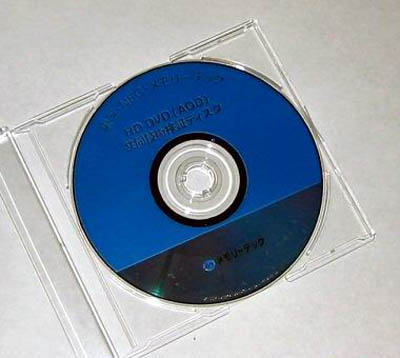
Walt Disney Pictures and Television Memory-Tech Corporation
NEC Corporation
Sanyo Electric Co.


Companies listed as Members, Associate Members, or Contributors
(may include duplicates and/or subsidiaries, major companies are bolded, major companies common to both camps are also italicized)

Blu-Ray HD DVD

3oh!5 Creative, Inc.
Adobe Systems
Almedio Inc.
Alpine Electronics Inc.
AMC Co. Ltd.
Anwell Technologies USA
Aplix Corporation
ArcSoft Inc.
Asahi Kasei Microsystems Co.
ashampoo GmbH & Co. KG
ATI Technologies Inc.
AudioDev AB
B.H.A. Corporation
Bandai Visual Co. Ltd.
BASF AG
BenQ Corporation
Broadcom Corporation
Canon Inc.
Ciba Specialty Chemicals Inc.
CMC Magnetics Corporation
Coding Technologies GmbH
Conexant Systems Inc.
Cryptography Research Inc.
CyberLink Corp.
D&M holdings, Inc.
Daewoo Electronics Corporation
Daikin Industries
DATARIUS Technologies GmbH
Degussa
Deluxe Media Services Inc.
Digital Theater Systems Inc.
Dolby Laboratories Inc.
Eclipse Data Technologies
Electronic Arts Inc.
Elpida Memory, Inc.
ESS Technology Inc.
Expert Magnetics Corp.
Fuji Photo Film Co.
Funai Electric Co.
Horizon Semiconductor
IMAGICA Corp.
Imation Corp.
Infomedia Inc.
Intersil Corporation
InterVideo Inc.
Kadokawa Holdings Inc.
Kaleidescape, Inc.
Kenwood Corporation
Konica Minolta Opto, Inc.
Laser Pacific Media Corp.
Lead Data Inc.
LEADER ELECTRONICS CORP
Linn Products Ltd.
LINTEC Corporation
LITE-ON IT Corporation
LSI Logic
M2 Engineering AB
Maxim Integrated Products
MediaTek Inc.
Memorex Products Inc.
Meridian Audio Ltd.
Mitsubishi Kagaku Media Co. / Verbatim
Mitsui Chemicals Inc.
Mitsumi Electric Co.
Moser Baer India Limited
MX Entertainment
Nan Ya Plastics Corporation
Nero
Newtech Infosystems Inc.
NEXAPM Systems Technology Inc.
Nightjar LLC
Nikkatsu Corporation
NTT Electronics Corporation
nVidia Corporation
Onkyo Corporation
Ono Sokki Co.
OPT Corporation
Optodisc Technology Corporation
Pixela Corporation
PoINT Software & Systems GmbH
PowerFile
Prodisc Technology Inc.
Pulstec Industrial Co.
Ricoh Co.
Ritek Corporation
Sanyo Electric Co.
SDI Media America
ShibaSoku Co. Ltd.
Shinano Kenshi Co. Ltd.
Sigma Designs Inc.
Singulus Technologies
Sonic Solutions
Sonopress
Sony BMG Music Entertainment
ST Microelectronics
STEAG ETA-OPTIK GmbH
Sun Microsystems, Inc.
Sunext
Taiyo Yuden Co.,
Tao Group Limited
Targray Technology International Inc.
Teac Corporation
Teijin Chemicals Ltd.
Toei Video Company Ltd.
Toho Company
Toppan Printing Co.
TOPTICA Photonics AG
Ulead Systems Inc.
UmeDisc Ltd.
Unaxis Balzer AG
Universal (inc. Music , Vivendi Games, Pictures)
VDL-ODMS
Victor Company of Japan (JVC)
Vidiom Systems Corporation
Visionare Corporation
Yamaha Corporation
Yokogawa Electric Corporation
ZOOtech Ltd.
Zoran Corporation Acer Inc.
Almedio Inc.
Alpine Electronics, Inc.
Altech Ads Co.
Arcsoft, Inc
B.H.A Corporation
Bandai Visual Co.
Canon Inc.
Cyberlink Corp.
D&M Holdings Inc.
Daikin Industries
Daiko.Co,Ltd.
Digion, Inc.
Digital Site Corporation
Digital Theater Systems
Disc Labo Corp.
Diskware Co.
Ebistrade,Inc.
Enteractive Gmbh
Entertainment Network Inc.
Expert Magnetics Corp.
Finepack . Co.,Ltd
Fuji Photo Film Co.
Fuji Seiki Co.
Funai Electric Co.
The High-Defition Marketing Company
Hitachi Corp.
Hitachi Maxell
Hoei Sangyo Co.
Imagica Corp.
Imation Corp.
Interchannel
Intervideo, Inc.
Itri
Jp Co., Ltd
Justsystem Corporation
Kadokawa Holdings, Inc.
Kaleidescape, Inc.
Kenwood Corporation
Kinyosha Printing Co.
Kitano Co.
Konica Minolta Opto, Inc.
M2 Engineering
Mcray Corporation
Memory-Tech Corporation
Mitomo Co., Ltd
Mitsubishi Kagaku Media Co. / Verbatim
Mitsui Chemicals, Inc.
Moser Baer India Ltd
Nec Corporation
Nec Electronics Corporation
Nec Fielding
Nero
Nichia Corporation
Nihonvtr Inc.
Nikkatsu Corporation
Omnibus Japan
Onken Corporation
Onkyo Corporation
Paramount Home Entertainment
Pico House Co.,Ltd
Pixela Corporation
Pony Canyon Inc.
Ponycanyon Enterprise Inc.
Prodisc Technology Inc.
Pryaid Records Inc.
Pulstec Industrial Co.
Q-Tec,Inc.
Ricoh Co.
Ritek Corporation
Sanken Media Product Co.
Sanyo Electric Co.
Shibaura Mechatronics Corporation
Sonic Solutions
Sumitomo Heavy Industries. Ltd
Super Vision, Inc.
Taiyo Yuden Co.
Teac Corporation
Teijin Chemicals Ltd.
Toei Video Co.
Toho Company, Limited.
Tokyo Laboratory Ltd.
Toppan Printing Co.
Toshiba Corporation
Toshiba Digital Frontiers Inc.
Toshiba Entertainment Inc.
Toshiba Samsung Storage Technology Corporation
Toshiba-Emi Limited
Toyo Recording Co.
Transmix Co.
Trendy Corporation
Tri-M, Inc.
Ulead Systems, Inc.
Unaxis Balzers Ltd.
Universal (inc. Music , Vivendi Games, Pictures)
U-Tech Media Corp.
Vap Inc.
Video Tech Co.,Ltd.
Visionare Corporation
Warner Home Video Inc.


Other interesting facts:

The Nichi Corporation, who holds the design patents to the Blu-ray’s laser system, sits as an associate member of the HD DVD Promotion Group.
Even though Apple sits on the Blu-ray Board of Directors, its DVD Studio Pro software supports authoring HD DVD media.
Blu-ray, unlike HD DVD, requires a hard coating on its discs because it’s 0.5m closer to the surface. The polymer coating it uses, called Durabis, was developed by TDK and is supposedly extremely resilient and fingerprint resistant.
The Java platform is mandatory on Blu-ray as it’s the standard for menus/multimedia (i.e. all Blu-ray systems must support JVM)
Though Microsoft has not officially sided with either format, it has a number of long-standing IP cross-licensing deals with Toshiba. HD DVD systems will run Windows CE; the standard is currently the only next-gen optical standard with announced support in Longhorn, and an HD DVD version of the Xbox 360 is rumored for the future.
The first consumer Blu-ray device in the US market is expected to be the PlayStation 3.


Version 1.01, last updated 10.20.2005

10 February, 2007

The Most Dangerous Book?


["LE LIVRE DES NONS MORTS

Le sujet de cette nouvelle est inspiré d'une histoire vraie, celle de Abdul Alazred surnommé 'l'arabe fou', auteur du livre maudit: LE NECRONOMICON. Ce livre contenait des formules et des descriptions de rites magiques pour faire appel à des démons d'une autre dimension. Ces incantations maléfiques étaient perpétuées souvent dans le but d'acquérir la vie éternelle et c'était en appliquant ses propres sortilèges qu'Abdul Alazred était devenu fou."]

{From a single early-2006 post, with no replies, on a French board-"Vladek"}. He seems to be discussing the 15th Century text by A. Alazred, which got him executed according to Jess Franco during the interview supplement on the 2006 BU disc of SUCCUBUS and upon which he based his film NECRONOMICON. It seems to be the same esoteric text which he borrowed from a rare book collection and worked into a treatment... See the David Gregory produced interview.

I'm not asking anyone to translate this until I can ascertain if it's indeed the same text and writer... But it sounds like it, although the author seems unaware of the 1967 film. I'm always intrigued by esoteric texts and grimoires.

Reading is always a potientially dangerous, subversive undertaking in the films of Jess Franco, witness the fate of Madame St. Ange in EUGENIE...HER JOURNEY INTO PERVERSION. Curiously, Phil Hardy's THE ENCYCLOPEDIA OF THE HORROR FILM mentions the 15th Century "Abel Alazred" text as a possible basis for Franco's 1973 horror-cannibal-sex epic LA COMTESSE PERVERSE, a kind of version of "The Most Dangerous Game."

OR...is it all a fiction courtesy of H.P. Lovecraft, his precusors and colleagues which is being latched onto? There are certainly more than a few films and books with the title NECRONOMICON. I've been reading Frank Belnap Long's 1975 Lovecraft biography and intend on rereading HPL's oeuvre. My favorite film adaptation of HPL's work is Roger Corman's THE HAUNTED PALACE, from "The Case of Charles Dexter Ward." But that's another blog...

Medieval grimoires, demons, the Inquisition, writers of the arcane, Lovecraft, the Old Ones, it kind of sounds like the word association game in SUCCUBUS. Feedback and comments are always encouraged here, but beware of a potential curse...!

08 February, 2007

Happy Birthday, Miles Deem...


wherever you are. AKA Demofilo Fidani he was born in Caligari Sardinia this day in 1914. He passed away in 1994. From 1967 to 1973 he made 12 or 13 totally mad, grade B- Spaghetti Westerns. It's difficult to get an exact count on his SW output since several are composites.

Fidani remains the most prolific, along with Spain's Joaquin Romero Marchent, maker of Eurowesterns. After Leone, he's my favorite above Sergio Corbucci and many more qualified candidates simply because I love homemade spaghetti and involuntary Surrealism. He was an original who built a kind of anti-aesthetic based on spinning cliches into previously unknown dimensions. One has even made it to US DVD: HIS NAME WAS SAM WALLASH, BUT THEY CALLED HIM AMEN (1972) aka SAVAGE GUNS [Great American Westerns: vol. 12, PLANTINUM]. It looks pretty good for a quick slam onto a cheap DVD set and it's more complete than some versions I've seen on VHS. AND.... it also stars the leading actor in a number of 1973 Jess Franco titles, Robert Woods [PLAISIR A TROIS, LA COMTESSE PERVERSE, among others]. I've had some chats with the genial actor who remembers his days with Fidani and Franco as wild and fun times. More about that in a future blog.

Try to locate the old video prerecord of FISTFUL OF LEAD (1971), featuring Klaus Kinski as a horseshoe playing Padre, Gordon Mitchell as an hysterical villain and Jack Betts as Butch Cassidy, notice the climactic restaging of the moving forest from Shakespeare's MACBETH! It was all lensed by Aristide Massacessi before he became the prolific exploitation director known as Joe D'Amato.

My favorite of Fidani's many onscreen akas is "Slim Alone"...

Oh yes, he became a successful medium after retiring from film directing and even wrote a book on psychic phenomena.

I'll be blogging much more about the otherworldly Signor Fidani...

(c) Robert Monell, 2006

06 February, 2007

Franco Talks; Tim Lucas Translates...


Here are the first translations of the previous blog's Jess Franco interview courtesy of our valued contributors Tim Lucas, Francesco Cesari and Doug Waltz. And there may be more on the way... It's always interesting to get multiple perspectives.
Many thanks, guys!


[From Tim Lucas]
A rough translation but better than nothing:

When Quentin Tarantino visited our country to present Kill Bill, Vol. 2, he regretted not being able to enjoy the boundless liberties of a filmmaker such as Jesus Franco and confessed that it would please him to someday shoot "a movie full of naked girls" like the ones that run rampant through the huge filmography of this auteur of Grade Z sub-genre movies. "The only liberty it takes to do anything I have done is a set of balls," retorted Jesus Franco during a recent visit to Madrid - "a city that has always seemed to me 50% Detroit, and 50% lower Villaconejos" - to participate in one of the roundtables planned in the celebration of the scene.

The cinemateca of the Museum of Fine Arts of Bilbao has also yielded recent tribute to Jesus Franco, rescuing his second short film Pious Baroja (1958) and dedicate to him a retrospective that will be prolonged over the next sixteen days. "You invent your own liberties yourself, though half the country strikes back," continues Franco, "but I have not yet thrown in the towel. Right now I consider three movies to premiere that they are cojonudas. Understand me, with all the limitations that be wanted, but my work has evolved and become purer, more Bressonian". Snakewoman, La muñeca y una para todas, shot on digital video, are the latest releases of a career that is about to reach 200 titles.

With the impetus of an authentic movie-manifesto, his first feature film, We Are 18 years old, opened in 1959 a window of eccentricity in the Spanish movies of the epoch: the mixing of genres and the influence of the popular culture sat down the bases of a speech that would reduce ad absurdam a good number of alien mythologies and archetypes. "Always I have considered myself a jazz musician who makes movies rather than a filmmaker", affirms Franco. He was right-hand man of Orson Welles during the filming of Chimes at midnight (1965) and from Welles he learned to remove party to all kinds of limitations, he fascinated Pedro Portabella in the starts of the School of Barcelona -from there he made Vampir Cuadecuc (1979), trial filmed during the filming of The count Dracula (1969), of Franco- and now there is the attention of José Luis Garcia Sánchez who, after offering him a role in a future film project to adapt the grotesques of Valley-Inclán, will prepare a documentary about his star that already has collected 180 hours of material in the can. It impelled in finding a form for that documentary one that be so little educator as the Franco himself, Garcia Sánchez announces his intention of structuring the movie in the fragmentary and sensationalistic manner of the program Aqui hay tomate, in which the director detects the distant echoes of the unorthodox film-trap of F For Fake (1974). Franco and Garcia Sánchez are also collaborating on on a future edition of a complete and annotated filmography for the Fundacion Autor.

The film work of Jesus Franco has a good number of critics that are used to considering it as the quintessence of dandruff movies: poor, rough and redundant. The visual harshness of a good part of this work seems to give them good reason, but only in appearance. Set against them, an increasingly more abundant cultured one franquiano international studies in great detail its works, traveled through by a libertarian and iconoclastic spirit that seems to owe him so much al Marquis of Sade as al Manuel Vázquez of the cartoons of Bruguera. The seal of American DVD Blue Underground has just launched al market a care edition of the diptych comprising the movies Two Undercover Angels and Kiss Me Monster (1969). In Spain, Manga Films published recently in DVD some of its movies carried out between ends of the seventy and principles of the eighty: Opalo de fuego (1978), Sinfonia Erotica, El Sadico de Notre Dame, Las Chicas de Copacabana (all of 1979) and El Sexo esta Loco (1981).

Names such as those of Romina Power, Janine Reynaud, Ajita Wilson, Monica Swinn and, very especially, Soledad Miranda and Lina Romay (his two great muses) accredit their fame of sex-addicted: "My good eye for the actresses has been always instinctive. When in my movies there is a woman that is a vegetable, it's because the producers imposed her on me. I have always liked my actresses and to create an aura of mystery around them", confesses Franco. The actresses Fata Morgana and Carmen Mount are the last discoveries of a creator that will continue generating passions and hatreds, but rarely indifference."
Publish (Tim Lucas) 1:55 PM


[Francesco Cesari adds]
"Cinema is going to disappear in a moment, even if the show will continue. The cinema of the theaters, with lights down, opening curtains and the Metro Goldwyn Mayer logo, has its day numbered. What the cinema of today lacks are independent producers like Mark Hellinger, who made classics like Robert Siodmak's Forajidos (1946), Jules Dassin's BRUTE FORCE (1947) and THE NAKED CITY (1948), one per year. He was the author. As a producer he succeeded in printing his signature over all these works."

The recent Franco projects are moving far from the narrative model of genre cinema: "I think that it was Godard who was right, he who, in my opinion, is the key-factor of modern cinema. The classic storyline cannot be used any more."


[From Doug Waltz]

Okay, here's the translation courtesy of BabelFish:

"the cinema is going to disappear" When Quentin Tarantino visited our country to present/display Kill Bill, Vol. 2 was lamented of not being able to enjoy the freedom without limits of a film director as Frank Jesus and confessed that it would enchant to him to be able to someday roll "a full film of naked girls" like whom the enormous filmografía of this estajanovista of series Z and the cinema of subgenera are accumulated in. "the freedom to be able to do all that me I have taken it by cojones", talks back Frank Jesus during its recent visit to Madrid -"una city that always has seemed me 50 % Detroit, 50 % Villaconejos de Abajo" - to participate in one of the programmed round tables in the celebration of the moved one.
ESSENTIAL TITLES the news in others webs webs in Spanish in other Blogs languages that connect here the film library of the Museum of Beautiful Arts of Bilbao also has rendered recent tribute to Frank Jesus, when rescuing its film Guipuzcoan Stamps number 2: Pío Baroja (1958) and to dedicate a cycle to him that will extend until next day 16. "the freedom always you invent you you yourself, pegándote with average country", continues Franc, "and I have still not thrown the towel. Right now I have three films to release that they are cojonudas. Entiéndame, with all the limitations that are wanted, but my speech has evolved and it has become purer, bressoniano ". Rolled in digital video, Snakewoman, the wrist and One for all are the last deliveries of a race that is on the verge of reaching the 200 titles.
With the authentic impetus of a film-manifest one, its first largometraje, We are 18 years old, opened in 1959 a window of eccentricity in the Spanish cinema of the time: the crossing of sorts and the influence of the popular culture laid the the foundations of a speech that would reduce to absurd a good number of other people's mythologies and archetypes. "I have always considered a jazz musician that makes films before a film director", affirms Franc. (1965) were man of confidence of Orson Welles during the running of Campanadas to midnight and of him it learned to remove party to all type from limitations, fascinated to Pere Portabella in the beginnings of the School of Barcelona - it left Vampir Cuadecuc there (1979), test filmed during the running of count Drácula (1969), of Franc and now it has abduced the attention of Jose Luis Garci'a Sanchez who, after offering a paper to him in their future cinematographic project to adapt the Valle-Incla'n absurdities, prepares a documentary one on their figure of which already she has been to collections 180 hours of material. Pawned on finding a form for that documentary one that is so little academic as the own Franc, Garci'a Sanchez announces their intention to structure the film under the inspiration of the assembly sensationalist and fragmentary of the program there is tomato Here, in which the director detects the distant echoes of the heterodox film-trap of Orson Welles Fraud (1974). Franco and the Garci'as Sanchez also work in the future edition on the part of the Foundation Author of a complete and commented filmografía of first.
"the cinema is going to disappear from a little while to another one", foretells Franc, "although the spectacle is going to continue. The one of the room of cinema with the lights extinguished, the curtain that is opened and logotipo of the Goldwyn Meter Mayer is counted. What him lack to the today cinema is producing independent of the caliber of Mark Hellinger, that made classic like Forajidos (1946), of Robert Siodmak; Brute Force (1947) and the city undresses (1948), of Jules Dassin in three years consecutive. The author was he. As producing he was able to print his seal to all those works ". Yet, the recent projects of Franc have been separated from the narrative model of the sort cinema: "I am convinced that who took the reason it was Godard, that, for me, it is the señero element of the modern cinema. The classic story cannot be stretched more ". The cinematographic work of Frank Jesus has a good number of detractors that usually consider it like the quintessence of the casposo cinema: poor man, coarse and reiterativo. The visual harshness of good part of its works seems to give the reason them, but only in appearance. In front of them, more and more nourished cultured international franquiano it meticulously studies his works, crossed by a libertario spirit and iconoclasta that seems to as much have to Marquess de Sade like a the Manuel to him Vázquez of the tebeos of Bruguera. The North American seal of DVD Blue Underground finishes sending to the market a well-taken care of edition of the díptico integrated by the films the case of the two beauties and Bésame, monster (1969). In Spain, Sleeve Films recently published in DVD some of its films made between end of the seventy and principles of the eighty: Opal of fire (1978), erótica Symphony, the sadist of Notre-Dame, the girls of Copacabana (all of 1979) and sex is crazy (1981). Names like those of Romina Power, Janine Reynaud, Ajita Wilson, Monica Swinn and, very specially, Solitude Miranda and Lina Romay (its two great musas) credit their fame of erotómano: "My good eye for the actresses has been always instinctive. When in my films there is a woman who is a plant, has been because me the producers have imposed it. I have always liked to portray them and to create I pull ahead of mystery around them ", confesses Franc. The actresses Fata Morgana and Carmen Montes are the last discoveries of a creator who will continue generating passions and hatreds, but rare time indiferencia."Siempre I have considered a jazz musician that does películas""Mi good eye for the actresses has been always something instinctive..."