12 May, 2011

HAPPY BIRTHDAY, JESS FRANCO!


FELIZ CUMPLEANOS AL TIO JESS!

I can't thank you enough for all the movies and memories....

Sergio Hardasmal - JESUS FRANCO GALARDONADO CON EL GOYA DE HONOR | http://www.filmica.com/hardasmal/...

jess franco (Cine - Posters y Carteles) | http://www.todocoleccion.net/jess-franco~x21900201

t05750 count dracula jess franco christopher lee soledad miranda klaus ... | http://www.allcollectio...


Jess Franco DRACULA VS FRANKENSTEIN rare Italian art | eBay | http://cgi.ebay.com/Jess-Franco-DRACUL...


jess franco films | pics.us | http://picsicio.eu/keyword/jess%20franco%20films/


Jess Franco (1930 - ) | http://www.thespinningimage.co.uk/cultfilms/displaycultfilm.asp?reviewid=854


Eugenie de Sade : DVD Talk Review of the DVD Video | http://www.dvdtalk.com/reviews/32030/eugenie-de...


NEW JESS FRANCO BOOK! in The Franco Lounge Forum | http://thelatarniaforums.yuku.com/topic/9130/t/NE...


jess_franco.jpg | http://www.judexfanzine.net/v2/noticia.php?id=764


di Jess Franco (1972) | http://www.filmbrutti.com/reviews.php?ShowReview=296


 ... nother zombie flick 1983 french style jess franco direct this bomb | http://monstermoviemusic.b...


JESUS FRANCO (b 12th MAY 1930) | http://ministryofterror.com/direct2.html


ONE SHOT PRODUCTIONS and Los Dos Hombres present... | http://www.oneshotproductions.bizland.com/vamp...


Jess Franco réalisateur et scénariste espagnol, à qui l'on doit ... | http://www.prod.estrepublicain...


THE CHRISTOPHER LEE COLLECTION: | http://www.dvddrive-in.com/reviews/a-d/christopherleecoll66686970....

Directed by : Jess Franco | http://www.eurocine.net/klaus.html


JESUS FRANCO (b 12th MAY 1930) | http://ministryofterror.com/direct2.html


Doriana Grey (Jess Franco) | http://cinexploitation.forumactif.net/t375-doriana-grey-jess-franco


Daughter Of Dracula 1972 Jess Franco avi torrent download - Fenopy.com | http://fenopy.com/torrent/D...


10 May, 2011

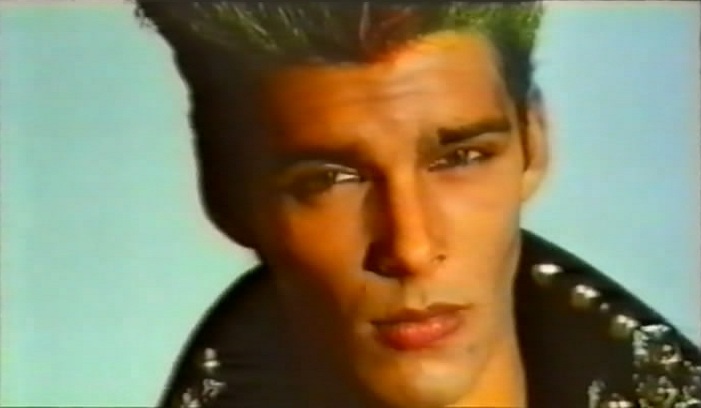
Franco's 80s actors: JOSÉ LLAMAS


In 1979, Antonio Mayans, who had previously acted with Jess Franco on an occasional basis six years before, was part of a theatre company that was putting on a play at the Alfil theatre in Madrid. When, two months later, the production got into money problems, Mayans quit the company on a Saturday. On Sunday he got a call from Alicante to appear in Franco’s first version of Poe’s The Gold Bug (unreleased as yet). The rest, as they say, is history.


Among those Mayans left behind in the acting company was a dark, slender, boyish actor named José Llamas. It seems to have been through Mayans that Llamas, three years after that failed stage production, was to become one of Franco’s regular 1980s players. According to Mayans, Llamas “was very good friends with my wife and daughters, so after a while we had him join the group. He was a very nice man, and almost like an older brother to my daughters. He was also a very good actor, he could dance and sing…” (1).


As part of “the group”, Llamas was assigned anything from minor roles to leads, sometimes on the heroic side, as in Viaje a Bangkok, ataúd incluido (1985) and several antagonists, such as his “Macho Jim” in Los blues de la calle Pop (1983). Strangest of all was Franco’s decision that he fill in the shoes of Bruce Lee in some of the pseudo-martial arts features the director was occasionally and inexplicably turning out in the eighties despite an absolute lack of demand in Spain for homegrown product of this kind, not to mention Llamas’s lack of an appropriate background. The actor certainly looked athletic, had black hair and, as Mayans has said, could dance, but in the words of David Domingo “he’s hopelessly clueless about martial arts” (2). These words are in reference to La sombra del judoka contra el doctor Wong (1982-85), with Llamas credited as “Bruce Lyn” and the real Bruce Lee featuring on the film’s poster!


Since Llamas flourished in Franco’s cinema in 1982, and given his youth and looks, it’s not altogether surprising, perhaps, that he should “graduate” (if that’s the word) to appearing in several of the hardcore features that engaged the filmmaker throughout much of the 80s. In this respect, the actor’s roles include that of the Russian seen dancing to In the Steppes of Central Asia in the 1982 screwfest Una rajita para dos (“What’s the matter?” he tells the girls. “Don’t you like Borodin?”). In the credits of these flicks, Llamas’s name was usually replaced by the facetious porn moniker “Pepito Tiésez”, which might be translated as “Joey Hardon”.


It was these, of all of Llamas’s Franco films, that led to roles for other directors, more specifically in porn movies made by Ismael González and Manuel Mateos, and occasionally in the company of Mabel Escaño and Verónica Arechavaleta, both of whom had acted for Franco.


1987 is the year in which Llamas’s filmography seemingly comes to a halt, unless we count the 1984 El abuelo, la condesa y Escarlata la traviesa, not released until 1992. Both Franco and Mayans are on record as stating that Llamas died in London, and the former adds that he had been suffering from an AIDS-related illness at the time (3). His date of death is, as yet, unknown, but it might have been towards the end of the eighties. He appeared in at least 26 films within a film career spanning half a decade.

José Llamas's imdb entry at:

http://www.imdb.com/name/nm0515635/

(1) Interview with Antonio Mayans conducted by Ferrán Herranz and Francesco Cesari in book Il caso Jesús Franco (2010). Ed. Francesco Cesari. Granviale Editori.

(2) Review of La sombra del judoka contra el doctor Wong by David Domingo (5 June 2008) in blog La abadía de Berzano at: http://cerebrin.wordpress.com/2008/06/05/las-artes-marciales-en-el-cine-espanol-iii-la-sombra-del-judoka-contra-el-doctor-wong/

(3) Interview with Jess Franco conducted by "Chus" and "Al Pereira" (3 March 2002)for Francomanía website at http://members.fortunecity.es/francomania2/

Text by Nzoog Wahrlfhehen

26 April, 2011

Orloff's missing link: SÓLO UN ATAÚD


Ever since Jess Franco decided to lift the name of Bela Lugosi’s surname in The Dark Eyes of London (1939) to christen his villain for The Awful Dr. Orloff (1961) probably the filmmaker’s first distinctive film, the Orloff moniker has become something of a recurring motif in Franco’s filmography, whether applied to title characters or supporting roles. In the midst of all this we find two “apocryphal” Orloff movies – with Howard Vernon in the role but not under Franco’s direction. Of these the most familiar by far is Pierre Chevalier’s Orloff and the Invisible Man (1971), which feels like a project Franco himself might have undertaken. As for Santos Alcocer’s Les orgies du Dr. Orloff (finished in 1966, released in 1969), this appears to have been seen by mighty few people. Some might regard it beforehand as a missing link in the Orloff filmography; on closer inspection, this is debatable as it inhabits quite a different world from that of Franco and even Chevalier (a contemporary British setting, in fact). And moreover, it only marginally qualifies as an Orloff film at all.

The film that was screened before French patrons as Les orgies du docteur Orloff is really called Sólo un ataúd (aka El enigma del ataúd), basically a Spanish production with some French financing, written and directed by the Spaniard who was later to give us the belated Karloff vehicle Cauldron of Blood (1970) and, as based on a novel by the comic book writer Enrique Jarber, certainly not intended to link with Franco’s Orloff films. Indeed, although Vernon may be present once again in the ubiquitous Coracera castle outside Madrid, the Spanish soundtrack clearly identifies his character – not, by the way, a physician or scientist of any kind – as Dan Gaillimh. Whether this Irish surname was replaced with that of Orloff in the reportedly racier version that played in France is something I don’t know but in any case the French distributors did choose to name it “The Orgies of Doctor Orloff”.


Even if not visibly inspired by anything Franco had made at the time, it may, paradoxically, have inspired Franco himself into making La noche de los asesinos (1976) the following decade as the storyline betrays a distant kinship with The Cat and the Canary. Vernon’s eccentric millionaire, diagnosed with liver cancer, invites his much-hated relatives to his sinister castle (the ubiquitous Coracera, which had also housed Vernon in The Awful Dr. Orloff) to announce that, since he has dissipated much of his fortune, his inheritors will simply share the insurance resulting from his death. Some time after Gaillimh has gone to lie in his coffin, where he is not expected to awaken, the castle guests discover that he has been stabbed in the chest. Whether this has been suicide or murder, either possibility precludes the effectiveness of the insurance and the duly heirs go out of their way to conceal the fact and hasten the burial. Soon, the castle’s remaining inhabitants become subject to various mysterious goings-on: Gaillimh is briefly seen alive by his widow; his corpse reappears mysteriously in sundry places; one of his nephews is shot dead by a mysterious hand but his body immediately disappears; the police receive anonymous calls to the effect that Gaillimh was murdered…


On the whole, this is less a horror film than a mystery thriller whose talkative script is made all the more objectionable by Alcocer’s ponderous direction. The top-billed Howard Vernon is confined to a few scenes while the film itself is dominated by Danielle Godet (the scheming woman from Franco’s Devil’s Island Lovers of 1974), who plays one of the few inheritors not characterised by alcoholism, by religious fanaticism (as in the case of Tota Alba’s role), some colourful neurosis or just plain malice. Most of the characters assembled, in fact, appear to be defined with some broadly stated character trait likely to make them instantly recognizable with each reappearance. Given the convolutions of the plot, maybe this is just as well.

Text by Nzoog Wahrlfhehen

21 April, 2011

MORPHO ATTACKS!


The scientifically created Wolfman, Morpho (Michel Lemoine), attacks Diana (Janine Reynaud), one of the Labios Rojos in Jess Franco's EL CASO DE LAS DOS BELLEZAS (1967) aka TWO UNDERCOVER ANGELS.  A favorite scene which often makes me wonder if this is qualified as the first Spanish werewolf film, edging out Paul Naschy's LA MARCA DEL HOMBRE LOBO. Franco would bring a more traditional werewolf to the screen in DRACULA CONTRA FRANKENSTEIN (1971).

Interesting that both this and the Naschy films were coproduced by W. Germany. The Spanish version of this is about 15 minutes longer than TWO UNDERCOVER ANGELS and has an alternate musical score.

19 April, 2011

LA CASA DE LAS MUJERES PERDIDAS


LA CASA DE LAS MUJERES PERDIDAS - Jesús Franco - 1982 # Clasificado ... | http://www.bloodyplanet.co...


Thanks to Nzoog I finally go the chance to screen one of Jess Franco's more obscure, but worthwhile, titles, the 1982 Golden Films Internacional production, LA CASA DE LAS MUJERES PERDIDAS. A difficult to describe blend of social satire, melodrama, erotic interludes, thematic and character references to Shakespeare's THE TEMPEST and KING LEAR, Cervantes' DON QUIJOTE DE LA MANCHA and even Ingmar Bergman's "island" films. That's a heady blend for sure and Franco would remake it, as BROKEN DOLLS, in 1999. After a cursory view I would say I prefer LA CASA... but the final scene of the demise of the father in BROKEN DOLLS is, for me,  one of the most memorable scenes of the director's digital oeuvre. 

LA CASA DE LAS MUJERES PERDIDAS - DIRECTOR JESS FRANCO - CON ANTONIO ... | http://www.todocoleccion....
CLASIFICADA "S"

A haunting piano sonata co-written by Franco and Rebecca White weaves through the film which opens and closes with shots of the Ocean. One could say the director's invocation of the Oceanic quality of cinema and his own oeuvre. It concerns the degeneration and final destruction of the Mendoza family. It's a kind of chamber cinema piece with only five characters excellently played by Antonio Mayans, Lina Romay, Carmen Carrion, Tony Skios [Antonio Rebello] and especially Susana Kerr [Asuncion Calero] whose developmentally disabled shrieks maker her one of the most indelible characters in the Franco canon. Franco developed the script with Bunuel's collaborator, Jean Claude Carriere, who also adapted CARTES SUR TABLE (1966), but he remains uncredited on the print I saw. 

La casa de las mujeres perdidas Download Movie Pictures Photos Images | http://123nonstop.com/pictur...
Desde (Lina Romay) and the mysterious hunter (Tony Siios)

The main problem with this film is it attempts to infuse what is essentially a CLASIFICADA "S" item with ambitious literary/dramatic elements. That could be seen as a good thing, or very misguided. In fact, the film presents the director as his most inspired and misguided.  Did the target audience appreciate it? Who exactly was the target audience? The use of limited space, the Techniscope framing, and the flow of images, however, are arresting. I will have a lot more to say about this film in the future.

 The print Nzoog sent came from the Barcelona Channel but the film can also be downloaded. I would suggest to try and find an English subtitled, high quality, OAR print because the dialogue, aspect ratio and use of colors are key to appreciating this. Franco has said this is one of his most iconoclastic films (that's saying something!).

According to Franco "...it's a story of manners...bad manners! It looks like Bunuel's THE DISCREET CHARM OF THE BOURGEOISIE, yet it's different totally different. It mostly concerns la petite bourgeoisie" [Jess Franco, 1986. Quoted from OBSESSION: THE FILMS OF JESS FRANCO--p.153.]

Thanks again to Nzoog for helping me to see this. 

(C) Robert Monell, 2011

11 April, 2011

Franco's 80s actors: CÉSAR ANTONIO SERRANO


In Franco’s adventure film En busca del dragon dorado (1983), this one-movie actor was assigned the arguably thankless task of combining the spirit of Bruce Lee with that of Anne Libert’s birdwoman Melissa from La maldición de Frankenstein (1972). Although given top billing, under the fake Chinese-sounding name Li Yung, Serrano, has relatively few scenes as the ghostly “martial arts genius” who emerges deux ex machina to provide the two girls who are the film’s central characters with some help. When he does appear, it is in the form of the disconcerting (some would say unwittingly comical) figure of the “kung fu eagle”, who, accompanied by overdubbed bird screeches, either outstretches his arms into a wing-like flutter or essays some vague kind of cod-martial arts when confronted with villains.


In En busca del dragon dorado, set in an indefinite or imaginary country in Eastern Asia, with myriad Spanish actors (including Franco himself) doing their best to look Oriental, Serrano at least was a bona fide Asian, and moreover from a country once under Spanish dominion. Antonio Mayans, who dubbed in the voice of Serrano’s character, has said the following of him:

“It was me who chose the main actor [of En busca del dragon dorado]. I once went to the Rock-Ola disco to see Alaska [singer] and he worked as the doorman there. He was a Filipino, although we were looking for somebody Chinese. At first he took it as a joke and did a little karate number on me. I later took him to a gym for an audition and we finally hired him.”*


Caption: César Antonio Serrano, immersed in his grotesque “Kung Fu eagle” act.

• Interview with Antonio Mayans by Chus and Al Pereira for the Francomanía website at http://members.fortunecity.es/francomania2/entrevistamayans.html

[Text by Nzoog Wahrlfhehen]

03 April, 2011

Franco’s 80s actors: RAQUEL EVANS and LYNN ENDERSSON


This entry may need a bit of contextualization. After the virtual abolition of censorship brought about by the Spanish constitution of 1978, but with hardcore still awaiting legalisation, Spanish cinema came to be increasingly dominated by softcore flicks exhibited under the government-imposed “S” certificate. Following the decline of popular genres that had previously been the staples of the industry, the softcore film acted as a reliable source of income and employment for professionals of the cinema until its demise in 1983, in which year the hardcore movie was legalized. In its last years, the “S” film had come to represent about a third of the national film output.


There were four basic production sources to be found in the Spanish “S” film, two of them being the respective film industries of Madrid and Barcelona, to which one should add a third category consisting of foreign films (French, German, Swiss, Greek…) with a minority Spanish participation, emanating from either of the two cities mentioned above. A fourth source may be found in the individual figure of Jess Franco, who, existing in a category of his own, was responsible for an approximate quarter of the Spanish “S” movies made in the 1978-83 period, not counting those films of his that were unreleased or unfinished.

Although Franco often worked at the time for Golden Films Internacional, whose quarters were located in Barcelona, his softcore output at the time might be placed, with some hesitation, within the Madrid tradition in terms of the talent employed on either side of the camera. In addition to several obscure actresses who appear to have worked only for him, Franco relied heavily on performers who may also be found in Madrid-made “S” fare directed by others: Rocío Freixas, Alicia Príncipe, Andrea Guzón, not to mention other Madrid-based actresses (Carmen Carrión, Mabel Escaño) whose beginnings go back to the “destape” (nudie) cycle that had served as a forerunner for the softcore film in the early to mid-seventies.

Meanwhile, the Barcelona pool of talent, of which Lina Romay cannot be said to have been a part despite her provenance, was largely left untouched by Franco but for two notable exceptions. Both Raquel Evans and Lynn Endersson, two familiar faces in skinflicks and girlie magazine pictorials, made respective isolated appearances in a Franco film. While neither of them was born in Barcelona (or indeed in Spain), they did live there and both, moreover, were members of the then-powerful Marta Flores casting agency, which represented much of the city’s acting talent, from prestigious figures such as Fernando Guillén to such softcore performers as Andrea Albani.


Character actress Marta Flores, agent of both Raquel Evans and Lynn Endersson.


Raquel Evans

Raquel Evans, whose real name is Arlene Guevara Gatica, was born in Santiago de Chile in 1956 and arrived in Spain in 1973 in the company of her brother, the filmmaker Enrique Guevara Gatica. At the time of her film debut in 1978, she had been working as a night club stripper in Lloret de Mar, Girona and in Barcelona. She is noted for appearing in the very first Spanish “S” movie, Una loca extravagancia sexy (1978), which was also the first of a series of films in similar vein produced by Enrique Guevara and nominally directed by him.

The willowy, angular Ms. Evans continued to appear in some twenty erotic films, several of them under the direction of veteran Ignacio F. Iquino, usually for Barcelona companies, but not to the exclusion of occasional Madrid efforts. By the time she landed a Jess Franco role in Linda / Orgía de ninfómanas (1981), she had already co-starred with Antonio Mayans in Iquino’s Emmanuelle y Carol (1978) and one presumes that it was Mayans, Franco’s regular production manager and lead actor, who suggested casting her as the film’s lead villainess. Since the making of Iquino’s film, Evans had undergone a nose job that made her features daintier and she now sported darker hair, as if in consonance with the part given her, much darker than one tends to associate with her. Her role in Linda, in fact, may represent something of an anomaly among the roles entrusted to Evans, who was usually required to project glamour and/or vulnerability.

Following the demise of the “S” film, and its replacement by hardcore, Evans gradually faded from the cinema. Now she reportedly works as a telephone operator.


Raquel Evans, prior to her nose job


Raquel Evans, between Bernard Seray and Antonio Mayans in Ignacio F. Iquino's Emmanuelle y Carol


Raquel Evans in Franco's Linda


Lynn Endersson

Lynn Endersson was in marked contrast with Raquel Evans in both appearance and personality. Whereas Evans was all grace and elegance, Endersson, who was already middle-aged at the height of her career, traded on a deliberate and exaggerated tawdriness that brought her screen persona within the realm of camp, abetted by her exaggerated performances in either comic or villainous roles. A typical Endersson role would find her wearing very high heels, gaudy clothing and heavy make-up, and she herself would supplement all this with mannered, expansive gestures and, whenever she did her own dubbing, a high-pitched, undulating delivery. Not unusually, she played roles named Lynn and in one film – the 1980 Un permiso para ligar, made by Enrique Guevara and Ricard Reguant – she actually played herself, and as an affected, highly-strung neurotic.

That a Catalan Frenchwoman, born Lina Nadal in Perpignan (on a date as yet undetermined), should have adopted a Swedish-sounding acting name adds to the campiness of her image and she herself was reportedly far from insensitive to humour. Trained as a painter, she started acting in films in what presumably were her thirties, under the direction of her partner, the Basque filmmaker Juan Xiol Marsal. She made her debut in Xiol’s Los farsantes del amor (1971), and subsequently contributed both the lead performance and the singing the title song (!) in El precio del aborto (1975), one of several anti-abortion exploitation films being produced in Spain at the time. After Sexy, amor y fantasia (1976), the last film made by the pair, Xiol died.
Working on her own, she effected the transition from “destape” to “S” cinema, usually working for Raquel Evans’s brother Enrique Guevara, but also for Manuel Esteba and the Madrid-based filmmakers Amando de Ossorio and Germán Lorente. In Las alumnas de Madame Olga (1981), José Ramón Larraz gave her a “straight” role (non-comic, non-campy, non-melodramatic) with good results. Amidst all this activity, she also got to appear in Porno girls (1977), a grey-market hardcore effort made on substandard gauge by Jordi Gigó and Ricard Reguant long before such fare was legalized in Spain. By the time she disappeared from the cinema in 1986, she had also played supporting roles in a couple of crime films, a Catalan comedy and an independent Majorcan feature. And, of course, one Jess Franco film – as in Raquel Evans’s case, this was in 1981.

If Jess Franco found a new facet in Raquel Evans in Orgía de ninfómanas, the same cannot be said of the use he made of Endersson in El sexo está loco (1981). Of the four main actors accorded various roles in that film (the others being Antonio Mayans, Lina Romay and Tony Skios), Endersson is given the least to do and is basically reduced to an onlooker (which she literally is in the nightclub scene involving Lina Romay and the two Argentineans). And this is one of her films in which she didn’t dub herself. With a more assertive role and her own voice, she might have come off as an apparent relative of the likewise plump, screechy-voiced, pop-eyed and histrionic Lina Romay.

Lynn Endersson in El sexo está loco


Evans and Endersson notwithstanding, Franco found no roles for any of those actresses from the Marta Flores agency: Carla Dey, Andrea Albani, Concha Valero, Berta Cabré, among several others. Too bad, as Berta Cabré might have come in useful in the event of Katja Bienert not being available.

Text by Nzoog Wahrlfhehen

26 March, 2011

Franco's 80s actors: JOAQUÍN NAVARRO


The juvenile lead of La isla de las virgenes aka El lago de las virgenes did no further work for Jess Franco and, indeed, very little film acting for others. His filmography comprised the years 1981-83 and his only leads were in Franco’s film and Carlos Aured’s quasi-bloodless slasher flick Atrapados en el miedo (1983, released 1985).


Other than that, he is listed as part of the respective casts of Mariano Ozores’s ¡Qúe gozada de divorcio! (1981), a comedy vehicle for Andrés Pajares; and Bésame tonta (1982), a now-forgotten vehicle for the Orquesta Mondragón music group. To these one should add José María Zabalza’s ultra-weird softcore film Bragas calientes(1983), with Navarro was the youthful owner of the mysterious house around which much of the action revolves. Franco’s movie appears last in his filmography due to its having been released in 1987, although it’s really a 1981 production, signifying that it was among the first of the actor’s films, or maybe even the very first.

Text by Nzoog Wahrlfhehen

22 March, 2011

THE CASE OF THE FRIGHTENED TOURIST - New Franco film?

CINEMADROME - THE WORLD OF JESS FRANCO FORUM - New Franco film

EL CASO DE LA GÜIRI ASUSTADA. nuestra primera producción

The above logo translates, according to Elena and Nzoog, THE CASE OF THE FRIGHTENED TOURIST.
I guess it would be an adaptation of Edgar Wallace's THE CASE OF THE FRIGHTENED LADY, made at least twice before in 1963 and 83, based on a novel [and there was also reportedly a play of that title which I have to research].  Nzoog reports that it's a contemptuous description of tourists. Since Franco often uses contempt as a basis for cultural comedy [cf IS COBRA THE SPY?] it makes sense. The 63 one [THE INDIAN SCARF] was directed in Germany by Alfred Vohrer and is very talky, but witty and entertaining as a whodunit set in a remote manse where greedy relatives of a man who was strangled by the titular scarf have gathered for a reading of his will. They have to stay in the mansion for a week and are cut off by a storm. Hienz Drache is the lawyer who investigates. With Klaus Kinski and Eddi Arent in their usual EW film adaptation-roles. I can't imagine this as a SOV erotic extravaganza, if that what Jess has in mind. We'll see...


Alfred Vohrer filmed Edgar Wallace's THE CASE OF THE FRIGHTENED LADY in 1963 as THE INDIAN SCARF, featuring a black gloved killer at work in a mansion. It would become a textbook for the gialli of Mario Bava [cf BLOOD AND BLACK LACE and Dario Argento DEEP RED].

Thanks to Nzoog and Elena for the translations over on CINEMADROME. 

15 March, 2011

Goodbye to Andres Resino and Joaquin Blanco


Joaquin Blanco in Jess Franco's  LOS OJOS SINIESTROS DEL DOCTOR ORLOFF (1973)


Blanco in PLAISIR A TROIS (1973)


As the scientist at the beginning of Bruno Mattei's HELL OF THE LIVING DEAD.

Blanco appeared in Jess Franco's PLAISIR A TROIS as the psychiatrist of Alice Arno's character and as an assistant to the police inspector played by Edmund Purdom in THE SINISTER EYES OF DR. ORLOFF. He also co-directed (with frequent Jess Franco player Antonio Mayans ) the softcore feature TRAMPA PARA UNA ESPOSA. He passed away last Feb. 28th. 


Number 1 is a limited first edition limiting printing of 250 copies ... | http://fantaterrorhorrorfr...
An excellent interview with Andres Resino [1940-2011] appears in the first issue of LATARNIA FANTASTIQUE INTERNATIONAL Resino studied acting at Spain's Escula Oficial de Cinematografia, played Marcel in LA NOCHE DE WALPURGIS (1970), the film which ignited the Spanish horror boom, and appeared as the unjustly imprisoned protagonist in Jess Franco's LOS AMANTES DE LA ISLA DEL DIABLO (1971). His later career was mostly in the theater and on Spanish television, where he played the villain in the TV series EL SUPER. He was married to actress Eva Leon from 1967 to 1984. Ms. Leon was featured in many 1970s Spanish horror films (VOODOO BLACK EXORCIST) and several Jess Franco films (GOLDEN TEMPLE AMAZONS, MANSION OF THE LIVING DEAD). Resino died of cancer on March 13th.


Cr?ticas de Jack El Destripador De Londres | http://www.aullidos.com/leer_criticas.asp?id_pelicula=7...
Andres Resino gave what is perhaps his best film performance in Jose Luis Madrid's SEVEN MURDERS FOR SCOTLAND YARD (1971).

Thanks to Nzoog for reporting the passing of these two actors, providing the information on their careers and supplying me with the caps. 

Robert Monell

09 March, 2011

Franco's 80s actors: FLAVIA HERVÁS


Jess Franco was one filmmaker who would use whatever elements or persons were available to him at the moment, making it unsurprising that he should give roles to set technicians – or as in the case of the child actress Flavia Hervás , to the daughter of his lead actor / production manager, Antonio Mayans, and the director’s regular make-up artist, Juana de la Morena.

Antonio Mayans had the habit of taking along his whole family along for shoots, meaning that his three daughters were regularly around on set, as was the dog. Eventually, the daughters were themselves given various assignments, whether it be acting roles or, as in the case of the oldest of the three, Regina Mayans, the job of assistant director in Jungle of Fear (1993, unfinished).


Of the three sisters, the youngest, Flavia Mayans de la Morena was the most conspicuous. Billed in films as Flavia Hervás (after Antonio Mayans’s mother), she was born in Cantabria c. 1977 and appears to have made her debut in Camino Solitario (1983), playing the daughter of her real-life father, a role she essayed again in Sola ante el terror (also 1983). The presence of the three girls gave Franco the idea of making children’s films, such as En busca del dragon dorado (1983), starring Flavia alongside her sister Ivana, both of whom could also be seen in uncredited roles during the titles of ¿Cuánto cobra un espía? (1984). Franco, most audaciously, even entertained the idea of using the sisters in a musical!


Flavia Hervás’s career ended soon, at the age of seven, due to her parents’ concern about her missing classes at school. She disappeared from Franco’s universe until she had turned 19, when she was offered the female lead, named Flavia, in the film that was eventually to be titled Killer Barbys (1996). Unsure of her acting abilities and unwilling to do nude scenes, she turned down the offer, and the project finally became a vehicle for the Killer Barbies rock band. Hervás’s return to acting came about in Ángel Mora Aragón’s shot-on-video The Snuff Game (2000), with Antonio Mayans in the cast, playing a seedy drunkard, and Hervás as the woman being stalked by the lonely murderer that is the film’s central character. Both father and daughter were obviously being iconically cast, even if the bearded, graying Mayans and, more especially, Flavia Hervás, now in her early twenties, were a far cry from what they looked like in the early eighties. That same year, as Flavia Mayans, she also appeared in an episode of the slob TV sitcom Manos a la obra, in the very brief role of a hooker.


On discovering she didn’t like acting, she took to other show business concerns, emerging as a lighting technician for the stage. In 2010, she and José Mora were nominated for a Max Award (the Spanish equivalent to the Tony) for their lighting design of the play Sueño Lorca o El sueño de las manzanas, a theatre production written and directed by María Caudevilla.


Poster of En busca del dragón dorado. Flavia Hervás is the girl wearing overalls.


Flavia Hervás in The Snuff Game


Flavia Hervás in the TV sitcom Manos a la obra


Production of the play Sueño Lorca o el sueño de las manzanas, lighting by José Mora and Flavia Hervás.

(Most information has been drawn from the interviews with Antonio Mayans and Flavia Hervás conducted by Ferrán Herranz and Fracesco Cesari and included in the book Il caso Jesús Franco, 2010, edited by Cesari).

Text by Nzoog Wahrlfhehen