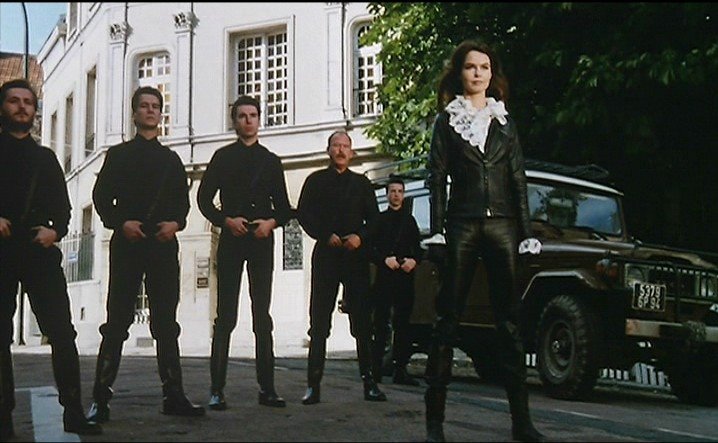
Thanks to Eric Cotenas for the screenshots from the BCI SE DVD
* * * *
I must admit that watching EL RETORNO DEL HOMBRE LOBO (1980) via the excellent new transfer from BCI, mastered in High Definiton from the original negative, adjusted my long standing opinion of the film. I especially found the Castilian language track gave the film a dignity and gravity which the rather hollow English dub lacks. Of course I'm talking about THE CRAVING, the US version, which played here theatrically and later surfaced as a murky looking and sounding VHS.
Rather than just deliver a conventional DVD review here (there are plenty to be found in various corners of cyberspace) I'll phase in and out giving my own impressions of this presentation and reflecting on my own history with this film. I'll also rotate some images from the disc and box artwork. Given my fondness for the films and vision of Paul Naschy I want to give my own perspective in a prismatic format which will be unbound from a normal review structure.
This is Paul Naschy's deluxe remake of Leon Klimovksy's LA NOCHE DE WALPURGIS (1970) and a testament to his emotional investment in the role and his epic four decade werewolf cycle. It commands respectful attention. It certainly gets it with this DVD.
I had some difficulty getting my hands on this (along with the new BCI disc of Leon Klimovsky's 1972 programmer VENGEANCE OF THE ZOMBIES). I do hope they will both soon be widely and easily available to Naschy's fanbase and horror/fantasy collectors everywhere who have already discovered or perhaps will be initiated into Naschy's intricately detailed universe.
The official release date is May 8. Some online distributors have already sold out their stock and the set is popping up in scattered Best Buys nationwide. If anyone has any corrections and/or further information on wider release and availablity please feel free to comment below.
I must admit that when I first saw this, as THE CRAVING via the US VHS, I was thrown off by the rather risible English language voice casting. The dubbing of Julia Saly's Countess Bathory seemed especially annoying. It was like somebody in a high school play trying too hard to act the wicked witch. Heard in Castilian Spanish (although the action is set in Hungary) she is far more menacing and the entire film loses any air it had of schlock.
Naschy really worked hard on its viusal style, collaborating with the great DP Alejandro Ulloa (COMPANEROS; MISS MUERTE) to emphasize, as he writes in his autobiography, "...Gothic imagery, blended with both real historical detail and unbridled flight of fancy." They fully succeeded and a true measure of the film is fully available on this DVD. Designed in varying shades of gold and crimson it's a somber looking production with strong undertows of sexual anxiety and looming violence. Naschy looks terrific in black clothing and bearded while his performance is more layered than earlier appearances as Waldemar. He has grown as an actor.
By 1980 Naschy had already directed two masterworks, EL HUERTO DEL FRANCES (1977) and EL CAMINANTE (1979), after his acceptable if uneven directorial debut, INQUISITION (1976).
EL RETORNO DEL HOMBRE LOBO builds on his strengths as a visual storyteller with a highly sophisticated sense of atmosphere and composition. I only hope that EL HUERTO... and EL CAMINANTE can someday find a way to quality DVD presentations like this one. These works move away from the exploitation arena into the realm of poetic fantasy similar to best of Kurosawa and Bunuel. What the film lacks in pace and script originality it compensates with a kind of visionary elaboration. For instance, the deaths of Saly and Aguilar are staged like extended arias in a bloody opera whereas Leon Klimovsky's handling of the climax in the 1970 template LA NOCHE DE WALPURGIS seems rather perfunctory in comparison. Unlike so many of today's one dimensional, dumbed down, CGI packed gorefests Naschy's film never seems rushed, obvious or intelligence insulting.
Some of the shots evoke Rembrandt, Goya and Bosch with the metaphysical horrors often thrusting themselves out of bottomless blacks. One script improvement over LA NOCHE DE WALPURGIS is that this time the beloved of Waldemar doesn't get to walk away from the carnage. She suffers her own grim fate before a last embrace. It's a powerful image which evokes the ending of Leon Klimovsky's DR JEKYLL AND THE WOLFMAN (1971). This was a very personal project for Naschy and the first time he had directed a Waldemar Dananisky saga. It's a densely referential combination of the best of the Universal Classics, Fisher's CURSE OF THE WEREWOLF, the Italian Golden Age (a cue from the Rustichelli score of Bava's KILL, BABY, KILL! is used again and again at pivotal moments), his aforementioned earlier werewolf films and is as impressively lit as Kubrick's BARRY LYNDON while ending up as nihilistically downbeat as Fulci's THE BEYOND, which was made the same year.
The anamorphic 1.85:1 transfer allows all these elements to be seen and heard as if for the first time with the added advantage of restoring footage missing from the previous US video release, THE CRAVING. I don't think I'll ever be able to watch it in English language again but it's really nice to have both that and the superior Castilian Spanish tracks available. A passionate introduction by the Great Man himself, deleted scenes, the US theatrical trailer, the Spanish credits sequence (which finally explains the clueless US opening credits), packed photo and still galleries make this as fully loaded as I wanted considering that it's going for well under twenty dollars along with its companion release, VENGEANCE OF THE ZOMBIES.
Mirek Lipinski's excellent liner notes introduce the film for the Naschy newcomer, perceptively evaluate the film itself, place it in a historical perspective and detail the careers of key cast and crew members. I've debated this particular film with him before and know that he combines the passion of a fan with the skills of a film historian, translator, author and webmaster of his essential site, THE MARK OF NASCHY. The fact that he takes time to speculate on the mysterious fate of Julia Saly and the tragic one of Azucena Hernandez is very much appreciated and proof that his interest in the film is much deeper than in just rattling off a list of facts. I was also very taken with the rather witty and appropriate menu design in which we are thrust toward a Necronomicon style book which blows open to reveal the menu options in Gothic lettering.
(C) Robert Monell, 2007

04 May, 2007


01 May, 2007
GOODBYE TO GORDON SCOTT

Gordon Scott and his 19 inch biceps from Riccardo Freda's stylish SAMSON AND THE SEVEN MIRACLES OF THE WORLD (1961)*, in which he actually played Maciste before it was dubbed, retitled and imported to the US by AIP.
It was sad news that Gordon passed away on April 30th in a Baltimore hospital after lingering complications from heart surgery. Born Gordon W. Werschul in 1927 he lived nearly 80 years. From his days as an Army Drill Instructor and MP to his appearances in six Hollywood Tarzan films after being discovered working as a life guard in Las Vegas, to his 19 films made in Italy between 1961 to 1967, Gordon kept busy but lived a hard and long goodbye for the final 40 years of his life. Director Freda admired his strength but complained about his drinking. Stories like how he wrecked his sports car and just walked away leaving it in a Roman alleyway abounded. Given his alcoholism, a terminal disease, it seems a miracle he lasted as long as he did.
He doesn't have much dialogue in SAMSON AND THE SEVEN MIRACLES OF THE WORLD (and damned if I can count "7" miracles) but he has "presence" and his unique physique, not as pumped up as Steve Reeves (his costar in Sergio Corbucci's DUEL OF THE TITANS), and it's the kind of charismatic physical presence that extraordinary athletes and stuntpeople have (it looks like he actually performed many of the dangerous stunts in SAMSON... himself). He seems perfectly scuplted for Freda's near perfect peplum and you easily suspend belief at the climax when he breaks out of his tomb beneath the foundations of ancient Peking, toppling the city (a highpoint in both his and Freda's careers).
His final film was Gianfranco Baldanello's LE RAYON INFERNAL (DANGER!! DEATH RAY), a delightfully inconsequential Eurospy entry in which he plays an agent named Bart Fargo who must secure the return of a kidnapped scientist. He looks like he's having a good time walking around in a tuxedo and bow tie in various Spanish gambling casinos. Still trim and fit, he's no match for Sean Connery in the acting department but you kind of enjoy watching him enjoying himself. And there's an interesting supporting peformance by "Max Dean" (BLOOD AND BLACK LACE's Massimo Righi) as an inept enemy agent befriended by Scott. Other villains include Jess Franco regular Alberto Dalbes (TENDER AND PERVERSE EMANUELLE) and Sylvia Solar (NIGHT OF THE HOWLING BEAST). A terrific CAM jazz score is a value added extra. This is the kind of compelling obscurity which we may never see on US DVD. But who knows?
I certainly hope to someday see R1 HD transfers of such Gordon Scott classics as GOLIATH AND THE VAMPIRES, DUEL OF THE TITANS, and a correctly letterboxed SAMSON AND THE SEVEN MIRACLES (forget the cheap Alpha DVD!) from quality elements.
*MACISTE ALLA CORTE DELL GRAN KHAN
(C) Robert Monell
27 April, 2007
EUGENIE, HISTORIA DE UNA PERVERSION on Blu-Ray?
 An external view of the Ricardo Bofill designed "El Xanadu" (1968) seen in Jess Franco's 1980 version of Sade's infamous story which he previously filmed in 1969 as EUGENIE HER JOURNEY INTO PERVERSION.* I much prefer this more dialogue free and visually surreal (Dali is directly referenced) version. JE Films was the company of Spanish producer-writer Julian Estaban, who also coproduced ZOMBIE LAKE and Franco's DEVIL HUNTER (both 1980) with Eurocine, Paris. El Xanadu is also a key set in Franco's SHE KILLED IN ECSTASY (1970), THE PERVERSE COUNTESS (1973).
My fantasy release would be a Blu-ray disc (could it happen?) which would deluge one with the uncanny atmosphere, vivid colors and Bofill's architecture (more screenshots due later). HD pushes you into a slightly 3D world but I would rather drown in the Blu-ray rendered hallucinations of our delirious visionary.
I spent the day being treated to a demonstration of Blu-ray vs HD. Blu-ray is the unquestionably superior technology in my view. The quality of the detail is just breathtaking. It's like being submerged in a tsunami of exquisite tinctures and glittering wonderments. It comes and gets you.
But I'm not planning to acquire the Blu-ray system I want. Even if I could afford it virtually everything which is available is material I don't want to see once much less revisit often. That may change. We'll see. Or both HD and Blu-ray will cancel each other out and a new technology will emerge and become the standard. Or they will coexist as niche preferences. But I would go with Blu-ray without hesitation.
I bet you thought it was going to happen for a minute...
You never know.
Now, can you name all the Jess Franco versions of this Marquis de Sade story?
Thanks Alex Lindsay for first posting a link to this image on the Latarnia Forum's Franco Lounge.
*Exterior: EL XANADU; this building is located in Calpe and houses a number of apartments. Did Bofill have CITIZEN KANE in mind when he named this structure?
I'll be rotating more screengrabs and images of Bofill's architectural designs to provide those who haven't seen this or are fans of this film with an ongoing slideshow.
(C) Robert Monell, 2007
An external view of the Ricardo Bofill designed "El Xanadu" (1968) seen in Jess Franco's 1980 version of Sade's infamous story which he previously filmed in 1969 as EUGENIE HER JOURNEY INTO PERVERSION.* I much prefer this more dialogue free and visually surreal (Dali is directly referenced) version. JE Films was the company of Spanish producer-writer Julian Estaban, who also coproduced ZOMBIE LAKE and Franco's DEVIL HUNTER (both 1980) with Eurocine, Paris. El Xanadu is also a key set in Franco's SHE KILLED IN ECSTASY (1970), THE PERVERSE COUNTESS (1973).
My fantasy release would be a Blu-ray disc (could it happen?) which would deluge one with the uncanny atmosphere, vivid colors and Bofill's architecture (more screenshots due later). HD pushes you into a slightly 3D world but I would rather drown in the Blu-ray rendered hallucinations of our delirious visionary.
I spent the day being treated to a demonstration of Blu-ray vs HD. Blu-ray is the unquestionably superior technology in my view. The quality of the detail is just breathtaking. It's like being submerged in a tsunami of exquisite tinctures and glittering wonderments. It comes and gets you.
But I'm not planning to acquire the Blu-ray system I want. Even if I could afford it virtually everything which is available is material I don't want to see once much less revisit often. That may change. We'll see. Or both HD and Blu-ray will cancel each other out and a new technology will emerge and become the standard. Or they will coexist as niche preferences. But I would go with Blu-ray without hesitation.
I bet you thought it was going to happen for a minute...
You never know.
Now, can you name all the Jess Franco versions of this Marquis de Sade story?
Thanks Alex Lindsay for first posting a link to this image on the Latarnia Forum's Franco Lounge.
*Exterior: EL XANADU; this building is located in Calpe and houses a number of apartments. Did Bofill have CITIZEN KANE in mind when he named this structure?
I'll be rotating more screengrabs and images of Bofill's architectural designs to provide those who haven't seen this or are fans of this film with an ongoing slideshow.
(C) Robert Monell, 2007
22 April, 2007
DVD Review: THE INCONFESSABLE ORGIES OF EMMANUELLE

LAS ORGIAS INCONFESABLES DE EMMANUELLE 1982
A Golden Films Internacional Production
Cast: Vicky Adams [Muriel Montosse'], Robert Foster [Antonio Mayans], Ida Balin [Asuncion Calero], Carmen Carrion, Tony Skios [Antonio Rebello], Juan Soler, Angel Ordiales.
Music: Pablo Villa [Daniel J. White, Rebecca White, Alain Petit]
Directed by Clifford Brown [Jess Franco]
"Puta...golfa..." The Marquis de Altuna
During his daily constitutional with his dog Sultan, Antonio Jamie Morales Marquis de Altuna, "Tony" to his friends, reflects on his recent encounters with several sexual partners, including the vivacious, troubled Emmanuelle...
In my encounters with Jess Franco, over transatlantic cable when he was kind enough to take time out of his busy production schedule to share his enthusiasm for cinema with me, I found him to be bascially a very humble, gentle artist who looks at the dubious aspects of life with brutal honesty and a curious type of humor. And that pretty much sums up this bound to be misunderstood attempt to merge a near plotless softcore sex romp with a very thoughtful and serious contemplation of the cultural and sexual attitudes of a modern Spanish aristocrat (Catholic in the broadest sense of the term) who still harbors 19th Century mores and manners.
The structure of the film is nonlinear in that the runtime of the film is exactly the length of the Marquis' daily dog walk while vignettes from the recent past flash through his consciouness. It's a softcore sex film which is also a sly contemplation of its own genre and narrator.
In the view of such an anachronism, women are troublesome property, pets.
The women in the Marquis' life, his stripper girlfriend (Calero) and the always restless tourist Emmanuelle (Montosse') are "whores", "sluts", inferior even to his faithful dog and he states this belief as if it were Holy Writ in the film's final moments.
This is a thinking man's (and woman's) sex film. Jess Franco takes sex seriously and examines it without hypocrisy or judgement. As Jess notes in the David Gregory documentary interview he wanted to make a film about the choices women face in the real world where unrealistic expectations are placed upon them. He didn't want to make an "Emmanuelle" film, that title and the character's name was forced upon him in post production by the distributor. Don't even bother comparing it to the French or Italian series about that character, it's a different kind of animal (no, the Marquis' dog does NOT become a player here!). But in the final Spanish dubbing Emmanuelle is the character's name so we are engaged despite Franco's protests. A lot of lesbian action and a rape don't seem to have any effect on Emmanuelle but one has to note her choices seem limited to the "freedom" Franco speaks of and sexual servitude (or at least fidelity) in marriage. CECILIA (1981), with Montosse' and Mayans, also contrasts "straight" versus "open" marriage.
My favorite scene is a very hot striptease performed by the feral Balin/Calero at the Marquis' club. Emmanuelle ends up performing oral sex on the dancer while Alain Petit's outrageous song "Life is Shit" (first performed by the film historian/actor in Franco's 1975 THE MIDNIGHT PARTY) is covered by an offscreen jazz combo. The rest is very stylishy lensed melodrama set in Almeria (where Sergio Leone once directed Clint Eastwood in his first Spaghetti Westerns) and the windswept Belearic Islands. Juan Cozar's relentlessly tracking camera drinks in these locations and seems to acknowledge no vanishing point.
The entire film can be experienced as one grand 360 degree arc from the artfully sculpted sand hills in the palm desert to the Marquis' adobe hometown which seems built into the local rock strata and back again to those hills in the final image. If I dote on the visual style of the film, Severin's 2.35:1 transfer finally allows the multilayered texture to emerge from decades of pan and scan videos, from the 1980s era Spanish language MDV Caliente label to the cable version EMMANUELLE EXPOSED. This latter incarnation is the possible source for the perfectly dreadful English language track which not only wipes much of Daniel J. White's delightful flamenco guitar score but also Alain Petit's signature "La Vie Est Une Merde"! This is replaced with unlistenable muzak style cues, the kind you might have heard if you were trapped in an elevator throughout the 1980s. Horrendous voice casting and an omnipresent hissing adds to the irritation. But I'm grateful that Severin included this track, along with the original Spanish language one (optional English subtitles are available). One really can appreicate Franco's use of music as an ironic counterpoint and his use of dialogue to advance his theme of the sexist illusions of the Marquis. "I'm a Spanish gentlemen," he tells two of his women whom he catches in bed together. On the English track he is awkwardly dubbed as saying, "I'm a discreet gentleman." What the English soundtrack does is to destroy the film's uniquely SPANISH character. And we must remember, given his worldliness, Jess Franco is first and foremost a Spaniard.
Antonio Robello has a subtle charm as the self deluded Marquis. Robello became a familiar face in Franco's 80's films.Future French TV actress Montosse, praised by Franco in the interview, pretty much leaves me cold here and in several other Franco films she appeared in during this time period. But Robello and Asucion Calero more than make up.
There's some visible grain here and there but the sunsplashed colors of Southern Spain are well rendered and the image is generally razor sharp. You have to take this film as a kind of imitation of life (Douglas Sirk would have understood it very well). Franco himself signals this during the scene near the beginning set in the local wax museum where Bogart, Liz Taylor, Liza Minelli, John Wayne and King Kong seem to watch our passionate couple as they make love on the floor while Don Quijote (10 years before Franco would attempt to complete Welles' Quijote project) seems to lord it over his fellow wax figures. I find it a fascinating film which rewards multiple viewings and it's clear Franco put a lot of personal touches into what could have been a by-the-numbers operation. With telling subterfuge Franco signed the film with his "Clifford Brown" cover.
Franco fiddles with a pack of his favorite cigarettes while discussing such matters as the defects of Just Jaeckin, Sylvia Kristel and American sexual mores in the inteview THE INCONFESSABLE ORGIES OF JESS.
Another worthy Golden Films Internacional obscurity finds safe refuge on another high quality Severin Films DVD.
(C) Robert Monell, 2007
20 April, 2007
Severin's SEXUAL STORY OF O: DVD REVIEW

HISTORIA SEXUAL DE O (1981)
DIRECTED BY JESS FRANCO
Cast: ALICIA PRINCIPE, CARMEN CARRION, DANIEL KATZ, MAMIE KAPLAN [Mari Carmen Nieto], MAURO RIVERA
DP: Joan Almirall [Juan Soler] -Techniscope
NOTE: Plenty of SPOILERS ahead. You may want to wait and see the film first.
"I don't understand..." Odile in THE SEXUAL STORY OF O
First and foremost, this is Jess Franco's STORY OF O, NOT Pauline Reage's. A point that the director himself forcefully makes in the David Gregory directed interview segment, "Franco's O."
Odile (Alicia Principe), a beautiful but naive young woman vacationing in Spain, attracts the attentions of a voyeuristic couple who live across from her hotel. The couple spy on her as she lounges around naked, and when they invite her over for a session of group sex, Odile gives in immediately.
After spending days enjoying this menage a trois, the couple take Odile to the villa of the wealthy Princess Wanda Von Baky, where the sex continues. Wanda's perverted husband drugs Odile's drink and rapes her. When she awakens, Odile finds herself chained to a bed and that her captors have sado-erotic torture and murder in mind. One of her abductors has a sudden attack of remorse after finding her mutilated body, murders the Von Bakys, and is finally seen walking into the ocean carrying Odile's dead body. The appearance of Odile's tormentors in their formal S&M gear is a direct "quote" from EUGENIE...HER JOURNEY INTO PERVERSION (1970), but this film is even more extreme and doesn't cop out at the end with a DEAD OF NIGHT caveat. Franco seems to become more nihilistic as he ages.
HISTORIA SEXUAL DE O is superior to most of Franco's tedious sex-a-thons of the 1980s. The flowery, tropical locations and sensuous cinematography offers an aesthetic counterpoint to the downbeat melodrama. A melancholy female vocal sets a sombre tone throughout, which Franco maintains until the very last shot of the blazing sun beating down on the aftermath of violence and death. There are many effective visual and aural touches throughout, which amplify the theme of corrupted innocence. For instance, the victim is first seen wandering in an idyllic garden reading excepts from Norman Mailer's "The Naked and the Dead," foreshadowing her own fate as well as establishing the Costa del Sol locale as a kind of ironic Eden. It is also significant that her abductors use Beethoven's famous "Ode to Joy" from his Ninth Symphony to seduce her attention, underscoring the theme of Old World decadence preying on Odile's American gullibility. It's a theme which Henry James built his classic DAISY MILLER around.
As Odile, Alicia Principe [Alicia Pedreira] offers sensuality and modernity with a tragic ignorance of the brutal ways of the world. The darkly torrid Carmen Carrion and the gaunt, sinister Daniel Katz (MIL SEXOS TIEND LA NOCHE) are well-cast as the wealthy tormentors, the employees refer to them as the "pervert couple." Katz's impotent freak-out while raping Odile is especially blood-curdling. The degenerate Von Baky's are identified as German and reflect upon the racial impurity of the victims while asserting some kind of amoral superiority. As Franco notes in the interview, they are characters which could have been written by Sade and would be perfectly at home in Nazi Germany.
There is also a subtle sociological subtext similar to the situation in Franco's 1973 THE PERVERSE COUNTESS, wherein upper caste villains use a financially struggling middle-class couple to provide victims for their bloodlust. This inequity creates a scene in which a henchman turns on his vicious employers.
The scene in which the only survivor of the massacre carries Odile's body into the ocean is also lifted from the end of THE PERVERSE COUNTESS (which is turn is a lift from the 1940's Val Lewton classic I WALKED WITH A ZOMBIE). The long, excruciating sequence detailing Odile's torture and death is painful to watch, as chains, whips, and studded medieval-style weapons are used to strip away her flesh. Franco encourages us to become emotionally engaged with Odile, which ratchets the level of intensity even higher. The camera angles here are an almost shot-by-shot replay of a similar scene (revealed to be a put-on) in EUGENIE...HER JOURNEY INTO PERVERSION. Franco and his expert DP, Juan Cozar film this appalling sequence through filters which create ironically gorgeous emerald, blue and orange light refractions. It almost as if the Mario Bava of THE WHIP AND THE BODY is being referenced.
A visually entrancing erotic nightmare, HISTORIA SEXUAL DE O is a very beautiful film about very ugly events. Odile's repeated "I don't understand" also is a tragic evocation of impossible to break cultural barriers.
Daniel White's lyrical score, highlighted by a melancholy female vocal line, was first deployed in the Paul Naschy crime-horror epic, CRIMSON (1973), a Franco-Spanish coproduction helmed by Juan Fortuny and featuring a number of Franco/Eurocine regulars (Olivier Mathot, Claude Boisson). It's much more appropriate and effecitive here. There are also familiar cues from LA COMTESSE NOIRE (1973). The score is credited to Pablo Villa.
Given the recycling of elements from LA COMTESSE PERVERSE and EUGENIE...HER JOURNEY INTO PERVERSION, HISTORIA is hardly original but what matters is the developement of earlier themes and the aesthetic sophistication with which they are transformed into something new. But Franco's developement is always cyclical, rather than linear.
John Ford once said something to the effect that good cinema is something that is short on talk and long on action. That is a perfect description of this almost dialogue free film, and although the action is violent and sexual the vision transcends it.
SEVERIN has given one of Jess Franco's most visually breathtaking films a near perfect 2.35:1 transfer. The camera frequently dotes upon the lush flora and fauna of the Costa del Sol and the tropical hues here are intoxicating. If the film is not a masterwork then Cozar's compositions show the care and skill of painter who continually fills the widescreen with bountiful servings of bursting floral arrangements, exotic fabrics, early morning ocean sprays and midnight blues. And when the blood starts spattering on the walls it's as if Paradise itself has been defiled.
Restored from original vault elements SEVERIN's typically impeccable transfer finally gives this very worthy film its long delayed due. When seen in 16:9 this is going to blow the lid off the stagnant theory that Franco is some kind of technical incompetent.
David Gregory tops off the feast by giving us another one of his excellent and unobtrusive interviews with the nearly 77 year old director. Finding Jess in an unusually self critical state of mind we learn that the production was more than modest, "two cents" rather than two dollars and that Franco was less than pleased with Principe (whom he terms "stupid") and Mauro Rivera. He saves his praise for Carmen Carrion and Daniel Katz, whom he says simply disappeared after acting in a few of his films. Jess also manages to diss Just Jaeckin's STORY OF O, suggesting the director is more of a high fashion photographer than a real director. More to the point he notes that Sade, rather than Reage, was his real influence here and encourages critics to actually "read" the oft condemned author rather than moralize about him. Even more fascinating is his discussion of his use of water symbolism as a kind of portal to another reality.
This is one of my favorite 1980s era Jess Franco films and I thank SEVERIN for this important release and continuing to examine his underestimated and underseen GOLDEN FILMS INTERNACIONAL output. Now let's have GEMIDOS DE PLACER!
I'll be looking at SEVERIN's new disc of Franco's THE INCONFESSABLE ORGIES OF EMMANUELLE next. Stay tuned...
(C) ROBERT MONELL, 2007
Connect to the next generation of MSN Messenger Get it now!
18 April, 2007
The SQUID?

Help me out here. I appreciate this upcoming presentation of a personal favorite Kaiju. But are they going to include the giant squid in at least one of the versions? Very surreal scene, my favorite in the movie. I remember reading about Nick Adams' death(suicide?) in the local paper in the late 1960s. He would have made a great David Lynch actor if he had stuck around.
16 April, 2007
Now on Ebay: THE OBSCENE MIRROR

http://cgi.ebay.com/ws/eBayISAPI.dll?ViewItem&item=130100162806
Thanks to Eric "ECC"
The rare French (SECAM) prerecord. It's already getting kind of pricey!
This is the altered version of AL OTRO LADO DEL ESPEJO (1973).
WHITE CANNIBAL QUEEN: "Substance" Abuse?

Thanks to John Charles for this telling screengrab from the Canadian DVD of Jess Franco's MONDO CANNIBALE/CANNIBALS/WHITE CANNIBAL QUEEN, his 1980 cannibal adventure featuring Sabrina Siani as the title character. As the main credit shows SUBSTANCE DVD Co. just slammed the old Video City VHS onto the disc without even an attempt to cover up the hijacking. According to John, SUBSTANCE is known as a "bootleg DVD" outfit. I still have the old prerecord which features a rather poor quality, English dubbed, fullframe presentation, which you can now see on this DVD. The US distributor is asking 25 dollars for that dubious pleasure.
It has been recently announced that BLUE UNDERGROUND is preparing a release of this film which is bound to be highly preferable. I do hope they release it with the French soundtrack as an option. I have a dub of the French language video. I find that it plays much better in that language.
14 April, 2007
GRINDHOUSE: MY TAKE...

The are many good things in GRINDHOUSE and just as many, maybe more, bad things. The worst thing of all are the appearances of Quentin Tarantino in both features. He's not an actor by any stretch, more of a highly distracting and annoying presence. His familiar visage threw me out of the High Concept, and to work GRINDHOUSE must fly high on that concept or crash and burn. He's there to wink at us and remind us that it's HIS show (I wonder how Rodriguez felt about his "acting"?). If he's not the world's worst actor, he's the same nuisance who shows up to mug and rant on those late night talk shows. You can only groan and want to bitch-slap him off the screen. He just seems like a lout who showed up on set and pushed his way on camera.
QT can be his own worst enemy. But he can also soar as a director, however briefly, before inevitably burning out. Case in point: The Accident. About halfway through DEATHPROOF motorpsycho Stuntman Mike snuffs four Texas hotties by crashing into their ride with his muscle car, taking off the top of the vehicle, their heads and other body parts. It's the bodies-in-pieces fantasy all over again, and, as the local sheriff explains, Stuntman Mike's way of getting off (the car crash as social/sexual metaphor was done first in Jean-Luc Godard's 1967 WEEKEND). The best car accident ever filmed may be the one at the climax of Argento's 1971 FOUR FLIES ON GREY VELVET (Dario Argento is cited, along with Sam Peckinpah and Umberto Lenzi, in the end credits) where Mismy Farmer drives into the back of a truck, spectacularly decapitating herself (in slow motion) in the process. The Accident in DEATHPROOF is even more outrageously stylized, shown again and again from multiple viewpoints at varying speeds. It makes the remainder of the rather meandering feature worthwhile. As the hapless Stuntman Mike Kurt Russell has never been better and it seems as if he's been preparing for the role of Stuntman Mike his entire long, twisting career.
OK, so I've said some nice things about DEATHPROOF. The now infamous girltalk marathons didn't irritate me as much as other commenatators. It seems as if QT is staging a kind of tug of war between the aesthetics of the Parisian cafe talkfests of mid 1960s Godard (he named his production company after Godard's BAND OF OUTSIDERS) and the stunt epics of H.B. Halicki (Halicki's GONE IN 60 SECONDS (1974), along with VANISHING POINT (1971), are the oft stated templates here). The girls are sexy and charming as they talk about sex, sex and more sex. The give away is that a REEL MISSING card pops up interrupting Rose McGowan's hot sex scene in PLANET TERROR and Butterfly's much anticipated lap dance in DEATHPROOF. Denial hurts! Cut back to more violence. Our hotshot directors would probably say 'hey, it's post-post modernist feminist genre deconstruction!' I say... well, I don't want to say. Check it out for yourself.
If QT is just a big Tease, Robert shows way too much puss for my taste (I know, it's a bad pun, but look at what were dealing with here). It exhults in the self knowledge that it's a post Osama bin Laden zombie film and that's part of the problem. Romero's LAND OF THE DEAD, conceptually much more daring but more stylistically conservative didn't push its allegory. I know, it's supposed to be way-over-the-top. But both features are way too self conscious, self congratulatory, smug, self referential and over produced. They just ain't "Grindhouse." Andy Milligan is Grindhouse; Al Adamson is Grindhouse; you really don't want a 100 million dollar GRINDHOUSE. The production values ultimately undermine the High Concept. All the elaborate CGI scratches, film breaks and print damage can't make it live up to it's title.
For my money, the only element which truly captures the classic Grindhouse aesthetic, in terms of tone and texture, is the RR trailer for the Mexi-revenge-slasher-thriller, MACHETE. As a whole GRINDHOUSE is a fun game while it lasts but I would have still rather spent three hours watching David Lynch's INLAND EMPIRE, which flew under conventional exhibition. Why? Because Lynch is a true American Original and I'll always take Originality over clever synthesis. At its best GRINDHOUSE is the highly amusing work of canny synthesizers. It doesn't want to be Art, and maybe it shouldn't be, it wants to be wink and nod Trash. It's a gift to fans of George A. Romero, Roger Corman and European Trash Cinema. But I got the uncomfortable feeling that they were laughing AT those films more than WITH them for too much of the runtime. And possibly laughing at fans like us for being gullible enough to be there.
There aren't many non-fans who are going to get the jokes, which probably explains the sparse attendance and walkouts. The theater I saw it in last night (Friday night, Movie Night) numbered no more than 40 to 50 and about a dozen walkouts happened during the second all-girl restaurant ramble in DEATHPROOF.
Did any of our blog readers appreciate the extended hommage to Jess Franco screenwriter Santiago Moncada (JUEGO SUCIO EN CASABLANCA, L'ESCLAVA BLANCA)? Tarantino may be more of a gourmand than a gourmet of Le Bad Cinema, but sometimes he does score. Will they have the nerve to release stand alone features of PLANET TERROR and DEATHPROOF? I wouldn't doubt it. Will I be there? That's another question. Will I buy the DVD[s]? That's where I think they'll show a profit, along with International venues.
I'll do what I'm sometimes criticized for doing and say what I wished it would have been. I wish they would have set the films in the 1970s rather than our present era of instant messaging, cellphones and IPODs. Then I wish they would have shot the whole thing down and dirty with next to nothing budgets. But I'm not Quentin or Robert or Bob or Harvey. I'm just a guy with a blog...
(c) Robert Monell, 2007
12 April, 2007
TO BE OR NOT TO BE...?

Should I see this? I do feel like I should after blasting it on the Latarnia Forums sight unseen. Hey, this is my blog and I can admit fault now and then. Perhaps I was unfair. But WTF, I didn't feel like a 3+ hour gorefest after Easter Mass and dinner and if I knew it was a stupid weekend to release it why didn't they?
In the meantime, Bob and Harvey are shitting bricks so I think I'll try to catch it before it disappears forever in its current form (I don't really think they'll lose their 100mil investment due to international venues and DVD sales, they might even turn a nifty profit). Apparently, there's even a different version playing up in Canada. Has anyone seen this? There's so much rumor, hysteria and hype around what is quickly building as a disaster of epic proportions or at least an event in the history of theatrical exhibition. It's already disappeared from two screens around here (Syracuse, NY) and there's a local newspaper article about numerous confused and angry patrons.
On QT: JACKIE BROWN is my favorite of his films. Loved the music, Pam, Robert Forster (a Jess Franco alumnus, btw) and everything about it. Parts of PULP FICTION, the KILL BILL films and the first scene of RESERVOIR DOGS are interesting. That's about it. I'm not a real big fan. And I've never seen a film by Rob Zombie, much less Robert Rodriguez or any of the rest of the directorial participants. But Tarantino worships Godard, goes out of his way to cite Jess Franco, so that right there makes him unique among contemporary mainstream US directors...
So, have any of our readers seen this and have the courage to venture some opinion or comment? Time is running out, though, for Bob and Harvey, not to mention Quentin...
If I do see it I'll return with a review. If not, I'll wait for the DVD with all the inevitable special features, cut scenes, et al and be able to relax while watching it. But don't get me going on the horrors of mainstream movie exhibition!
Reports from the teletype have Harvey already speaking of stand alone releases of PLANET TERROR and DEATHPROOF, with added footage and possibly cleansed of their CGI "Grindhouse" appearance, appearing sooner than later...
(C) Robert Monell, 2007
09 April, 2007
Jess Franco Starlet in THE ROGUE

This is the US theatrical poster for THE ROGUE (NOKAUT), the 1971 Italian-Serbo-Croatian production filmed in Yugoslavia decades before the return of concentration camps, ethnic cleansing and US military intervention in the late 1990s.
Margaret Lee (VENUS IN FURS, THE BLOODY JUDGE) was featured in the YouTube clip. Mirek correctly answered all our quiz questions. Thanks to all those who offered guesses. I'll add some more comments on the film itself later...
ELEGANT IMAGES
Can you identify what JF film the image which forms this collage is from and who the actors are?

05 April, 2007
Jess Franco Film at the Library of Congress!
Held at the Library of Congress:
Title: War song / director, Jess Franco.
Published: 1989.
Description: 10 reels of 10 on 5 : sd., col. ; 35 mm. ref
print.
LC Call No.: CGB 5113-5117 (ref print)
Notes: Copyright: Intercontinental Releasing
Corporation. DCR 1989; PUB 23Oct89; REG 28Feb90; PA451-743.
Copyright application title: Lilly, a song for
Berlin.
Copyright application author: Eurocine.
Cataloged from copyright data base.
Received: 1/19/92; ref print; copyright
deposit--MPA; Copyright Collection.
Other authors: Franco, Jess, direction.
Other authors: Copyright Collection (Library of Congress) DLC
Other titles: Lilly, a song for Berlin.
Control No.: 11593246
Yes, it's true. The above listing was discovered by the ever vigilant Mirek Lipinski, who called my attention to it. I could hardly believe my eyes. A Jess Franco film held by the Library of Congress?! And why this particular film? His 1989 Eurowar epic which can be most accurately described as dull, without his characteristic obsession with eroticism, featuring more stock footage from that old Italian WWII film they already used in OASIS OF THE ZOMBIES and starring Mark Hamill and Christopher Lee! The mind boggles at the thought of a 35mm print of a Jess Franco film just sitting down there waiting to be screened by the Secretary of Defense or the next president of the United States.
So now you know where you can see a 35mm print of a JF film.
Thanks again to Mirek...
(c) Robert Monell, 2007
Title: War song / director, Jess Franco.
Published: 1989.
Description: 10 reels of 10 on 5 : sd., col. ; 35 mm. ref
print.
LC Call No.: CGB 5113-5117 (ref print)
Notes: Copyright: Intercontinental Releasing
Corporation. DCR 1989; PUB 23Oct89; REG 28Feb90; PA451-743.
Copyright application title: Lilly, a song for
Berlin.
Copyright application author: Eurocine.
Cataloged from copyright data base.
Received: 1/19/92; ref print; copyright
deposit--MPA; Copyright Collection.
Other authors: Franco, Jess, direction.
Other authors: Copyright Collection (Library of Congress) DLC
Other titles: Lilly, a song for Berlin.
Control No.: 11593246
Yes, it's true. The above listing was discovered by the ever vigilant Mirek Lipinski, who called my attention to it. I could hardly believe my eyes. A Jess Franco film held by the Library of Congress?! And why this particular film? His 1989 Eurowar epic which can be most accurately described as dull, without his characteristic obsession with eroticism, featuring more stock footage from that old Italian WWII film they already used in OASIS OF THE ZOMBIES and starring Mark Hamill and Christopher Lee! The mind boggles at the thought of a 35mm print of a Jess Franco film just sitting down there waiting to be screened by the Secretary of Defense or the next president of the United States.
So now you know where you can see a 35mm print of a JF film.
Thanks again to Mirek...
(c) Robert Monell, 2007
03 April, 2007
The Jess Franco DVD Boom Continues!
www.zonadvd.com has announced plans for the release of five Jess Franco films on June 27 in Spain from Filmax Home Video. At this point I don't have any further information on the specs, bonus materials or if English subtitles will be available.
Here are the films with some comments:
BESAME MONSTRUO (1967): One of the two "Red Lips" films coproduced by Adrain Hoven's Aquila Company in the same year as NECRONOMICON/SUCCUBUS. In this entry the labios rojos, Janine Reynaud and Rossana Yanni, are up against a plot to create an army of synthetic humans. Amusing and colorful, this should be the Spanish language "covered" version, which is quite different, in terms of footage, montage and musical score, from the more familiar English language variant, KISS ME MONSTER. I personally prefer the Spanish version.
Juego Sucio en Casablanca (1984): Produced by Franco's own Manacoa Films, this Santiago Moncada scripted crime thriller may owe its premise to the 1944 William Castle film noir, THE WHISTLER. An alcoholic writer (William Berger) arranges for his own execution but attempts to stop the hit at the last minute. A highly atmospheric neo-noir set in the mythical North African city. It was actually shot in southern Spain with some stock footage added. The tropical setting is well defined. William Berger gives what is perhaps his finest performance as the man who can't quite choose if he wants to live or die. The excellent supporting cast includes Ricardo Palacios, Luis Barboo, Antonio Mayans and the film's cinematographer Juan Soler Cozar, all playing heavies! It also features a terrific music score which perfectly compliments the locale. Moncada's script was also the basis for the 1974 film ACE OF HEARTS, featuring Mickey Rooney. Highly recommended.
La Bahía Esmeralda (1989): This is an example of Jess Franco attempting to do an almost mainstream film. Coproduced by Eurocine, it had a much higher budget than usual for Franco and features well known US actors George Kennedy and Robert Forster (JACKIE BROWN), along with such frequent US Europlayers as Brett Halsey and Craig Hill. This somewhat confused story of American intervention in a Central American dictatorship had many parallels with the situation in Panama which was playing out at the time of the film's production. The film is stolen by the hot-blooded charms of Sylvia Tortosa Davis. This kind of feels like a rejected 1980s US TV miniseries translated into an international coproduction deal. But it's still of some interest for Franco completists.
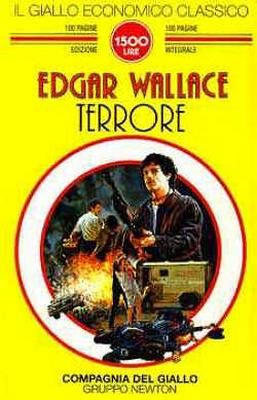
Viaje a Bangkok, Ataúd Incluido(1985): Another production from Franco's own Manacoa Films. I haven't seen this one yet. It's supposedly based on the Edgar Wallace "Sanders" character. Howard Vernon is featured.
¿Cuánto Cobra un Espía? (1984): Yet another Manacoa Films item. This is a very minor but somewhat successful screwball comedy set in Spain's coastal resort area. A goofy but good natured composer (Juan Cozar, the film's DP) gets involved with a group of spies who want his most recent composition, which they actually think is a secret formula. Antonio Mayans has an amusing bit but the extremely laid back style of direction (for Franco) deosn't quite capture one's full attention for the runtime. It's kind of like a live action cartoon at times or one of those harmless Walt Disney or Jimmy Stewart comedies of the early 1960s. A true oddity.
Thanks to Francesco Cesari for reporting this on the Franco Lounge at www.latarnia.com.
(c) Robert Monell, 2007
29 March, 2007
"Touch" Connors in Jess Franco Collection Vol. 2?

Jess Franco Collection Vol. 2
our price: £23.99 Delivered
availability: Due for release on 21/05/2007
RRP: £29.99 You save: £6.00 (20%)
Review
Anchor Bay presents The Jess Franco Collection 2, a selection of his best works now available together with digitally re-mastered picture and sound. Experience Downtown Heat, Down Town, Macumba Sexual, The Story Of O, Inconfessible Orgies of Emmanuelle and The Mansion Of The Living Dead as never before, with brilliant colours, clear sounds and technical perfection surpassing the originals by far.
Technical Details
Certificate 18 years and over
Screen Widescreen 16:9
Languages Dolby Digital (2.0) Stereo
Region Region 2 - Will only play on European Region 2 or multi-region DVD players.
The above is from play.com re: The Jess Franco Collection Vol. 2, reportedly coming from Anchor Bay UK. I'm trying to dig up some more specific info on this set. Titles include MACUMBA SEXUAL, MANSION OF THE LIVING DEAD, ...ORGIES OF EMMANUELLE, SEXUAL STORY OF O, DOWNTOWN, DOWNTOWN HEAT. A mixed bunch of Severin releases along with the 1975 Erwin Dietrich produced crime film. Surprised to see the 1990 French-Spanish coproduction DOWNTOWN HEAT in there. There is also the separate Severin Films US DVD release of SEXUAL STORY OF O and ORGIES OF EMMANUELLE scheduled in April. Looks like another busy year on the Jess Franco DVD front already.
A rather glossy production, DOWNTOWN HEAT is a gritty and pretty interesting crime flick. Mike "Touch" Connors is featured as a special agent out to bust Eurocrime Lord Radeck (Craig Hill). Connors, who started his career in such Roger Corman B film entries as the WIP SWAMP WOMEN, is his usual hard edged self and gives everybody hell.
"Touch" may be pissed if it all turns out to be a mistake. And you don't want to deal with a pissed off "Touch" Connors.
Any additional information or updates on this release will be much appreciated.
(c) Robert Monell, 2007
28 March, 2007
Jess Franco's MACBETH?
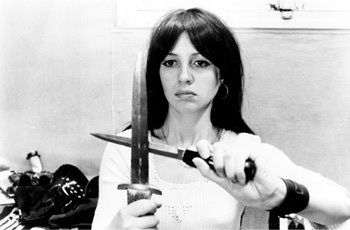
"I've also got this Macbeth in mind, in which an amateur theatrical troupe are rehearsing the play in a theatre until the power of the tragedy starts to take over and they begin to act for real."
A quote from a recent interview with Jess Franco published in the Barcelona leisure guide "Guia Del Ocio" [n.158]*
Interesting that Franco also mentions making a new version of the classic "Medea" set in the present era. He also has been working on [circa 2005] his "Nathaniel Hawthorne" project, THE HOUSE ON TOP OF THE CEMETERY. He described this last project (not to be confused with Lucio Fulci's 1982 Lovecraftian HOUSE BY THE CEMETERY) to me in some detail during a phone conversation in 2005. His ideas sounded pretty exciting. I hope it works out. I'm still not sure, though, on WHICH Hawthorne story he has based this project!*
Why is Jess Franco taking on such heavy duty literary projects at this stage in his long career? I think it has something to do with his relationship to his favorite director, Orson Welles. Welles directed his own low budget MACBETH in 1948. Maybe even more to the point is the fact that Jess Franco was second unit director on Welles' CHIMES AT MIDNIGHT (1965), and helped stage the famous battle sequence, often praised as one of the best ever filmed. I find that CHIMES... only gets better over the years and strikes me as the best-ever Shakespeare adaptation simply because of the creative risks it takes with the Bard's works, composting several major plays with bits of Holinshed's Chronicles. Welles' gives his most moving performance as the tragi-comic Falstaff, the role he was born to play. Welles' interpretation stresses the relationship between age and play. Falstaff is the eternal child, who despite his advanced age leads Prince Hal astray until the young man has to assume the role of King. Childhood's end is perhaps the great Welles theme, or one of them. It also may be one of Jess Franco's less examined preoccupations, playing a large role in EUGENIE (1970), AL OTRO LADO DEL ESPEJO (1973) and BROKEN DOLLS, three of his best films. The adventure (and terror) of growing up is in all of his films from WE ARE 18 to SNAKEWOMAN.
Let's all pray that the complex rights issues can be cleared so we get a decent R1 DVD of CHIMES AT MIDNIGHT sooner than later. The Spanish DVD is simply unacceptable in terms of video quality and sound.
"Macbeth" may have been a primary source of inspiration for the Santiago Moncada scripted LA ESCLAVA BLANCA, a microbudgeted jungle yarn Franco made in 1985. And, of course, the sometimes magnificent BROKEN DOLLS is shot through with elements from KING LEAR and THE TEMPEST. In any case, Franco's MACBETH, with the play taking over the actors, has a Rivette-like** resonance, also evoking Ronald Coleman in George Cukor's A DOUBLE LIFE. "Macbeth" has been filmed an unlucky 13 times since 1916.
We'll have much more to say about the complex relationship between Shakespeare, Orson Welles and Jess Franco in future blogs.
* This eventually was completed and released as the two part CRYPT OF THE CONDEMNED (2012).
**Image at the top of the blog from Jacques Rivette's OUT ONE (1970).
Thanks to Nzoog Wahrlfhehen for providing the reference and translation.
(c) Robert Monell, 2007
23 March, 2007
BLACK EMANUELLE'S BOX: Continued

Just to clarify my comments concerning the runtime of EMANUELLE AROUND THE WORLD. The soft version included in the boxset is a legitimate release version and complete in that regard. I'll be covering Severin's DVD of the XXX Euro version but it must be noted that, as with Jess Franco's LA COMTESSE NOIRE, a non hardcore version was shot for some markets and a XXX cut prepared for other territories. I should note that these are the only versions I have seen to date, there may be more out there.
As illustrated by the above collage the two D'Amato directed features are presented with the original US release adverts on the covers, while the CD is illustrated with the original vinyl EMANUELLE NERA cover. Giuseppe Vari's SISTER EMANUELLE is presented with a promo still of Laura Gemser in her shocking white nunsploitation gear with Euro-hottie Monica Zanchi (EMANUELLE AND THE LAST CANNIBALS) kneeling before her in birthday suit. I wish the film itself were as provocative as the DVD cover.
Shot entirely in Italia, SUOR EMANUELLE suffers from the loss of D'Amato as its director/cinematographer and especially from the lack of another deliciously quirky Nico Fidenco soundtrack. This DVD has the same specs as the other two and is a nice transfer from almost pristine elements. It's nowhere near as deliriously colorful as the other two, but that's because DP Gugliemo Mancori had mostly dreary castle interiors to light. This one is best watched in Italian with the English subtitles on since all the action takes place either in Venice or the castello doubling as a school for wayward girls. Note that the castello is the same location used in BLOODY PIT OF HORROR and numerous other Italian horror films of the 1960s and 70s. The real problem with this film starts with Mario Onorati's script which has Emanuelle suffering for her past "sins" under the watchful eye of the stern mother superior, who chides her for such "blasphemies" as not wearing her "chastity" undergarments. You don't want to have Emanuelle stuck in this situation for the entire runtime, although they do come up with a DEAD OF NIGHT style twist to liberate her at the end.
With the exception of some erotic flashbacks, showing how Monica Zanchi got there (for seducing her stepmom), everything which occurs is rather dull and predictable. Ms. Zanchi does heat up the proceedings by having close encounters with everyone in sight, including an escaped convict (a very welcome Gabriele Tinti), but one longs for the wilder international adventures and exotic tone of the D'Amato Emanuelle entries. It's all shot from absolutely static camera positions which leave one wondering why Vari and Mancori didn't bother to compose an occasional inventive image to create some visual interest. The energetic wind and percussion cues of maestro Stelvio Cipriani try hard but just can't make up for the absence of one of Fidenco's infectious Emanuelle themes. His work is craftsmanlike but it's not one of Cipriani's more memorable scores. This one is all by the numbers.
Four deleted scenes in Italian language only, featuring brief glimpses of hardcore action performed by body doubles for Gemser and Zanchi, are included. But even if they were inserted into the feature it wouldn't help much. One is appreciative that they are available here even if the very soft picture quality (are they sourced from an Italian vhs?) is way below the quality of the feature print. The English language theatrical trailer, letterboxed and in good quality, is also included. All told, this is an excellent presentation of one of the lesser Black Emanuelle titles. It just confirms that Bitto Albertini and D'Amato were really the prime movers of this series.
Also included as an extra are an array of postcard sized Italian adverts for the features. They're colorful and fun to look at. It's all packageed in an appropriately black box which features a glossy image of the sultry Ms Gemser staring out from a window cut out of the gatefold cover. The cover opens up to reveal her svelte torso, nude from the waist up. It's a great cover and a terrific boxset. I await Vol. 2 with high hopes. By my count, Gemser made at least eight Black Emanuelle films between 1976 and 1983 so there's a lot of material to choose from out there.
As stated before Severin's separate disc,the XXX Euroversion of EMANUELLE AROUND THE WORLD,contains several scenes of hardcore action. They involve scenes of group sex and two instances of bestiality. I'm not going to describe them in detail, you'll have to discover them for yourself. The do appear to have been shot at the same time as the feature as altenate footage for a version intended for select adult markets. They are just XXX extensions of scenes already in the soft version and they really don't add much to the film except for 4 or 5 extra minutes. It will be of some value to Eurocult collectors and D'Amato completists. Laura Gemser wasn't directly involved in any of the hardcore footage. In any case, she always had a body double for hardcore scenes where her presence was implied. Any information or comments on the variances between these two versions of EATW is very welcome in the comment section below. This is my first exposure to both versions. It might be interesting to come up with some suggestions for a Vol. 2 BLACK EMANUELLE Box.
(c) Robert Monell, 2007
22 March, 2007
Review: BLACK EMANUELLE'S BOX, Vol.1

"I was looking for happiness, but I got lost." Laura Gemser in EMANUELLE PERCHE' VIOLENZA ALLE DONNE?
"Come...with Emanuelle," invites the heavy-breathing male narrator on the vintage Jerry Gross Organization US trailer for Joe D'Amato's EMANUELLE AROUND THE WORLD. It's just one of the delightful and pertinent bonus materials on Severin Films BLACK EMANUELLE'S BOX Vol. 1. It's especially eye opening when considering the splice-ridden, blurry trailer vs. the gorgeous new transfer that Severin has given the original EMANUELLE PERCHE' VIOLENZA ALLE DONNE? (1977). After viewing two of the discs and listening to the CD compilation containing three Nico Fidenco "Black Emanuelle" scores, GETTING DOWN WITH BLACK EMANUELLE, my immediate reaction is that this 4000 Unit Limited Collector's Edition box is already a candidate for one of the 10 Best Eurocult DVD's presentations of 2007...and if you are as much of a Joe D'Amato/Nico Fidenco/Laura Gemser fan as myself then it's Christmas in March.
Given the amount of material included on the four discs, along with my preference for shorter to medium blogs rather than epic-length ones, I'm going to split my look at this LE boxset into two separate blogs. First of all, I do appreciate someone at SEVERIN having the wit to call it BLACK EMANUELLE'S BOX, given what we all "think" these films are about. Excellent transfers have become expected from Severin and they continue to dazzle at least myself with these revealing transfers of EMANUELLE IN BANGKOK (1976) and EMANUELLE AROUND THE WORLD (1977). They present convincing new evidence of the multifaceted talents of both the late, prolific and always underestimated Joe D'Amato (rn: Aristide Massaccesi, which he uses in both of these features as his DP credit, more about that later) and the Prince of eccentric Italiano cult music, singer-composer Nico Fidenco.
First, some history: my introduction to Joe D'Amato and the "Black Emanuelle" series came during a 1977 theatrical showing of EMANUELLE IN BANGKOK (US title) which I attended at the Hollywood Theater in Syracuse, NY, one of those old brick and mortars which specialized in showing cult films like George Romero's MARTIN and the ISLA films at Midnight on Saturdays. I paid my one dollar [!...those were the days] admission and expected a repeat performance of the 1974 French film EMMANUELLE, which I had seen and reviewed in a local newspaper a year or two before. What I hadn't realized was that Italian director Bitto Albertini has created the "Black Emanuelle" character of Mae Jordan/Emanuelle in EMANUELLE NERA, his 1975 exploitation of the French film, which became a surprise hit in the US, playing in much more mainstream venues than dollar Midnight movie houses. I found the French EMMANUELLE to be a rather pretty (in terms of cinematography and locations) bore. In other words a pretty stupid X rated film to which I took my girlfriend after we had a few too many one rainy Sunday afternoon. I can't even remember why on earth we went to see EIB a few years later except that it WAS Saturday Night and there had probably been more liquid persuasion. EIB seemed gritty, grungy and much more disgusting (the mongoose and cobra scene sent my girlfriend out of the theater). And, of course, this Emanuelle was a person of color whom I somehow found much more real and appealing than Sylvia Kristel. Of course, the Italian Emanuelle films aren't really related to the French, Spanish (some by Jess Franco), Asian and US films with the name Emanuelle in the title. Joe D'Amato himself makes clear in the Eurofest interview included as an extra on this set that Albertini, himself and Italian colleagues made sure the character's name always was spelled with one M rather than two, like the French heroine's in the competing series based on the novel by Emmanuele Arsan.
In EMANUELLE IN BANGKOK the globe trotting, sexually available photojournalist has somewhat evolved from the kinder, gentler mold in EMANUELLE NERA of the previous year. D'Amato was a much more innovative and daring director than Albertini and gave the character and action a harder edge, including sequences of graphic sex, rape and violence. This would reach its apex in the notorious entry EMANUELLE IN AMERICA (already out in a deluxe DVD ed from BLUE UNDERGROUND). EIB (onscreen title: BLACK EMANUELLE EN ORIENT) is much milder, almost a lighthearted international sex romp compared to ...AMERICA or the other D'Amato directed Black Emanuelle flick in this set, EMANUELLE AROUND THE WORLD. Set in the sprawling Thai metropolis D'Amato doesn't shrink from presenting the crushing poverty of most of the residents seen in the background, and sometimes foreground. There is a lot of handheld, strikingly framed cinematogrphy, none of it is pretty but all of it is extremely effective in efficently setting the tone and atmosphere of its exotic locations without ever relying on "tourist shots" of easy, photogenic targets. D'Amato always admitted that he was a DP first and foremost who just happened to get into producing and directing. The fact that he was the DP on his best films is what often gives them their only distinguised quality.
Voyaging to Bangkok from her New York City base with an achaeologist friend (the late Gabriele Tinti, who was married to Gemser from 1976 to his death in 1991) the credits detail their oceanliner trip by amusingly intercutting them having sex with the movements of the giant pistons driving the ship's engine. There are a lot of canted camera angles of the local architectural wonders and a general sense of fun as a swinging Republican US Senator (are there any other kind?) and his bimbo wife (FIVE DOLLS FOR AN AUGUST MOON's Ely Galleani) join into the sexual hijinx in between encounters of the sleazy kind with local strippers who get into dripping hot candle wax and projecting ping-pong balls from unlikely places... you get the idea.
A strong supporting cast includes the late Ivan Rassimov (charmingly saturnine as always) as the mysterious local politician who gets Emanuelle involved in a plot for a coup, making her the target of a group of thugs who try to change her mind by raping her and then being nice! This, of course, would all be wildly politcally incorrect in today's pop culture and maybe that's part of its fascination. The fact that corrupt US officials are played by such prolific Italian Eurocult regulars as Giacomo-Rossi Stuart (the hero of Bava's KILL BABY KILL!) and Venantino Venantini somehow keeps reminding us that this is after all mid 1970s European Trash Cinema. The action moves to Morocco, where Emanuelle gets involved with more group sex and near rape scenarios. Toward the end Chris Avram (BAY OF BLOOD) shows up as a writer who tries to impose a philosophy on the entire affair.
Severin has given EMANUELLE IN BANGKOK another of its impecabbly detailed and colorful transfers which one has to only compare in terms of resolution and luminousity to the original vintage theatrical trailer to see how much work has gone into this restoration. The 1:85.1/16X9 transfer from generally very good elements (excluding a somewhat lower resolution opening credits sequence and a few fleetingly visible scratches) would probably surprise even its late director. It's the absolute best this feature has ever looked or will look.
As with the other two Emanuelle features in the set, both the Italian and English language tracks are available, along with removable English subtitles. The Dolby Digital presentation of the Mono tracks has remarkable presence and gives the wonderful Nico Fidenco score a chance to assume its primary place over the admittedly risible dialogues. I would recommend watching both of the D'Amato Emanuelles in English with the Italian subs on. It's nice to have the Italian track there but since these films are set initially in the US and have an American main character who interacts with English speaking Europeans and Asians the Italian track sounds strained and artificial in comparison
Along with the original trailer a 12m video interview camcorded at the 1995 Eurofest Convention is included wherein the modest D'Amato is questioned by Mark Ashworth and Adrian Smith. A very genial and laid back D'Amato answers questions about his work. The credits list this as his only English language interview. The video/sound quality is admittedly substandard but watchable, providing some insight into the character of this often misunderstood auteur. Interestingly, the opening and closing credits for EIB and EMANUELLE AROUND THE WORLD are in French, obviously indicating these elements originated in France.
EMANUELLE PERCHE' VIOLENZA ALLE DONNE? (onscreen title: LE VICE DANS LA PEAU) is another D'Amato-directed Black Emanuelle item from 1977, and is more along the lines of the same year's EMANUELLE IN AMERICA in terms of its presentation of scenes of extreme sexuality and violence against women. EIB has its rape scene but this entire feature is built around the concept of rape and sexual slavery as a shameful underside of a societal perversion which thrives on the sexual exploitation and control of women, especially "liberated" women who dress provactively, are intelligent and travel without escort. Once again, top US government officals along with various underclass rapists are part of a worldwide plot involving the abduction of female tourists who are then sent to work in brothels in the Middle East and Asia.
Emanuelle arrives in San Francisco (after having a go with a truck driver in the back of his rig) to investigate and expose the operation. She is greeted by a local journalist (international sex sensation Karin Schubert) who wants "the most famous photo-journalist in America" to help her indict the white slavers. Schubert is brutally raped by the ring's enforcers which only makes Emanuelle more determined. Stopping over in Bombay she meets a world famous Indian guru (frequent D'Amato actor and sometimes screenwriter "George Eastman" rn: Luigi Montefiori), whom she quickly beds and just as quickly exposes as a philosophical and sexual fraud. Moving onto Rome, the Far East and back to New York D'Amato unleashes one gorgeous long lensed impression after another of the exotic locales while allowing Fidenco's increasingly odd musical cues to provide audio counterpoint. The repeated use of Fidenco's song "A Picture of Love" performed in High Bubble Gum style by FIRE FLY has to be heard to be believed, and once you hear it there'll be no forgetting it! I mean that in the most fun sense. But EMANUELLE AROUND THE WORLD is serious stuff when it comes to sexual violence. The sequence involving the sexual humiliation and gang rape of "Miss Ohio", orchestrated by a group of powerful US Senators as "punishment" for her gambling debt, is truly jaw-dropping and takes on a prescient quality in light of high profile news stories of the last few years. D'Amato seems both appalled and a bit amused that the liberal press, with the New York City based Emanuelle as its representative, is ultimately unable to change the system of representation, although she does get some of those responsible (including, in an amusing cameo, D'Amato himself) busted.
The transfer of EMANUELLE AROUND THE WORLD is also 1:85.1/16X9; DD, Mono; English and Italian tracks available, with optional English subtitles. It seems a bit soft during the opening credits before exploding into the most breathtakingly colorful transfer of the set. Resolution and detail are just amazing throughout and the original French elements couldn't be more luminously beautiful. Check out the glowing emeralds, deep ocean blues and hot crimsons of the Bombay guru's palace interiors and tell me if the color and definition isn't as good as any contemporary big budget Hollywood feature film showing at any theater in the US.
Curiously, the EATW disc clocks in at just over 97m, about five minutes short of the 102m listed on the back of the box. I'm sure we'll read more about this elsewhere. Also, I haven't yet seen the XXX Euroversion, but I'll attempt to report any variations after I see it later. It's also has a 102m runtime listed on the back of its box. Remember, this disc is NOT going to be included as part of the boxset. I'm not an expert on this particular title, so if someone can clear up the correct original runtime of the non XXX version please feel free to to do in the comment section below.
The inclusion of a CD compilation of 25 Fidenco tracks from three separate Black Emanuelle features mark the EMANUELLE AROUND THE WORLD double disc as the motherlode of the boxset and worth the price of admission. There are nine cues from EMANUELLE NERA (although the film itself is not in the set), eight from EMANUELLE NERA ORIENT REPORTAGE along with another eight from EMANUELLE PERCHE' VIOLENZA ALLE DONNE? The outre lyrics ans music is all composed and orchestrated by Fidenco and conducted by Giacomo Dell'Orso. The singers BULLDOG perform track 5 "Off Your Body" while SILKY SOUND SINGERS perform "Sweet Living Thing" and "Like a Sailing Ship" is tones that can best be termed...silky.
The coup de grace for me on this double disc, though, is the bonus feature BLACK EMANUELLE'S GROOVE: Interview with Composer Nico Fidenco. For a Euro music collector like myself this is a jam packed 13 minutes of pure joy. Fidenco appears as a impeccably dressed lounge master who, vinyls of the three scores in hand, rapidly and hypnotically takes us through his 40 year and still going career as a songwriter, composer and performer. He's a compulsive talker, charming, self effacing, insightful about his peers. He brackets his work between "technical" assignments like his first score (at the behest of RCA) for the mid 60s Spaghetti Western IN A COLT'S SHADOW and his crazier cues for the 1980s gorefest ZOMBIE HOLOCAUST. He also manages to detail his approach to composing soundtracks for sex films, citing his attempts to present a romantic leit-motif or theme which is then repeated to soften the eroticism and violence. He underlines his basic philosphy as a kind of anti-orchestral minimalism, noting: "When an erotic scene plays to a very sweet, romantic soundtrack, it loses its morbid character." Viva Fidenco! GETTING DOWN WITH BLACK EMANUELLE also comes with a very informative and helpful program insert listing the tracks and their timings. It's illustrated with the original vinyl covers. Fidenco also finds time to squeeze in discussion of his personal memories of D'Amato, Gemser, Ennio Morricone among others. This guy can really TALK!
If all the above weren't enough there is still the fourth disc on this set to consider, the very different in tone SISTER EMANUELLE, also featuring Laura Gemser in the title role. This is directed by Giuseppe Vari and scored by Stelvio Cipriani, a fact which, as we shall see in our next blog, makes a crucial difference. We'll also be considering more of the special bonus features included in the set along with the separately released Severin disc, the XXX European version of EMANUELLE AROUND THE WORLD. Stay tuned...
(c) Robert Monell, 2007
18 March, 2007
Godard's Magnum Opus on R2 DVD


Even Bela Lugosi can be found in Jean Luc Godard's epic collage, HISTORIE(S) DU CINEMA...
"Godard, Bunuel, Fritz Lang, they're not outmoded..." actress in SUCCUBUS discussing trends with Jack Taylor.
Jean Luc Godard is identified as a primary influence by Jess Franco not only in the dialogue of NECRONOMICON/SUCCUBUS but also in his recent interviews. Godard's massive "documentary" HISTORIE(S)DU CINEMA (1989-2004) will be available on FR PAL R2 DVD [with English subtitles] March 20, 2007 from Gaumont. It is a 4 disc boxset containing the documentary and three major featurettes.
Layered with images from films of all genres from all over the world, HISTORIE(S)... represents a cinephile's paradise. A challenging intellectual and sensual matrix which signals something of a paradigm shift in the art of categorization and commentary. It's been called Godard's testament on the evolution of cinema from the silent era onward in his unique personal essay format.
It will be interesting to see if this surfaces on R1 DVD anytime soon.
We'll be rotating screenshots from this amazing work at the top of this blog as a slideshow for the next few days...
www.dvdbeaver.com/ Amazon Fr HISTORIE (S) DU CINEMA
(c) Robert Monell, 2007
17 March, 2007
LA BRUJA: DVD
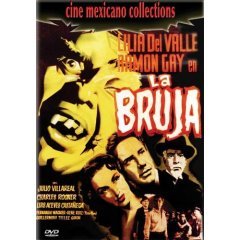
We've discussed the influence of the films of the prolific Mexican director Chano Urueta (1895-1979) on the career of Jess Franco in a previous blog. Urueta made over 100 films in many genres between 1928 and 1974 and is probably best known in the US for his ultra-bizarre THE BRAINIAC [EL BARON DEL TERROR-1962], which is now out in a superior CasaNegra DVD presentation along with his 1960 THE WITCH'S MIRROR. We also look forward to a future CasaNegra edition of THE LIVING HEAD (1961). Urueta was also an actor who appeared as bandidos in Sam Peckinpah's THE WILD BUNCH (1969) and BRING ME THE HEAD OF ALFREDO GARCIA (1977). One assumes that Chano and Sam got along famously. Urueta's 1954 THE WITCH (LA BRUJA) is also out on DVD from Phoenix: Cine Mexicano Collections. This 2005 disc is in Spanish language only and not as impressive as the CasaNegra DVDs. The image is fullframe and not exactly in High Definition in terms of sharpness, detail and contrast. It is quite watchable but makes one wish this fascinating item will be considered as a future CasaNegra release.
Urueta hasn't quite achieved the kind of critical reputation of his colleague Fernando Mendez (EL VAMPIRO-1957) but at his best this reliable journeyman can conujure up a delirious Primitivism. Just as THE WITCH'S MIRROR has many parallels with Franco's GRITOS EN LA NOCHE (1961), probably coincidentally since it wasn't released until after GRITOS was produced, LA BRUJA uncannily anticipates the surgical horrors of MISS MUERTE (THE DIABIOLICAL DR. Z-1965). Dr. Boerner (Julio Villarreal) transforms a facially deformed woman (Lilia Del Valle) into a beautiful seductress who lures several men responsible for the death of the Doctor's daughter to their doom. The character of La Bruja is a kind of composite of the disfigured female scientist (Mabel Karr) and the seductive nightclub perfomer (Estella Blain) in MISS MUERTE.
The basic idea of a sexy enchantress murdering a group of scientists whose intolerance resulted in the death of a mad doctor's loved one also resonates in Franco's later Soledad Miranda vehicle SHE KILLED IN ECSTASY (1970). Urueta's film is in some ways even wilder as he includes a cult of black robed beggars, drawfs and assorted freaks who aid in the elaborate vengeance scheme from their subterranean temple dressed with human skulls, stuffed animals, occult symbols, along with numerous macabre details in Urueta's outlandish mise en scene. The Tribunal of the Night sequence is a surreal highlight with elements from Fritz Lang's M and the 30s Lugosi serial RETURN OF CHANDU woven into the plot and visual design. The scientifically manipulated "ugly woman" would be a recurrent feature in other Mexican films (the markedly inferior John Carradine Mexican excursion LA SENORA MUERTE-1968) as well as many 50s and 60s Eurohorrors (notably the fumetti inspired SATANIK).
LA BRUJA really deserves the kind of deluxe DVD treatment, complete with English subtitles, that other Mexican fantasy films are finally realizing.
(c) Robert Monell, 2007
13 March, 2007
Jess Franco makes IMBD Bottom 100 list...
For a film which he provided the original story and was set to direct before French Erotic-Vampire-Movie specialist Jean Rollin was called in to helm when Jess didn't show on the first day of shooting. Yes, it's the immortal ZOMBIE LAKE [LE LAC DES MORTS VIVANTS] the 1980 Nazi-Zombie stomp which is so bad that it's... well, not good but kinda fun.
The IMBD poll places it at #98 out of 100. These are the worst films of all time according the the IMBD reader's poll. They also have a top 250 list which places THE GODFATHER at #1.
BTW, I noticed in my last screening of this that film historian, Jess Franco actor {MIDNIGHT PARTY, TENDER FLESH), screenwriter (PLAISIR A TROIS) and author of the essential Franco study THE MANACOA FILES Alain Petit can be glimpsed at the film's climax as an angry villager who is standing next to the guy who is turning the flame thrower on the zombies.
Other Eurogenre/cult films in the bottom 100 listing include the Joe D'Amato produced TROLL 2 (a personal favorite) while D'Amato's ATOR THE INVINCIBLE 2 is #100.
Interesting that Franco's name is listed in the IMBD writing credits for the film but not on the film itself. Maybe Eurocine was mad at him for not showing up at the last minute!
(c) Robert Monell, 2007
09 March, 2007
LA BELLE CAPTIVE DVD:
Sara and co. have prepared an unpleasant surprise for Walter in Alain Robbe-Grillet's LA BELLE CAPTIVE.
Finally, Robbe-Grillet's 1983 fusion of Rene Magritte, Film Noir and female vampires arrives on R1 DVD 3/13/07. I can't vouch for the transfer but at least it's here with Eng subs. From Koch Lorber. The only extra is the original French trailer.
Not to boast but check out my August 2000 review of LA BELLE CAPTIVE under its IMBD listing. I believe that dates me as the first critic to point out the visual and thematic qualities which link it to Stanley Kubrick's 1999 EYES WIDE SHUT. Not to impley that SK saw or was influenced by the earlier Robbe Grillet film but now one can consider them together on DVD. I'm a supporter of EYS and still chafe at the digital altering of Kubrick's elegantly ominous swansong. Both films certainly link Eros and Thanatos within the format of the Erotic Thriller genre. They also both seem to employ the mythic structure of Orpheus in the underworld and that's probably a conscious decision on ARG's part. I can't speak to what Kubrick had exactly in mind.
LBC is probably ARG's most accomplished color film. Lensed by the legendary Henri Alekan it's certainly his most visually sensuous cinematic enterprise, and one of his most difficult. I must admit that I fell asleep the first time I attempted to watch this, via a poor video dub. It may improve with repeat viewings. This is the kind of film which respects and rewards the adventurous viewer but demands full attention. It's a very high performance vehicle and probably the most erotic of his films. Robbe-Grillet makes literary arthouse events with softcore porn surfaces which are often criticized as exotic S&M. But LA BELLE CAPTIVE is something else again with a specific density which will put off the casual consumer.
"La Belle Captive" is also a novel by Robbe-Grillet, in "collaboration" with the late surrealist painter Rene Magritte. It is like few other "novels" and, in fact, redefines the genre as do his other literary collaborations with visual artists.
(c) Robert Monell, 2007
08 March, 2007
VAMPIROS AND MONSTRUOS

Check out Mirek Lipinski's newly revamped Mexican Fantastique blog, VAMPIROS AND MONSTRUOS. Mirek is a world class expert on Mexican horror/fantastic cinema.
The colorfully illustrated blog has accurate information on new Mexican horror DVDs along with compelling reflections on the films themselves.
Mirek has written a book of the same title which will be a comprehensive study of 20th Century Mexican Fantastic cinema. I am proud to be a contributor to this eagerly awaited and much needed tome. Other contributors include Mark Barnard, Gary L. Prange and Richard Harland Smith. And, of course, Mexican horror cinema has a fascinating, interactive relationship with the career and films of Jess Franco, a relationship we shall explore in future blogs. In the meantime, try a double bill of the CasaNegra DVD THE WITCH'S MIRROR and THE AWFUL DR. ORLOFF.
VAMPIROS AND MONSTRUOS: THE MEXICAN HORROR FILM OF THE 20TH CENTURY should be published sometime this summer according to the update.
It will be a must-have for all fans of Mexi-horror and those who want to learn more about the subject.
www.vampirosandmonstruos.blogspot.com/
THE EUROSPY FILES
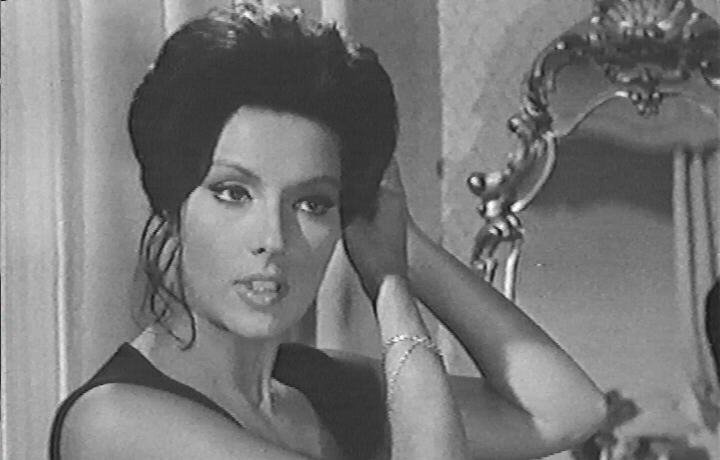
In answer to our quiz question in the previous EUROSPY FILES entry: It's Roger Browne in Osvaldo Civriani's OPERAZIONE POKER (1965), a rather lavish affair, moving from the dangerous backstreets of Casablance to a Scandanavian brewery which is the cover for the usual worldclass villainy. Colorful stuff scored by Piero Umiliani, who provided more catchy, frenetic Eurogenre soundtracks during the 1960s than anyone else (my favorite are his happy-to-be-crazy cues for Mario Bava's minimalist madcap FIVE DOLLS FOR AN AUGUST MOON).
Roger Browne acted in a bunch of subsequent Eurospy adventures including the underrated and oddly titled RIFIFI IN AMSTERDAM, returned in KILL AGENT GORDON when not taking time out to embody the masked supervillain in ARGOMAN, all stylishly directed by the talented Sergio Greico (as Terence Hathaway). Reportedly, Roger later retired and worked as a chiropractor. Roger could be considered the King of the mid budgeted 1960s Eurospy film. I'll take him over any and all of the post Sean Connery Bonds.
Above is an image, also from OPERAZIONE POKER, of an actress who could be considered the Queen of the 60's Eurospy genre. Can anyone ID her?
BTW, after looking at the filmography I calculate that our subject Jess Franco may be the most prolific director of Eurospy films. He seems to have made more than any other single director from 077: OPERATION JAMAICA (1962) up to IS COBRA THE SPY? in the mid 1980s. My favorite is the satire LUCKY, THE INSCRUTABLE (1967).
(c) Robert Monell, 2007
05 March, 2007
Douglas Sirk vs Jess Franco
"Melodrama means music plus drama..." Douglas Sirk
Way back in the days before cable TV, videotape, DVD, I once travelled 500 miles to see a Douglas Sirk film. There are not many films I would do that for. It was THE FIRST LEGION, his film about Jesuits. Not exactly a key film in his oeuvre or something I could discuss here at length. But, like all of Sirk's films, I was hypnotized by the emotional honesty of it amidst its unique plastic aesthetic. It was worth the trip.
I finally caught up with the CRITERION COLLECTION DVD of Sirk's WRITTEN ON THE WIND (1956), a late masterwork and one of the 20 plus films he made for Universal International after signing with them in 1950. It's Sirk's most beautiful film in terms of pure form and that has a lot to due with DP Russell Metty, who would shoot Orson Welles' Hollywood swansong TOUCH OF EVIL (see Jess Franco's 1963 RIFIFI EN LA CIUDAD for a virtual remake, which may have prompted Orson to hire him to direct second unit for CHIMES AT MIDNIGHT) the next year. Universal was persuaded by producer Albert Zugsmith to let Sirk, and later Welles, work as they pleased. A DP able to give a film an auteur's style and a studio look Metty is one of my favorite Hollywood cinematographers and he enabled Sirk to do breathtaking things with color, framing and camera movement. The gorgeous hues pulsate in depth of field and seem to have a life of their own. It's beyond the kind of Expression which Sirk practiced in his early UFA films before he fled the Nazis. It's a kind of eye drugging American Surrealism, bold, delicious and somehow morbid. How can one describe in words a canary yellow sportscar speeding past a pumping oil derrick and tanks emblazoned with a red family business seal? You have to see it. It's like Metty is painting with Technicolor heated up to the max. The plot is lurid and ulitmately unimportant. It's a film about sex and class and its images are its true story and themes. By classification it's a melodrama, a "woman's picture" which Douglas Sirk mastered in his final decade of filmmaking. But Jess Franco, througout his career, has also made the woman's picture HIS genre.
Franco's most interesting and personal films are women's pictures: women and their emotional turmoils are at the center of THE DIABOLICAL DR. Z, NECRONOMICON, 99 WOMEN, NIGHTMARES COME AT NIGHT, EUGENIE DE SADE, VAMPYROS LESBOS, SHE KILLED IN ECSTASY, LA FILLE DE DRACULA, LA COMTESSE NOIRE, THE OTHER SIDE OF THE MIRROR (a perfect Douglas Sirk title), LORNA-THE EXORCIST, A VIRGIN AMONG THE LIVING DEAD, MACUMBA SEXUAL, right up to the recent SNAKEWOMAN. Women have absolute power over men (and not just sexual) in these films and even in his male centered neo-noirs like BOTAS NEGRAS, LATIGO DE CUERO. The women at the center of these titles search for meaning and identity, usually finding neither.
In WRITTEN ON THE WIND the pathetic nymphomaniac played by Dorothy Malone holds the life and death of her dysfunctional family in her quivering hands througout. On impulse I immediately put on Franco's 1973 MAIS QUI DONC A VIOLE LINDA? (BUT WHO RAPED LINDA?)and completed a fascinating double bill. Franco also made early films in the style of German Expressionism (1961's GRITOS EN LA NOCHE/THE AWFUL DR. ORLOFF), moved to a kind of Surrealism in films like NECRONOMICON, VAMPYROS LESBOS, THE CURSE OF FRANKENSTEIN, but settled into the impoverished minimalism or subrealism of his these mid 1970s French backed features. He didn't have Russell Metty, or even his favorite DP, Manuel Merino. He had little money, so it's an imposed style, and he seems to have preferred working in relative freedom, although he had to eventually turn even the best of these films into hardcore versions at their producer's insistence. LINDA presents the precognitive dream of Marie-France (Alice Arno) who is about to go to an island where she will interact with the bizarre Radeck/Steiner family. The fact that the "story" of the film is presented as she dozes off reading a book (by "David Khunne*) recalls the formal structure of EUGENIE...THE STORY OF HER JOURNEY INTO PERVERSION (1970), but that was a big budget film compared to this.
Like Sirk's film LINDA is also about sex and class, the pressures they place on the family unit, which ultimate fragments under the strain. The Orloff's family secrets as the ones of the title character in SNAKEWOMAN are kept hidden from the outside world and are investigated at the risks of those who do the probing. Paul Muller's neurotic father is wealthy and remote, he warns Marie-France about the nymphomania of daughter Olivia (Lina Romay). As in most of Franco's key films, this is about watching various performances and he uses mirrors to open the action into symbolic dimensions of time and space. The mirror is the central object in Franco's mise en scene and his filmography as it is with Sirk. The progression into madness and murder is thus a reflection on what life should be, something to be experienced within a happy family. But there are no really happy families in the films of Douglas Sirk or Jess Franco, only the Self to be contemplated by the camera and in the mirror.
"The mirror is the imitation of life. What is interesting about a mirror is that it does not show yourself as you are, it shows you your own opposite." Douglas Sirk
*MAIS QUI DONC A VIOLE LINDA? is also known as LES NUITS BRULANTES DE LINDA [Hardcore version], EROTIC DREAMS [the rare non hardcore English language version], among other titles. The film must be seen in it's origina 2.35:1 OAR to appreciate Franco's complex use of framing, space and objects. Thanks to Francesco Cesari for helping me to see three significantly different edits of this underappreciated JF title.
**The title of the book is MAIS QUI DONC A VIOLE LINDA? Now that we know that there were no actual "David Khunne" novels, this is a double in-joke on JF's part.
"Sirk on Sirk".
(c) Robert Monell, 2007
01 March, 2007
Happy Birthday, Paul Muller!
Born in Switzerland 84 years ago today, Paul Muller is the King of Eurogenre character actors with 100's of roles to his credit. An exceptionally fine actor and very nice man. I thank him for patiently attempting to answer all my annoying questions.
Here he is as the drug addicted stalker, strikingy framed by Mario Bava, in the template for all following Italian and Euro-horror, I VAMPIRI (1956). Note the similarity between this set-up and the scenes of Morpho abducting victims in Franco's 1961 GRITOS EN LA NOCHE. No wonder Mario Bava is one of the few Italian directors JF speaks well of.
Muller portrayed Dr. Seward in Jess Franco's COUNT DRACULA, but my favorite of his numerous roles for the director is the depraved and desperate Radeck, the father of Soledad Miranda's Eugenie in the 1970 film EUGENIE DE SADE.
Today he lives quietly in Italy and is still available for work.
(c) Robert Monell 2007
THE EUROSPY FILES
You can have the new James Bond and all the ones since 1970. I prefer the Eurospy guys and girls of the 1960s vintage. As a regular feature here I conjure up images from that era. Here we have one of my favorite Eurospy actors in one of the several he made in Europe during that Golden Age.
Can you name the actor and the film shown above?
Or at least appreciate the threads and hairstyle circa 1965 (that's a hint).
Subscribe to:
Posts (Atom)